



 For all latest news, follow the Daily Sun's Google News channel.


As Bangladesh stands on the threshold of a new political chapter, the nation finds itself presented with a rare and powerful opportunity, the opportunity to rebuild with intention. Elections are not merely about leadership change; they are moments to rethink priorities, reset direction, and invest where it matters most.
As our beloved country continues its journey of growth and renewal, Bangladesh has an opportunity to strengthen its future by investing thoughtfully in areas that shape human potential, with education foremost among them. Within education, English learning holds particular promise in preparing young people with the skills needed for the future.
While Bangla will always remain the soul of our nation, English today is the language through which our children access global knowledge, higher education, research, and international opportunity. When English education fails, it is not merely a subject that fails; it is potential that is delayed or denied.
Two Systems, One Country. And a Growing Divide
Bangladesh currently operates within a few broad schooling streams: public schools offering our National Curriculum, a curriculum designed and governed by National Curriculum and Textbook Board (NCTB) which is taught in Bangla and English; private schools offering various international curricula; and madrasa education, which follows its own structured system and plays an important role in serving a significant segment of the population.
Diversity in education systems can be a strength when it allows different learners to thrive. The key challenge before us is ensuring that these systems lead to more aligned and equitable learning outcomes.
English Version students study textbooks written in English, yet many struggle to communicate confidently in the language as they grow older. This is not due to a lack of intelligence or effort. Rather, an improved curricular design and pedagogical focus could help address this. English within the National Curriculum can be strengthened by positioning it not only as a subject to be studied, but as a language for communication, a skill to be mastered, and a tool for thinking and expression.
On the other hand, English Medium schools teach English as a living language through literature, language use, grammar in context, creative writing, and discussion. These schools, however, often serve a relatively small segment of students in comparison to the majority. In some cases, students coming from English Medium schools and studying under international curricula may feel less connected to the local context and culture, as English is often used as the primary language of communication.
Hence, the result is a divided classroom reality: the majority of children in public and English Version schools, full of talent but under-supported in language skills; and a minority in private English Medium schools, better prepared linguistically but not always rooted locally. This divide is not sustainable for a nation that seeks inclusive growth.
This article explores the growing gap between the learning outcomes of students following the English Version of the national curriculum and those studying international curricula in English Medium schools, and invites a collaborative rethinking of English education that serves national priorities while preparing students for global engagement. It also seeks to encourage a gradual, thoughtful approach to reform that can be undertaken step by step by the incoming government.

A Practical Path Forward: Strengthening English Education:
English Version and Bangla Medium, for both, a practical path forward should be strengthening English Education within the already thriving, practicing and a working system – The National Curriculum of Bangladesh, NCTB. It is important to be realistic. Redesigning the entire national curriculum is a massive undertaking, one that requires time, consensus, and structural overhaul. Expecting immediate change across all subjects is neither practical nor necessary.
For a start, the most effective and achievable reform lies in focusing on English alone.
English is not just another subject. It is the medium through which students think, express, analyse, present, and engage with the world. If English education is strengthened, its impact spreads across all learning areas.
The solution, therefore, is not to dismantle the national curriculum, but to redesign the English programme within it. Aligning English within our National Curriculum with English Medium…Without Losing Our Roots.
The English taught under NCTB does not need to mirror what is taught in the Private schools under the international curricula. What it needs is alignment…alignment in philosophy, progression, and skill development.
This can be achieved by redesigning English First Paper and English Second Paper from Playgroup through Grade 12, with clearly structured strands such as: language skills (listening, speaking, reading, writing); grammar taught through use, not memorization, literature appropriate to age and context; creative writing and expression; and discussion, presentation and reflection. English should not be taught as a subject to be memorised, but as a skill to be practised daily.
Such a redesign would allow our students under the national curriculum, especially those studying the English Version to develop competence comparable to their English Medium peers, without abandoning national curriculum values or cultural identity.
When Assessment Changes, Thinking Changes
When assessment focuses primarily on memorisation and written reproduction, teaching inevitably follows the same path. As a result, students may score marks yet struggle to speak, present, or express ideas confidently. This seems to be the biggest barriers to effective English learning. Research indicates that assessment styles and teaching practices, not just the presence of English subjects, influence students’ ability to use English confidently.
Therefore, reform could introduce oral presentations, group projects, personal reflections, case studies and portfolios, all as a part of assessment. Written exams should remain, but only as one part of assessment, not the sole measure of learning. This should be applicable to all schools in our country, Bangla medium, English medium and English version.
If we look carefully into where our students struggle most today, we will see that they struggle with public speaking, confidence and expressing what they know. These struggles are not intellectual; they are linguistic and psychological. Change assessment, and learning will change.
Teachers Hold the Key to Real Reform:
No curriculum reform can succeed without teachers. More importantly, no meaningful reform can be designed without listening to teachers. On top of all this, no reformed curriculum can be implemented to meet its purpose without training the teachers.
To improving English education for the children of our country, a national English reform committee should be formed. This should comprise of experienced English Medium school teachers, school leaders who began their careers in classrooms, and educators who understand child development from ages 3 to 18.
These are the professionals who understand how language develops over time, where children need support, how parents perceive success and failure, and how classroom realities differ from policy documents. Teachers-turned-leaders are uniquely positioned to bridge policy and practice. Their voices are essential.
A Call to the New Government
As a new government prepares to take responsibility for Bangladesh’s future, this is a moment to act with vision and courage. Reforming education is a national investment. We should start small, but start smart: redesign English, reform assessment, train teachers, bridge the classrooms, and build one future.
How can we Bridge the classrooms and build one future:
To prepare today’s children for global citizenship tomorrow, we must first empower the teachers who guide them.
Train Teachers to Teach Differently
Using books alone will not transform classrooms. Teachers must be trained to embed inquiry into lessons, encourage discussion rather than silence, value exploration over memorization, and create safe spaces for language practice. Many teachers teach the way they were taught. Reform must therefore invest in continuous professional development, mentoring, and classroom support. If we change the way teachers teach, learning will change naturally.
Learning Must Be Experienced, Not Just Explained
Having over two decades of experience in Education and winning many international awards as recognition of my work in this field, I believe, progress is the only constant. Change, and change that comes with the trial and testing should be the progress that is constant. Having being experienced in a number of curricula, my favourite part of the job as a Principal is designing the school’s curriculum. Every school that I have had the opportunity to lead, I have designed their unique curriculum, which makes them stand apart from others. At present school, the curriculum I have designed has a subject called Inquiry and Exploration, a new idea…the progress spoken of above. The purpose to introduce this subject was simple: to help children think, question, and discover. Alongside academic learning, every school calendar should, like ours, embed moral values, ethics, skill-building and community service activities.
These activities are not taught through memorisation or lectures. These are embedded in our everyday teaching and learning. These are there in everything that the children do, subtly chipping away corners to reshape the way children think. The results are visible. Children grow into confident speakers, critical thinkers, and creative problem solvers. These outcomes are not accidental; they are designed.
If such practices can be implemented at school level, they can also inform national thinking, especially when the goal is to prepare students not only for exams, but for life.
Empowering the Majority, Not Just the Few
Last but not the least, the ultimate aim of reform must be equity. Most Bangladeshi children study in public schools. They are no less talented than their peers in private institutions. What they often lack are opportunities…opportunities to practice language, to think critically, and to build confidence. By aligning our national curriculum with global best practices, Bangladesh can empower millions of students who may never enter English Medium schools, yet deserve the same chance to compete, contribute, and succeed. In the end, it is not individual students alone who benefit. The country benefits, through a more skilled, confident, and globally capable generation.
Here is wishing to see our new government working to Bridging the learning for our children from local to global. Because when Bangladesh’s children are given language, confidence, and skills, they will not merely catch up with the world. They will lead it.
______________________________________
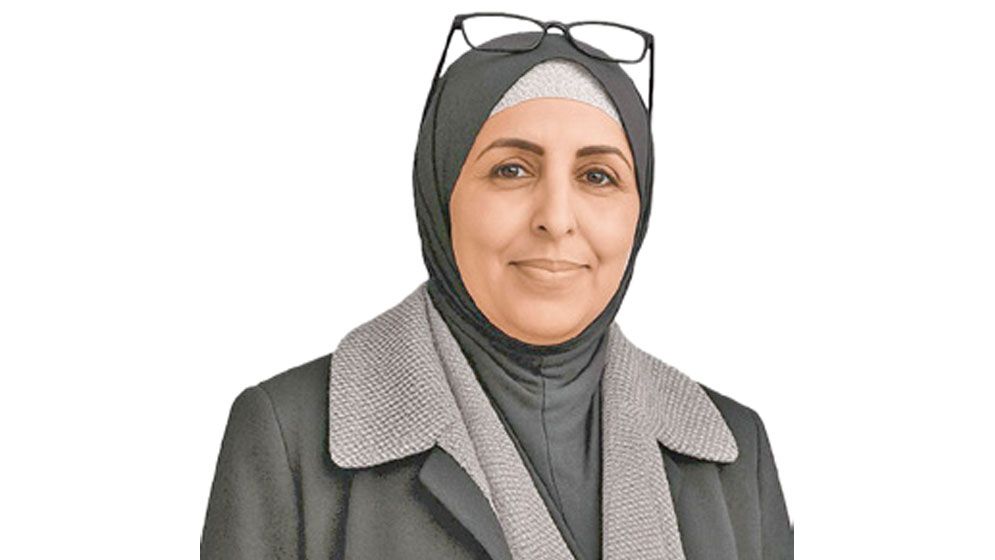
The writer is the Principal, New Horizon Crescent International School; ESL/FLE Teacher and Teachers’ Trainer