


 For all latest news, follow the Daily Sun's Google News channel.


PM Tarique invites Japanese firms to explore five sectors for investment
BSS, Tokyo
Published: 28 Oct 2026, 02:55 PM
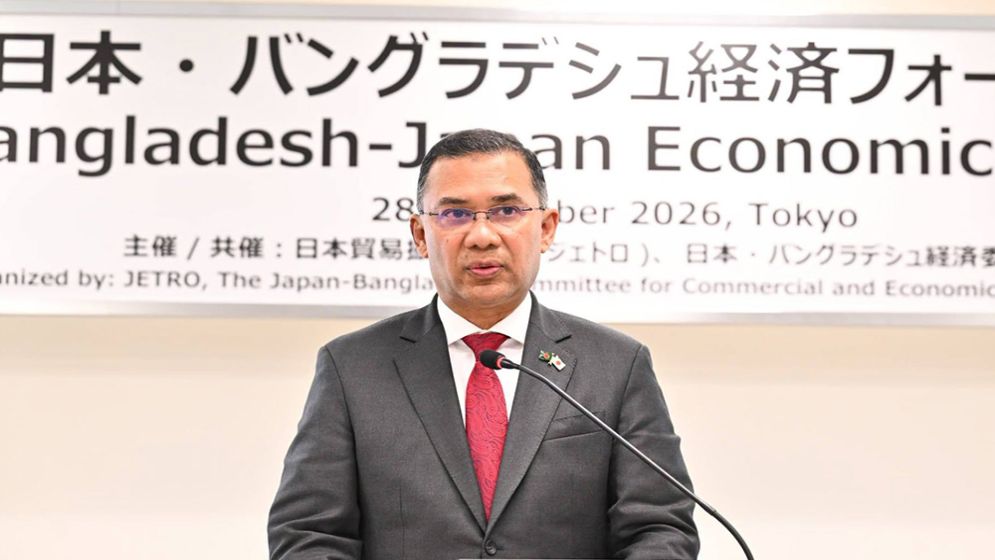
Prime Minister Tarique Rahman. Photo : PMO
Prime Minister Tarique Rahman today invited Japanese companies to explore investment opportunities in five priority sectors in Bangladesh-automotive manufacturing, energy, technology and space cooperation, rail and logistics, and agro-processing and manufacturing-to translate long standing bilateral ties into stronger trade and investment.
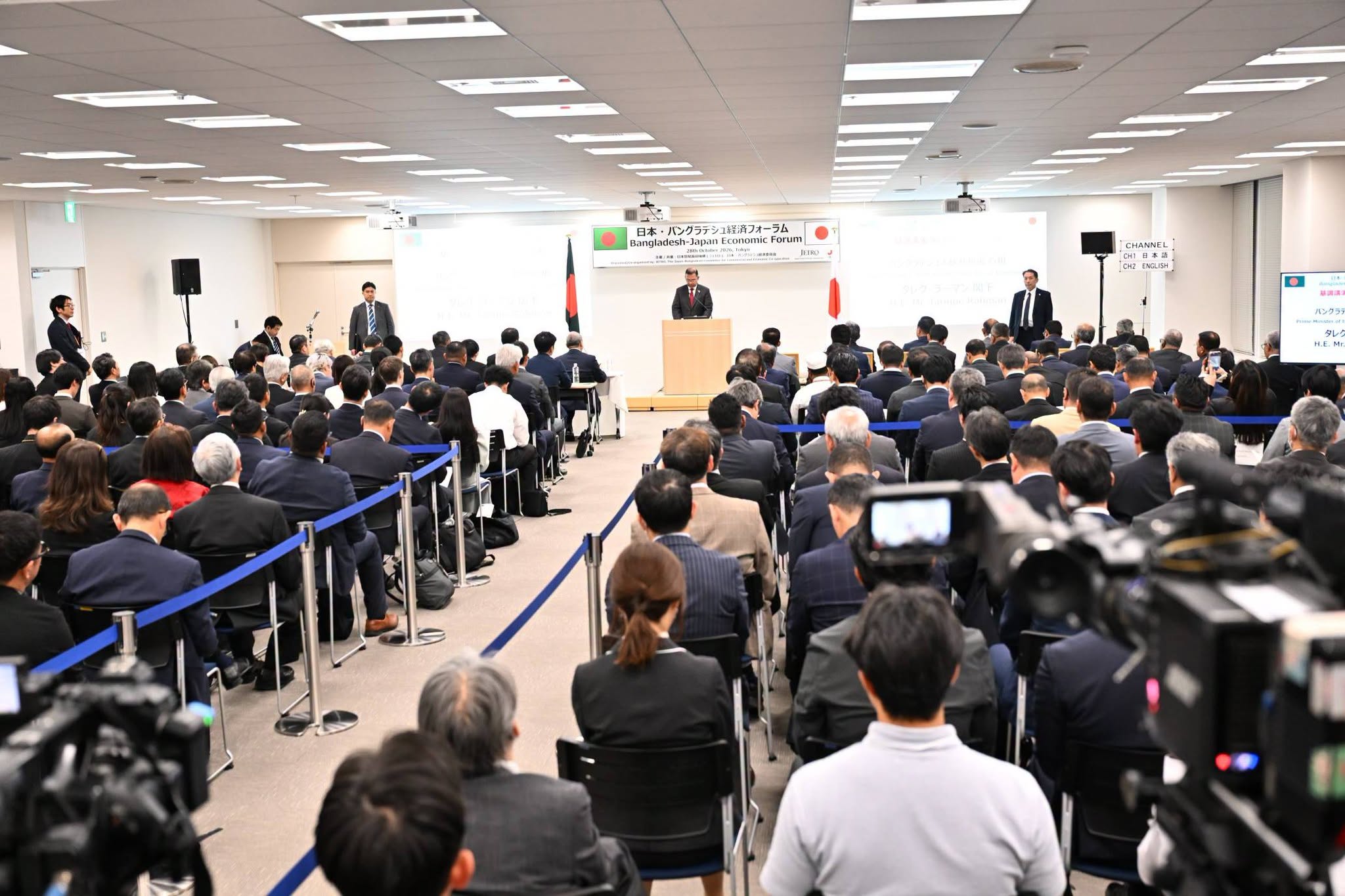
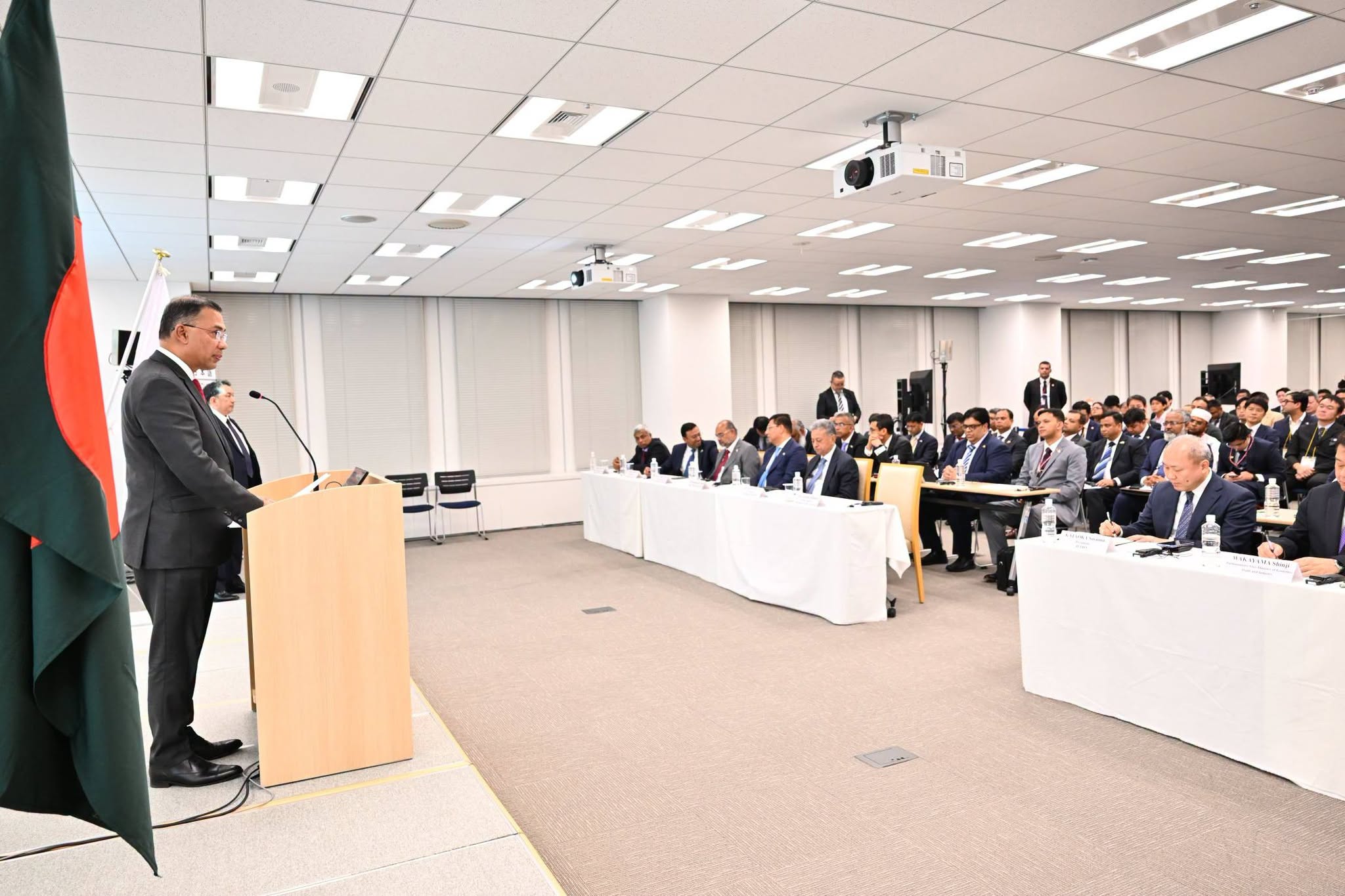
"I invite Japanese companies to explore five key areas for future cooperation and business opportunities for mutual benefits," he said while delivering the keynote speech at the Bangladesh-Japan Economic Forum Dialogue at JETRO Hall in Tokyo.
Highlighting the untapped potential of bilateral economic ties, the Prime Minister said around 350 Japanese companies operate in Bangladesh, while Japanese direct investment in the country remains below US$500 million.
"Our exports to Japan reached 1.36 billion US dollars and Bangladesh imported from Japan 2.16 billion US dollars, in the last fiscal year," he said, stressing the need to take the relationship beyond development cooperation and expand trade and investment.
Recalling the longstanding friendship between the two countries, Rahman said Japan was among the first countries to recognise Bangladesh in February 1972 and had remained its largest development partner for more than five decades.
He also recalled the contributions of his parents-- Shaheed President Ziaur Rahman and late Prime Minister Begum Khaleda Zia-- who visited Japan several times and helped deepen bilateral relations.
"Today, I want to speak about the next 30-50 years of partnership and collaboration," he said.
Tarique Rahman said Bangladesh and Japan had signed an Economic Partnership Agreement (EPA) this year, the first such agreement Bangladesh had concluded with any country. Under the agreement, 7,379 Bangladeshi products will enjoy duty-free access to Japan, while Japanese goods, including steel, automotive parts and electronic components, will receive preferential access to Bangladesh.
The Prime Minister highlighted Bangladesh's market of more than 180 million people, its young and energetic workforce with a median age of 27, and its growing middle class as major advantages for investors.
He said Bangladesh was expected to become one of the world's top 10 consumer economies by 2030.
Identifying automotive manufacturing as the first priority, Tarique Rahman welcomed Toyota's plan, conveyed earlier this month, to begin work on a vehicle manufacturing facility in Bangladesh, with full production targeted by 2029. He assured the company of the government's full support.
In the energy sector, he invited Japanese companies to invest in liquefied natural gas (LNG) infrastructure, efficient gas-fired power generation and renewable energy.
He said Bangladesh had short-, medium- and long-term plans for gas, electricity and the wider energy sector, and urged Japanese firms to explore the opportunities, noting that Bangladesh was working closely with JERA.
On technology and space cooperation, the premier said Bangladesh was planning to establish a Bangladesh-Japan Technology Park, including an innovation-focused information technology park covering artificial intelligence, cloud computing, robotics and electronics manufacturing, with the involvement of Japanese companies, universities and investors.
He said the two countries also had significant potential for cooperation in space technology. Bangladesh wanted to strengthen its space capabilities and was keen to explore mutually beneficial collaboration with Japanese institutions, drawing on Japan's experience in space science, technology and satellite engineering.
The Prime Minister identified rail and logistics as another priority, saying Bangladesh planned to build a nationwide elevated high-speed rail network connecting major cities, including Dhaka, Chattogram, Sylhet, Rajshahi, Khulna and Barishal.
"We plan to build a national network master plan, develop passenger and freight demand analysis, route prioritisation and feasibility studies. We will very much welcome Japanese institutions to invest in this critical and priority initiative," he said.
In agro-processing and manufacturing, the Prime Minister invited Japanese companies to explore food-processing opportunities in Bangladesh, which produces a wide variety of crops, fruits and vegetables.
"Japanese companies can explore opportunities in food processing in Bangladesh. We invite Japanese companies to invest in the Bangladesh Special Economic Zone at Araihazar. Sumitomo Corporation is developing this zone to Japanese standards," he said.
The Prime Minister said Bangladesh was working to address concerns raised by Japanese companies about reliable energy, efficient infrastructure, and predictable customs clearance and taxation.
"We have listened. We are working to address these concerns and deliver better outcomes," he said, adding, "I fully understand that businesses need certainty. Investors need confidence. Our job is creating the right environment to deliver both."