


 For all latest news, follow the Daily Sun's Google News channel.


Anyone who spends time watching farmers work the paddy fields across Bengal quickly learns the value of patience. Everyone out there knows the harvest is decided long before the rice actually ripens—it comes down to picking the right seed, tending the soil with care, and respecting the land. No one expects a field choked with weeds to suddenly produce golden grain.
Countries are not all that different.
Building a relationship between neighbours takes years, sometimes generations. Trust is fragile and painfully slow to rebuild once it has been neglected, while suspicion seems to grow on its own with very little encouragement. Right now, India and Bangladesh are at one of those critical forks in the road where the choices made today are going to shape the relationship for years to come.
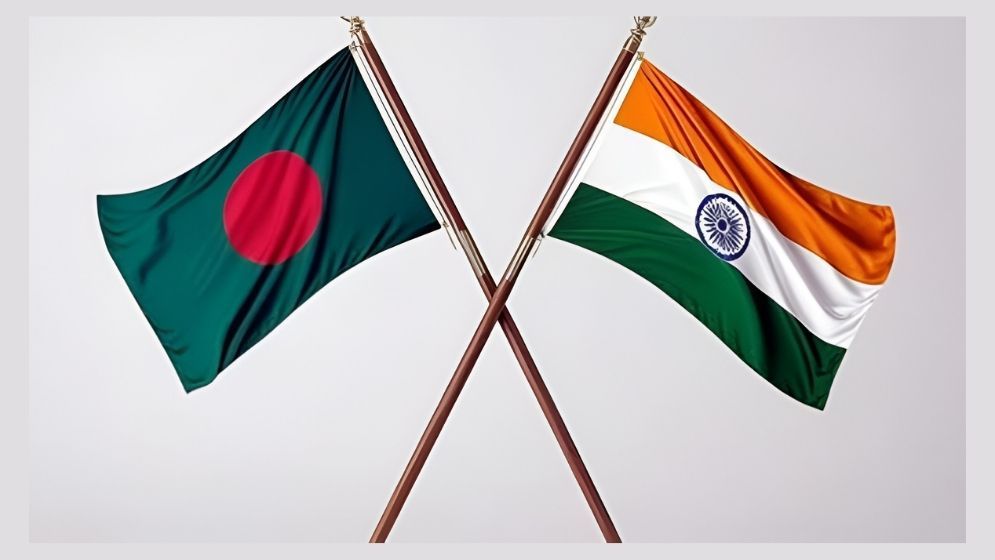
Recent diplomatic movements between New Delhi and Dhaka give us a real opening to shift the tone. Indian Prime Minister Narendra Modi’s public congratulations and phone call to Bangladeshi Prime Minister Tarique Rahman after the general election, along with inviting him to the BRICS Summit in New Delhi this September, go beyond standard diplomatic box-ticking. They give both governments a genuine chance to turn the page.
For a long time now, India and Bangladesh have tended to talk about each other rather than to each other. Political shifts in Dhaka, strategic jitters in New Delhi, and a constant churn of speculation have created an environment where rumours travel circles around actual diplomacy.
In both countries, one can always find political factions that benefit from keeping old wounds fresh. Every meeting gets framed as surrender. Every disagreement is treated as proof of a hidden agenda, and any gesture of goodwill is immediately dismissed as a cynical trick. Over time, suspicion has simply become the default language. That kind of narrative makes for loud headlines, but it doesn't make for good neighbours.
Bangladesh is not seeking anyone’s permission to be a sovereign nation, nor should it. The country was born out of immense sacrifice and has every right to pursue its foreign policy according to its own national interests.
Very few pairs of neighbouring countries share as deep a foundation for trust as India and Bangladesh.
They are tied together by geography, by rivers that completely ignore political boundaries, by shared literature, and by families torn apart by partition yet still bound by memory. They share centuries of commerce and culture that go back long before modern nation-states were ever drawn on a map.
Above all else, they are connected by 1971.
Friendship cannot survive if one side spends all its time counting yesterday's sacrifices while the other is busy rehearsing today's grievances. The past is there to give us confidence, not a sense of entitlement. It should light the way forward, not lock us in a cell.
Looking around the world, anyone can see proof that this kind of shift is possible.
When Charles de Gaulle and Konrad Adenauer pushed for reconciliation after generations of brutal conflict between France and Germany, people thought they were crazy. That political courage turned one of Europe's most dangerous rivalries into its sturdiest partnership.
Even Vietnam and the United States managed to find a way forward after a devastating war, deciding that while they did not need to erase their memories, they refused to let the past govern their future.
Those transformations did not happen because all their disagreements magically vanished. They happened because leaders had the guts to look past short-term political passions and imagine something better. South Asia has seen that kind of leadership before, too.
The strongest relationships between neighbours are not built on everyone agreeing on everything, but on mutual respect, trust, and the confidence to look beyond immediate political noise.
None of this is to pretend that tough issues do not exist. Water sharing, border management, trade imbalances, connectivity, and a fiercely competitive geopolitical backyard are going to test the relationship between Bangladesh and India again and again. Mature neighbours are not defined by having zero problems; they are defined by how calmly and confidently they manage them.
Governments have to be responsive to public opinion, but real statesmanship means rising above the noise. Diplomacy is bound to fail if every compromise gets branded as a sellout and every conversation is dismissed as weakness.
India and Bangladesh have one of those rare diplomatic windows—a chance not to rewrite history, but to write the next chapter together. It does not call for empty sentimentality and surrender. It just calls for confidence in sovereignty, democratic legitimacy, and the simple belief that two neighbours can respect each other without needing to march in lockstep.
The farmers of Bengal know that harvests are decided long before the grain ever makes it to the barn. They are decided the moment the first seeds hit the turned earth. The seeds are in the ground today. Tomorrow's harvest depends entirely on what India and Bangladesh choose to grow—or as the old saying goes — as you sow, so shall you reap.