


 For all latest news, follow the Daily Sun's Google News channel.


There need not be any conflict between modernising urban areas and preserving historic sites if policymakers understand the importance of protecting heritage to help younger generations connect with the past.
Unfortunately, in many countries, developers and architects often clash with archaeologists and conservationists over this issue. During my recent visit to China as part of an international media programme, I found the country to be a notable exception. I witnessed how heritage conservation can go far beyond protecting old buildings, revitalising communities, strengthening cultural identity and creating vibrant public spaces for future generations.
My first stop was the Wushan Riverside Ecological Zone in Nantong, where nature, history and modern planning blend seamlessly.
Once blighted by polluting chemical plants, rusting pipelines and gantry cranes that blocked views of the Yangtze River, the area has been transformed into an expansive green space where families now gather to relax and enjoy the riverside.
The transformation began in 2016, when local authorities demolished 65,000 square metres of illegal structures along the river. Today, it is one of Nantong's leading tourist attractions.
Standing beside the river, I was struck by the attention to detail, from restored stone pathways to traditional architectural features thoughtfully incorporated into the surrounding landscape.
The following day, I visited the Pingjiang Road Historical Block in Suzhou, where the experience became even more immersive. The centuries-old neighbourhood demonstrates how traditional Chinese urban life can be preserved despite the pressures of rapid modernisation.
Narrow stone-paved lanes run alongside tranquil canals, while whitewashed houses with black-tiled roofs retain the elegance of classical Jiangnan architecture.
What impressed me most was that Pingjiang Road is not a museum frozen in time. It remains a thriving neighbourhood where residents go about their daily lives alongside visitors exploring teahouses, handicraft shops, bookshops and cafés.
The restoration has preserved the district's original layout while allowing carefully managed commercial activity that supports both tourism and local livelihoods.
As I wandered through its winding alleys, I felt as though I had stepped into a living history book. Every bridge, courtyard and canal carried stories from generations past, yet the district never felt disconnected from the present.
Another memorable visit was to the Xiaoxihu Historical and Cultural District in Nanjing, where restoration has focused not only on buildings but also on preserving community life.
Rather than relocating long-time residents to make way for tourism, the conservation programme has sought to improve living conditions while maintaining the neighbourhood's traditional identity.
This people-centred approach left a lasting impression on me. Historic homes have been carefully restored, public utilities upgraded and community spaces revitalised without erasing the district's original character.
It reflected a philosophy that heritage belongs first to those who live with it every day. Visitors are welcome, but the neighbourhood remains an authentic place to live rather than an artificial attraction created solely for tourists.
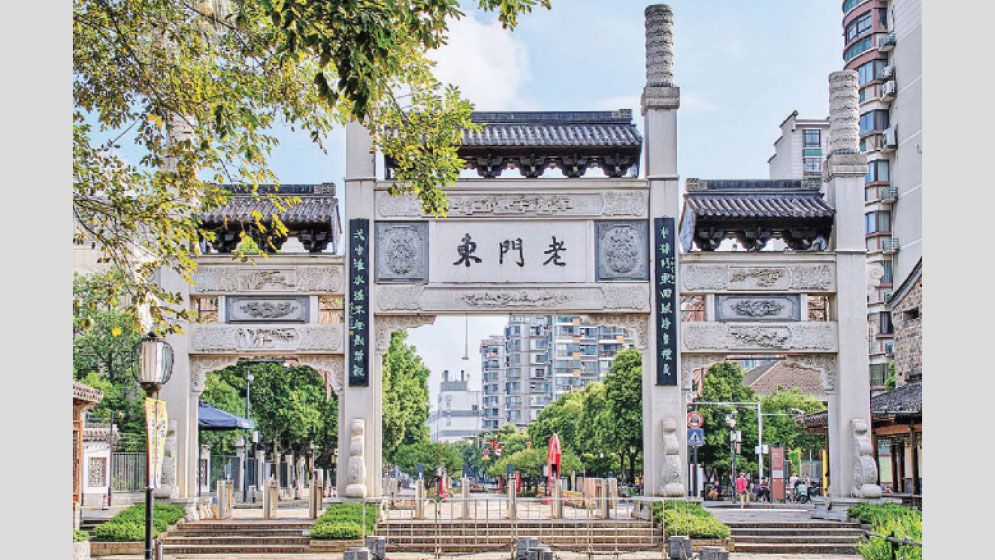
My final stop was the East Zhonghua Gate Historical Culture Block in Nanjing, another impressive example of heritage-led urban renewal. The district successfully combines restored historic buildings with cultural exhibitions, creative businesses and pedestrian-friendly public spaces.
Walking through the area, I noticed how traditional architecture had been carefully preserved while accommodating contemporary uses that attract both residents and visitors. Even Starbucks has an outlet there, but the multinational coffee chain has adapted its storefront to complement the area's architectural character.
The balance between conservation and innovation was particularly striking. Historic façades stand alongside modern cultural venues, creating an environment where the past and present complement rather than compete with one another.
Too often, restoration is seen simply as repairing ageing structures. In China, however, I witnessed a broader vision that integrates ecological sustainability, urban planning, cultural preservation and community development into a single strategy.
As a journalist from Bangladesh, I could not help comparing these experiences with the challenges facing many historic areas back home, including Panam Nagar in Sonargaon, Shakhari Bazar and much of Old Dhaka.
Across South Asia, countless heritage sites continue to suffer from neglect, unplanned urbanisation and inadequate conservation. China's experience demonstrates that with long-term planning, sustained investment and community participation, historic neighbourhoods can become engines of cultural pride, tourism and sustainable urban development.
I returned home with more than photographs and memories. I came away with a deeper appreciation that preserving history is not about resisting change; it is about ensuring that development respects the stories, traditions and identities that define a nation. China's restored heritage sites show how the past can continue to enrich the present while inspiring the future.