


 For all latest news, follow the Daily Sun's Google News channel.


True artistry speaks for itself, and, it’s authenticity that endures: Fahmida Nabi

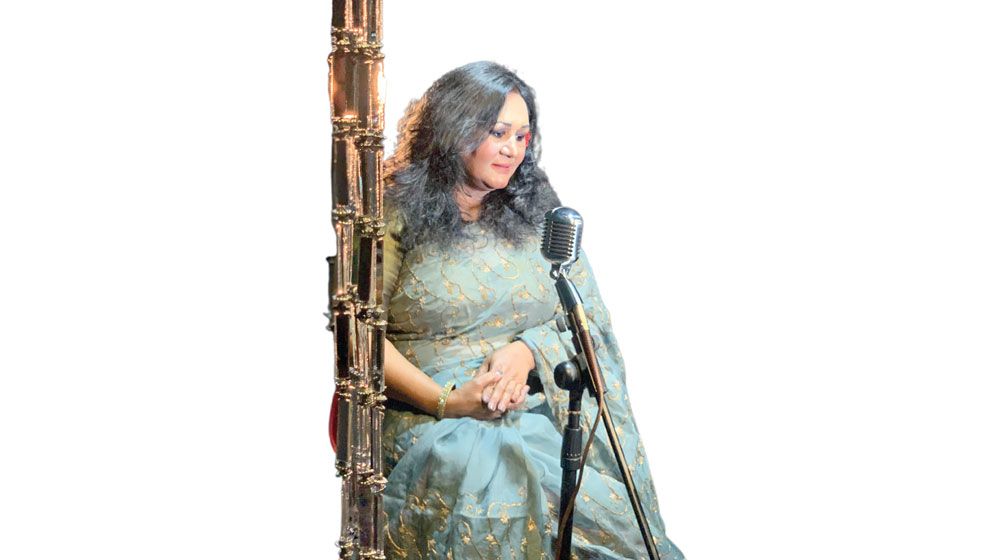
Fahmida Nabi is a noted vocalist of the country celebrated for her versatility and emotive voice. Emerging from a distinguished musical family, she is the daughter of legendary singer Mahmudun Nabi. Fahmida gained popularity through playback singing and modern songs, earning critical acclaim for her expressive style. The National Film Award-winning singer has established herself as a leading figure in the country’s music scene, contributing significantly to contemporary Bangladeshi music. Of late, the Daily Sun caught up with this versatile artiste-up close and personal-to know more about her new projects, the evolving landscape of music industry, and he perennial passion for music.
What are you currently working on? Could you tell us about your recent musical projects?
I recently returned to the country after spending two months abroad. In the meantime, I completed a few projects, while some work is still pending. But honestly, I often find myself questioning the foundation on which our music industry operates. Music is meant to be about creating new songs, but are we really doing that anymore? What I mostly see now is the recycling of old forms like ‘palagan’ and folk songs, presented in modern outfits and arrangements. While tradition is valuable, there is very little effort to create something original. The simplicity and beauty of songwriting seem to be fading. As an artiste, I feel incomplete if I’m not singing. Music is my passion, so I continue to compose and release songs on my own platform. It doesn’t feel like work; rather, it feels like I’m searching for something new all over again.
After such a long and successful career, how do you choose your projects these days?
When I take on a project, I tend to follow a familiar instinct shaped by my past work. If it’s a love song, I try to capture that emotion; if it’s about life, I reflect that feeling. Perhaps it has become a habit--I can’t easily step outside that rhythm.
Not every song resonates the same way. Some work beautifully, others don’t. I rely on my experience to decide whether a song can connect with my style. I try to blend new ideas with what I have learned over the years. However, one challenge is that I don’t have a dedicated producer. Whatever I do, I have to manage myself, which makes the process both demanding and deeply personal.
What are your thoughts on the current state of the music industry?
We, as senior artistes, still have a lot to offer, but many young performers are not interested in learning. There is a growing desire to become celebrities rather than true artistes. But an artiste is simply an artiste--celebrity status is a separate idea that has become trendy. This obsession with fame often overshadows the essence of music. It’s disappointing, but I don’t let that discourage me completely. I still want to believe that something meaningful can emerge. Hope is importan--without it, there is no reason to continue creating.
How has the industry changed since you began your career?
There have been many changes. In our time, music had authenticity and originality. Songs like “ Ke dilo Piriter Bera Lichhur Bagane” carried the essence of palagan. Today, while the presentation has changed, originality is often missing. Old songs are repackaged with modern beats and styles, but that doesn’t make them new. Instead, it confuses audience and weakens the culture of true creation. At the same time, the industry often promotes those who lack originality while ignoring those who genuinely want to create something meaningful. This cycle has continued for years.
Do you think the value of senior artistes in the industry is declining?
Senior artistes have always been somewhat undervalued in our industry, and that continues today. Ironically, today’s young artistes will one day become seniors themselves, yet the lack of respect persists. In other countries, senior artistes are honoured and supported through structured systems like royalties. Their work continues to generate value even after their demise. Here, however, we struggle with basic recognition. There is a tendency to pull others down rather than uplift them, and that creates a negative environment.
How important are musical training and discipline for a singer in today’s fast-paced industry?
Discipline is essential in every field, and for an artiste, it is even more important. While artistes may have unconventional lifestyles, their dedication to their craft must remain strong. Even a small mistake in a song can affect the entire piece. So discipline is not optional--it is necessary. An artiste may think differently from others, but that doesn’t mean they can ignore structure and responsibility. In fact, discipline helps shape creativity and sustain it over time.
Is there any unfulfilled musical ambition or genre you still wish to explore?
As human beings, we always want to do more-that’s what keeps us alive. If I ever feel completely fulfilled, it would mean I have stopped growing, and I don’t want that. I still have many dreams, but it’s difficult to find the right environment to realise them. There is too much clutter and ego in the industry, which makes collaboration challenging. Ego is one of the biggest obstacles for artistes. Without mutual respect and understanding, meaningful work becomes difficult. Still, I hold on to my dreams and the desire to create something new.
What’s your advice to new-generation singers?
Learning is something that must come from within. No one can force it. Challenges help people grow, and artistes must be willing to learn continuously. It’s important to understand respect, love, and independence. True humility is not something you can show externally--it has to come from within. Without that sincerity, talent cannot fully develop. Art comes from the heart. If it doesn’t, it won’t connect with people. I respect those young artistes who are dedicated and sincere. However, for those who ignore talent and focus only on superficial success, I have little to say. True artistry speaks for itself--and in the end, it is authenticity that endures.