


 For all latest news, follow the Daily Sun's Google News channel.


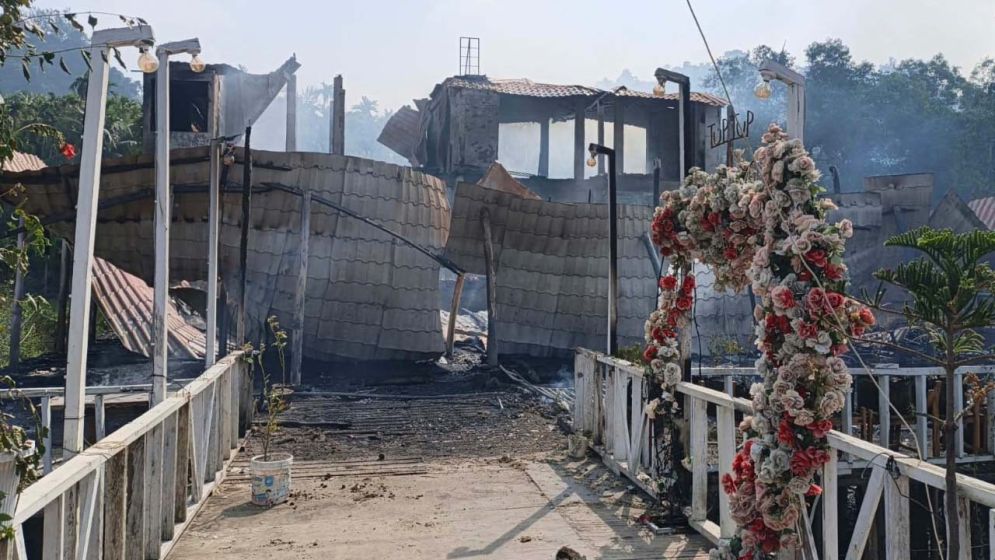
On Saturday morning, a fire broke out at Tuptup Resort, located beside the Marine Drive road near Patuartek Beach in Ukhiya, Cox's Bazar. A large portion of the resort was consumed by the flames. Later, 10 bodies were recovered from the scene. These deaths were unwanted; these deaths are deeply painful. This tragic accident in Cox's Bazar has cast a pall of grief not only over Cox's Bazar but across the entire country. The whole nation is stunned in grief. No consolation is enough for the families who have lost their loved ones. This tragedy will remain an everlasting nightmare for these families. Yet, these deaths have opened our eyes. So many lives lost have shown just how unprotected and terrifyingly vulnerable this tourist city really is. For a long time, it has been said that Cox's Bazar is dying. Due to unplanned urbanization, illegal structures, environmental pollution, and the setting up of unauthorized shops, the beauty of Cox's Bazar has been ruined. This magnificent beach has now lost its grace, charm, and vitality.
Cox's Bazar, the country's primary tourist destination with immense potential, boasts the world's longest natural sea beach. Every year, hundreds of thousands of domestic and foreign tourists rush here to enjoy the exquisite beauty of the sea. In recent years, however, one complaint from tourists has surfaced repeatedly—that in Cox's Bazar, the presence of commercialization is far more visible than nature. Some even say Cox's Bazar has literally become a "bazaar" (market), with nothing left of the sea. Consequently, anyone might wonder: is Cox's Bazar gradually transforming from a coastal town into a city of markets? Yet, no one paid heed to these complaints from tourists.
Going to Laboni, Sugandha, and Kolatoli points of Cox's Bazar beach reveals a different picture altogether. Alongside the ocean waves, one sees rows of temporary shops, mobile vendors, beach bikes, horses, photographers, and various other commercial activities. Many tourists complain that it has become difficult to sit quietly for a moment and enjoy the sea. From a distance, it looks like a market to anyone. This is now the stark reality.
It is not just the beach; the town's roads tell the same story. During the tourist season, long traffic jams are a daily occurrence in Kolatoli, Sugandha, and Jhautala areas. Tourist suffering is increasing due to unplanned parking, sidewalk encroachments, and an excess of vehicles. According to many, although the number of tourists has increased, urban management and infrastructure development have not progressed proportionately. As a result, those visiting during long holidays or festivals fall victim to immense harassment.
Cox's Bazar's primary assets are its sea, sandy beach, and natural environment. But unplanned commercialization, noise pollution, plastic waste, and unregulated activities are gradually damaging the beach's environment. At the end of the day, plastic bottles, food wrappers, and other trash are seen strewn across various spots on the beach. This waste not only spoils the aesthetic beauty but also poses a severe threat to marine biodiversity.
Popular sea beaches around the world have designated zones for commercial activities. At the same time, they offer tourists a tranquil environment, clean beaches, and proper civic amenities. In Cox's Bazar as well, modern planning for beach management, dedicated zones for hawkers, effective waste management, adequate parking, and long-term initiatives to reduce traffic congestion are urgently needed.
In the nearly four-square-kilometer area adjacent to Cox's Bazar beach, high-rise buildings have been springing up in an unplanned manner. Over the past three decades, more than 700 multi-story buildings have been constructed in this Ecologically Critical Area (ECA). These buildings range from 4 to 14 stories high, and include 537 residential hotels, resorts, and guesthouses.
According to data from the Cox's Bazar office of the Department of Environment, out of nearly 700 buildings, only 14 star-rated hotels have a Sewage Treatment Plant (STP). Only 45 possess environmental clearance certificates, while the rest lack environmental approval entirely.
Since the majority of hotels do not have STPs, hotel waste, plastic, and sewage are draining directly into the sea. There is not even a dumping station for garbage disposal in the municipal area. Along both sides of the 84-kilometer-long Cox's Bazar–Teknaf Marine Drive, the trend of building construction has escalated over the last decade. As a result, coastal tamarix (jhau) forests are being cleared, destroying the breeding habitat for red crabs and mother sea turtles.
Anarchy and lawlessness are rampant in Cox's Bazar. Saturday's accident proved that the greed for profit and the irresponsibility of a few individuals have turned Cox's Bazar into a death trap.
This past April, the Department of Environment issued a notice to Tuptup Restaurant and Resort, located along the Marine Drive in Cox's Bazar, to halt operations carried out without environmental clearance. When they failed to comply with the directive, they were fined 100,000 BDT. Since April of this year, the Department of Environment issued notices at various times to 26 other resorts and 10 restaurants for operating in the Marine Drive area without environmental clearance. Among them, 14 resorts were fined for disobeying the notices, and lawsuits were filed against two resorts. Although notices were served to the remaining 10, no action was taken against them. In 1999, the government declared the beach area adjacent to Marine Drive an Ecologically Critical Area (ECA). Tuptup and many other resorts were built within these ECA zones. Whenever steps are taken to shut down these resorts, officials from the Department of Environment face various forms of political pressure. The Cox's Bazar Development Authority stated that there are another 145 hotels, motels, and resorts on both sides of the 80-kilometer stretch of Marine Drive from Kolatoli to Teknaf. Although these resorts built in the Marine Drive ECA zone have been fined at various times, their operations were never shut down.
In this manner, by flouting the law, Cox's Bazar is being continuously killed. This tragedy has shown just how unsafe Cox's Bazar has become for tourists. These deaths are a source of profound grief for us. We must learn a lesson from this tragic accident. If we want to save Cox's Bazar, action must be taken immediately. We hear various assurances at various times about saving Cox's Bazar. We hear of many grand plans. But the chaotic state Cox's Bazar is in right now is proven by these deaths. These deaths have warned us that if Cox's Bazar is to be saved, there cannot be a moment's delay.
Illegal structures must be removed immediately. To save the biggest advertisement of Bangladesh's tourism, all irregularities in this city must be eradicated with a firm hand. Will we finally wake up after the deaths of ten tourists?
Audite Karim: Author and Playwright
Email: [email protected]