


 For all latest news, follow the Daily Sun's Google News channel.


Govt to drill 150 wells, set up new LNG terminals to address industrial gas crisis: PM
2D and 3D seismic surveys to be conducted along total 8,700 line kilometres; tenders asked from foreign contractors interested in exploring offshore fuel reserves
Daily Sun Report, Dhaka
Published: 09 Sep 2026, 07:12 PM
The BNP
government has undertaken major plans to resolve the persistent gas supply crisis in the industrial sector by significantly increasing domestic production and setting up a new terminal for LNG imports.
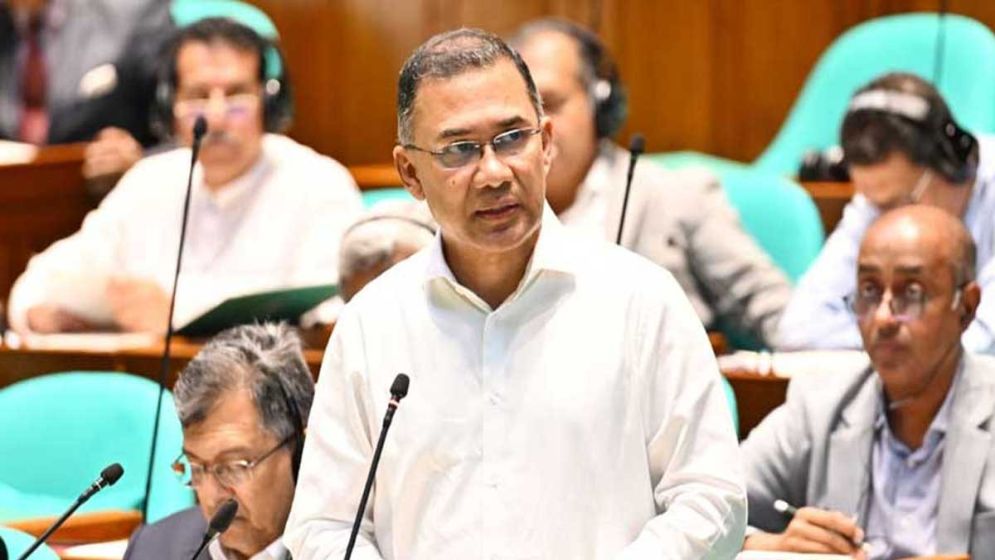
Prime
Minister Tarique Rahman outlined the plans in a question-answer session in the
parliament on Wednesday after treasury bench lawmaker Sultana Ahmed raised a
question over the country’s gas supply situation.
By 2030-31,
the government plans to drill 150 new wells, and also conduct exploration works
for discovering new gas reserves.
As per the plans, along 4,500 line kilometres 2D seismic surveys will be conducted and along 4,200 line kilometres 3D seismic surveys will be conducted to discover gas reserves by 2030-31, the premier said.
Furthermore, the government on 24 May floated tenders for attracting foreign companies to explore and extract natural gas and crude oil supplies in the 26 offshore blocks. The deadline for tender bid submission is November, Tarique told the parliament.
For
exploring onshore reserves, the government has begun works for drafting the “Bangladesh
Onshore Model PSC-2026.”
When it comes to boosting LNG supplies, relevant works have
already been started to establish a new floating terminal in Kutubjom union of
Moheshkhali upazila, Cox’s Bazar and a land-based termina in Matarbaril of the
upazila.
Regasification from the two terminals would begin by 2028
and 2030, respectively, the PM said.
The government is also exploring the probability of setting
up another floating LNG terminal near the Payra or Mongla port or any other
part in the country’s southeast.
The government has taken plans for utilising the gas
reserves in the island district of Bhola, Tarique said.
Bringing the gas to the mainland via pipeline would take
seven years, and therefore, to avoid the delay, the government has decided to use
Bhola’s gas inside the district itself.
Works are already underway for setting up gas-based
industries in the district, Tarique said.
The government would also establish a fertiliser factory and
a 500-megawatt power plant in the district. A feasibility study will also be
done to determine the prospects of bringing Bhola’s gas to mainland factories in
the form of LNG, Tarique told the parliament.