


 For all latest news, follow the Daily Sun's Google News channel.


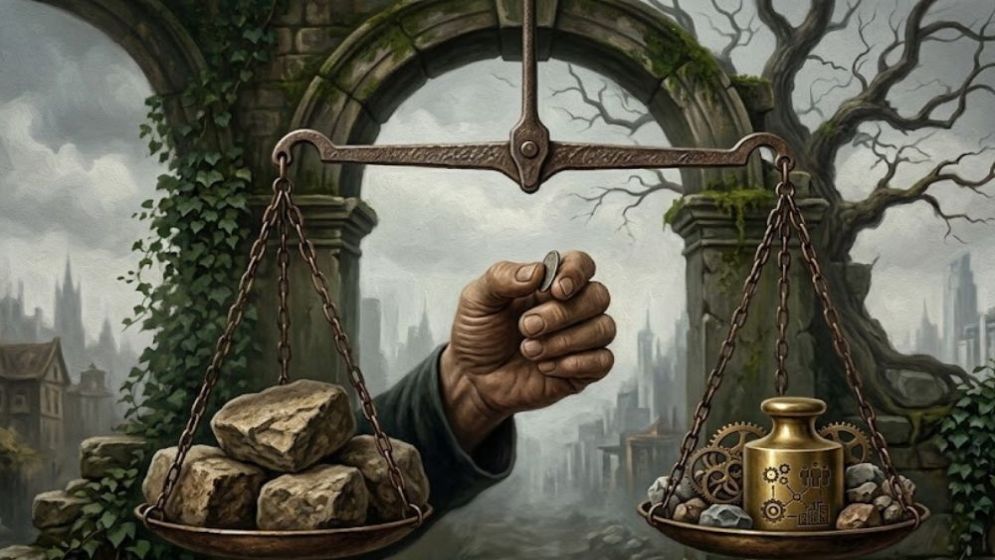
Photo: AI
Crime must be punished. Irregularities must be investigated.
The state has every right to open a company’s books, scrutinise every page of its accounts and take action if laws have been breached. That is only natural.
But how justified is it to try to strangle an entire organisation simply to settle a personal grudge? Can allegations against one individual be weighed on the same scale as the future of hundreds of thousands of people employed by his organisation? If the owners of an industrial group are disliked, should an entire industrial enterprise—and, ultimately, the national economy—have to pay the price?
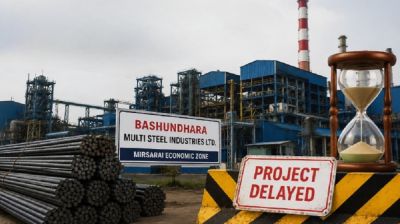
These are the questions that have repeatedly crossed my mind after visiting Safwan Bashundhara Global’s subsidiary, Bashundhara Multi Steel Industries Ltd.
What I saw was a massive industrial venture lying neglected before my eyes.
What was missing? Machines, sheds, manpower and raw materials were all there. Yet amid all these necessities, one crucial thing was absent: production.
An area that should have been buzzing with machines and workers was eerily silent. Machinery that should have been running continuously lay idle.
Weeds and creepers had climbed over machines left exposed to sun and rain. Does this tell us only about the financial condition of an industrial enterprise? No. It also tells the story of lost time and lost opportunity.
But why did this happen?
The answer has been discussed in detail in two reports titled ‘Tk7,000cr steel project caught in interim govt’s crosshairs’ and ‘The cry of idle machinery’. I do not want to repeat all those details here. But after listening to complaints from people involved in the project, examining documents and visiting the site myself, I was left with a clear impression that this catastrophe was the outcome of what appears to have been a coordinated and far-reaching conspiracy.
And at the centre of it, two names repeatedly emerge: former chief adviser to the interim government Dr Muhammad Yunus and then Bangladesh Bank Governor Dr Ahsan H Mansur.
When an entrepreneur invests thousands of crores of taka to build a factory, the state will collect taxes from him. It will formulate regulations and enforce them. It will impose environmental conditions. If necessary, it will hold him accountable. But alongside all this, it has an unquestionable responsibility to protect his investment and provide the necessary infrastructure.
That is not a favour. It is a responsibility.
The very purpose of establishing special economic zones was to make investment easier—to create an environment where an entrepreneur would not have to knock on one government office for gas, another for electricity and yet another for water. Nor should an investor have to waste years moving from one desk to another.
Yet at the country’s largest National Special Economic Zone in Mirsarai, Chattogram, I saw exactly the opposite.
BSMIL had to wait for the utilities that were supposed to be ensured, even after paying for them. Eventually, it had to arrange them at its own expense and under its own responsibility. Ironically, other industrial enterprises later benefited from those utility facilities built with Bashundhara’s money.
In other words, a domestic entrepreneur took upon himself a responsibility that should have been shouldered by the state.
And what did he get in return?
That may sound like an uncomfortable question today. But the truth cannot remain buried forever.
An industrial group that spent its own money to make up for the state’s shortcomings saw one of its mega-projects trapped in a web of policy decisions. A policy that, it appears, was designed to settle a personal score. Financing was held up through banking complications. Machinery remained stranded at the port for a prolonged period. Costs kept mounting by the second.
What is particularly striking is that Bangladesh Bank reversed the position that had created the major complications 13 months later, following a change of government.
So who will pay the price for those 13 months?
This is not merely a question of money.
Financial losses are relatively easy to calculate. How much was paid in demurrage? How much interest accrued? By how much did the project cost increase? Put the figures into a calculator and you can arrive at an answer.
But which calculator can measure the value of lost time?
If a factory cannot begin production for two or three years, it is not only the entrepreneur who suffers. The people who were supposed to work there remain unemployed. Products that were supposed to be manufactured domestically are not produced. The government loses expected tax revenue. Import substitution does not take place. Foreign currency is not saved.
So is this loss borne only by BSMIL?
There is plenty of criticism of large industrial groups in Bangladesh. And there should be. The bigger the institution, the greater its responsibility. Large companies should be more transparent and subject to greater accountability. When they violate the law, the state should be even more uncompromising in taking action against them.
But firmness and vindictiveness are not the same thing.
Enforcing the law and throttling an industrial enterprise are two entirely different matters.
If there are allegations against an individual, they should be investigated. If a crime is proven, the person should be punished. But if, using those allegations as a pretext, the normal operation of a productive enterprise is obstructed, the question inevitably arises: who was actually punished?
The owner? The workers? Or the wider economy of the country?
Bashundhara is a large industrial group with considerable financial capacity. That is why, despite suffering such blows, it has continued trying to survive. It has stood by its employees and protected them. Even after seeing a project worth thousands of crores of taka lying idle, it has not given up.
But what would have happened if the same thing had happened to a medium-sized entrepreneur?
Imagine an entrepreneur who takes a bank loan, invests his savings or mortgages family property to build a factory. Just before production begins, his financing is blocked. His machinery remains stranded at the port. Bank interest rises every day on one side, while demurrage accumulates on the other.
How long could he survive?
Perhaps all the achievements of his lifetime would have been wiped out before the factory wheel had even begun to turn.
During the tenure of the interim government, we saw few visible major initiatives aimed at strengthening the private sector. Yet a large part of Bangladesh’s economy rests on the private sector. It is one of the country’s biggest sources of employment and a major contributor to government revenue.
A government may politically favour or oppose someone.
But can the state afford to take sides for or against an industry?
For the state, an entrepreneur’s political identity should matter far less than his investment. What should matter is how many people are employed in his factories, how much revenue they generate and how much foreign currency the country saves through domestic production.
Because governments remain in office for five years.
Industries remain for decades.
The issue of foreign investment is an even greater concern.
We frequently say Bangladesh needs foreign investment. We invite foreign investors to invest here. We organise conferences and highlight the opportunities and incentives available to them.
But what will a foreign investor look at first?
My assumption is that he will first examine how the state treats its own investors.
If a Bangladeshi entrepreneur invests thousands of crores of taka and is subsequently thrown into uncertainty because of a change in government policy, a foreign investor will certainly take note. For him, no government in Bangladesh is permanent.
What is permanent is the state—and the predictability of its policies.
That is why the biggest prerequisite for investment is not tax exemption.
It is not even cheap land.
The most important requirement is trust.
And once that trust is broken, it cannot be restored simply through grand announcements and publicity.
That is why the Bashundhara Multi Steel case deserves an impartial review.
What happened because of whose decision? What was the legal and economic basis of those decisions? If a decision is subsequently reversed, how should responsibility be determined for the losses caused by the earlier decision?
These questions are not important only for Bashundhara.
They matter for the future.
Because if it is Bashundhara today, someone else could be next tomorrow.
If industrial policy changes with the political winds, who will make long-term investments? On what assurance will an entrepreneur commit thousands of crores of taka to build a factory?
As I was returning from Mirsarai, one thought kept coming back to me.
It takes years to build an industry. It takes the labour and sweat of thousands of people. It requires engineering, capital and courage.
But it can take only one decision to bring it to a standstill.
And that is why, standing before Bashundhara Multi Steel, I do not feel like asking this question only on behalf of one company.
I want to ask it on behalf of the country’s industries, its entrepreneurs and its future investors:
Who bears responsibility for this?