


 For all latest news, follow the Daily Sun's Google News channel.


Govt expects Payra Port to be fully operational by year end: Minister
BSS, Sangsad Bhaban
Published: 22 Apr 2026, 06:31 PM
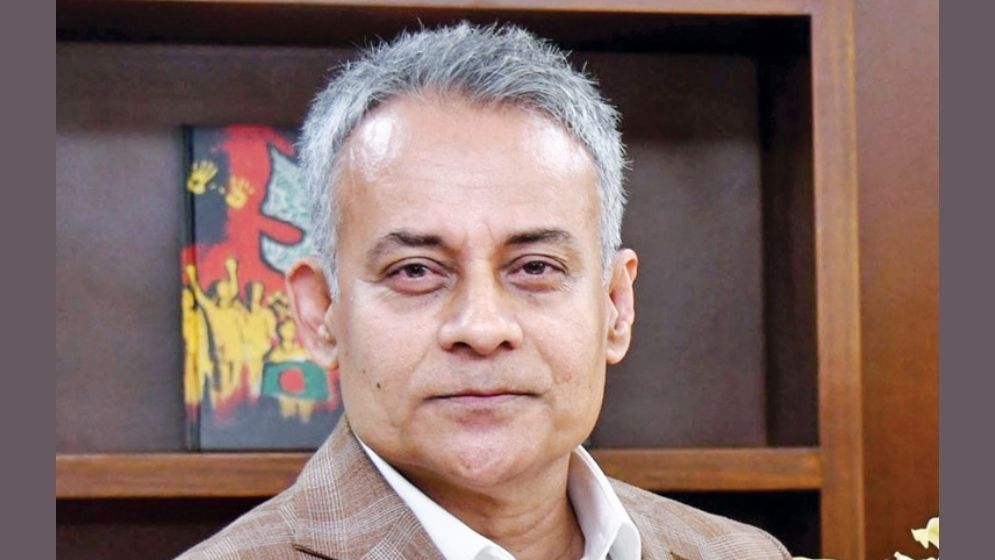
Shipping Minister Shaikh Rabiul Alam. File Photo
Shipping Minister Shaikh Rabiul Alam has said the government has taken comprehensive steps to make Payra Port fully operational by this year as core activities are expected to be completed by December next.
Replying
to scripted question in the House on Wednesday from ruling party lawmaker ABM
Mosharraf Hossain (Patuakhali-4), Rabiul said a techno-economic feasibility
study of the port was conducted in 2015 by UK-based consultant HR Wallingford,
marking the first initiative to build a seaport in Bangladesh after
independence.
He
said land acquisition and rehabilitation of affected people began in 2016,
while two major long-term projects—construction of the port’s first terminal
and development of road and bridge connectivity—were undertaken in 2019.
“The
two projects are scheduled for completion in July and December this year
respectively,” he said.
The
Minister said construction of a 1,180-metre four-lane bridge over the
Andharmanik River and a 6.35-kilometre six-lane terminal access road connecting
the port to the Dhaka–Kuakata highway is now nearing completion and is expected
to be finished by December 2026.
“Once
these works are completed, the port is expected to go into full operation by
end this year,” he added.
However,
he noted that the Rabnabad Channel—the main navigational route to the
port—currently lacks sufficient depth for commercial vessels. Due to high
sedimentation, continuous dredging of the channel will be required, he said.
The
minister said, the government is considering a two-year project for dredging
and procurement of two trailing suction hopper dredgers (TSHDs), he added.
Highlighting
the significance of the port, the minister said around 96% of the country’s maritime
trade is currently handled by Chattogram Port.
To
manage the growing volume of foreign trade and ensure a strategic alternative
in emergency situations, development of Payra Port is essential, he said.
He
added that two coal-based power plants with a combined capacity of 2,640
megawatts have already been established in the Payra area.
It’s
necessary to make the port operational for handling of coals imported for the
power plants, he said.
The
port is also expected to accelerate industrialisation, employment generation
and socio-economic development in the country’s south-central region, he said.
Rabiul
said under infrastructure development, 5,900.99 acres of land have been
acquired and rehabilitation work is in its final stage.
Besides,
a master plan has been prepared jointly by Royal HaskoningDHV of the
Netherlands and BUET. Seven support vessels have been procured, and
construction of 100,000 square metres of warehouse facilities has been
completed, he said.
Under
the first terminal project, a 650-metre jetty and a 3.25 lakh square metre
backup yard have been completed, allowing berthing of three 200-metre vessels
simultaneously.
He
said a 100-metre service jetty, container freight station, car yard, and
necessary cargo-handling equipment have also been installed. In addition,
terminal buildings, substations, and communication network infrastructure have
been set up, along with a Vessel Traffic Management System (VTMS).
Regarding
operational readiness, the Minister said customs and shipping facilities have
been established, while a smart access management system has been introduced in
compliance with the ISPS Code.
“A
gazette to impose a reasonable levy on vessels to meet dredging costs is now at
the final stage,” he said.
The
Minister further said several projects are awaiting approval, including
maintenance dredging of the Rabnabad Channel and procurement of two hopper
dredgers, construction of housing and utility facilities for port officials and
staff, and development of an ICT-based port operating system.
He
added that following implementation of the dredging project, the port is
expected to handle vessels up to 220 metres in length, 10.5 metres draft and
45,000 metric tonnes capacity by 2027–28.