


 For all latest news, follow the Daily Sun's Google News channel.


US-Bangladesh trade deal causes concern for Indian apparel exporters
The Hindu, Tamil Nadu
Published: 10 Feb 2026, 09:15 PM
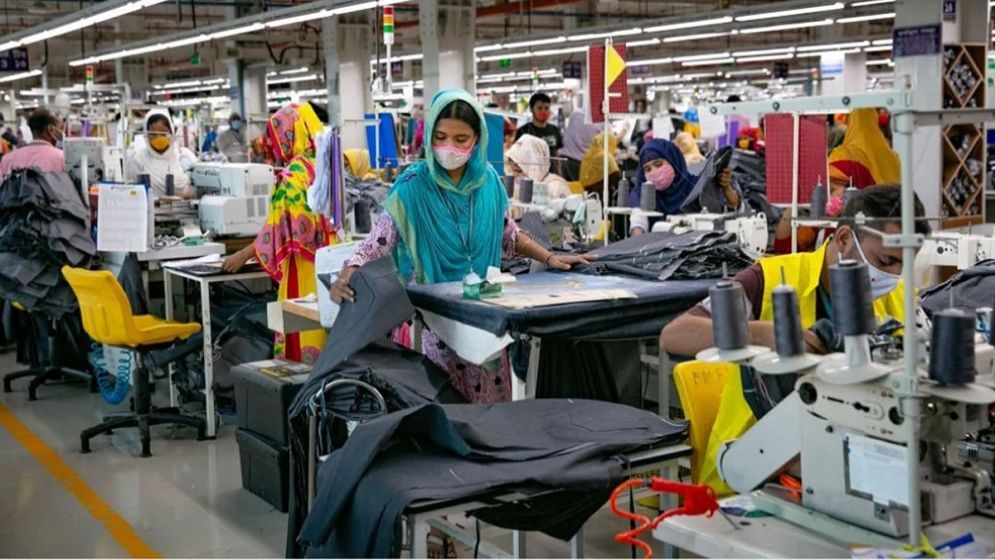
File Photo: Collected
The US-Bangladesh Agreement on Reciprocal Trade has led to
concerns among Indian textile and apparel exporters who were looking forward
for a competitive advantage over Bangladesh with the 19% tariff for Indian
goods in the US because of the interim trade deal between India and America.
According to the US-Bangladesh Agreement on Reciprocal
Trade, “The United States commits to establish a mechanism that will allow for
certain textile and apparel goods from Bangladesh to receive zero reciprocal
tariff rate. This mechanism will provide that a to-be-specified volume of
textile and apparel exports from Bangladesh can enter the United States at this
reduced tariff rate, but this volume shall be determined in relation to the
quantity of exports of textiles, eg US produced cotton and MMF textile inputs,
from the US.”
India exported $1.47 billion worth cotton yarn (570 million
kg) to Bangladesh, which is the biggest destination for Indian yarn, in
2024-2025. It shipped 12-14 lakh bales of cotton to Bangladesh last year.
Almost 20% of Bangladesh’s garment exports and 26% of India’s cotton apparel
exports are to the US.
“I fear that the immediate impact will be on Indian cotton
yarn as Bangladesh can buy US cotton and spin at its textile mills,” said
Chandrima Chatterjee, secretary general of the Confederation of Indian Textile
Industry.
“A Bangladesh exporter can use 10% US cotton and claim that
he has used 100% US cotton. How will the US determine traceability of the raw
material? As Bangladesh is very strong in apparels, we may stand to lose,” said
K.M. Subramanian, president of the Tiruppur Exporters Association.
The US will see more import of Bangladesh garments that
makes both, knitted and woven products. India will lose its competitiveness in
100% cotton products such as T-shirts and tops in women’s wear, said Sanjay K
Jain, chairman of the Indian Chamber of Commerce national expert committee on
textiles.
But, there are stakeholders who say the impact may not be
much.
The textile mills in Bangladesh are facing a crisis because
of electricity issues. Bangladesh should make it competitive to buy cotton from
the US and spin the yarn, said a Coimbatore-based garment exporter.
“Bangladesh does not grow cotton or produce manmade fibre.
It has to buy MMF yarn or cotton from the US for the reciprocal tariff of 19%
to be waived. But, the MFN rate will continue. The time taken to receive the US
cotton and the transport and storage costs should be taken into consideration.
Further, not all products can be made from American cotton. So, the product mix
should change and supply chain should be realigned in Bangladesh. This will not
be an overnight change. It will all take time and we should see how practical
it is. This is going back to the quota regime that existed before 2000,” said
Siddhartha Rajagopal, executive director of the Cotton Textiles Export
Promotion Council.
According to A Sakthivel, chairman of the AEPC, “There is an
Executive Order by the US government issued last April that says that the ad
valorem rates of duty applies only on the non-US component of a product, when
there is at least 20 % value addition. We will appeal to the Indian government
to ask for a provision similar to the one given to Bangladesh for Indian
apparel exporters too,” he said.