


 For all latest news, follow the Daily Sun's Google News channel.


No heavy metals found in fortified soybean oil samples: Minister
BSTI to expand nationwide surveillance to curb adulteration
Daily Sun Report, Dhaka
Published: 15 Oct 2026, 12:00 AM
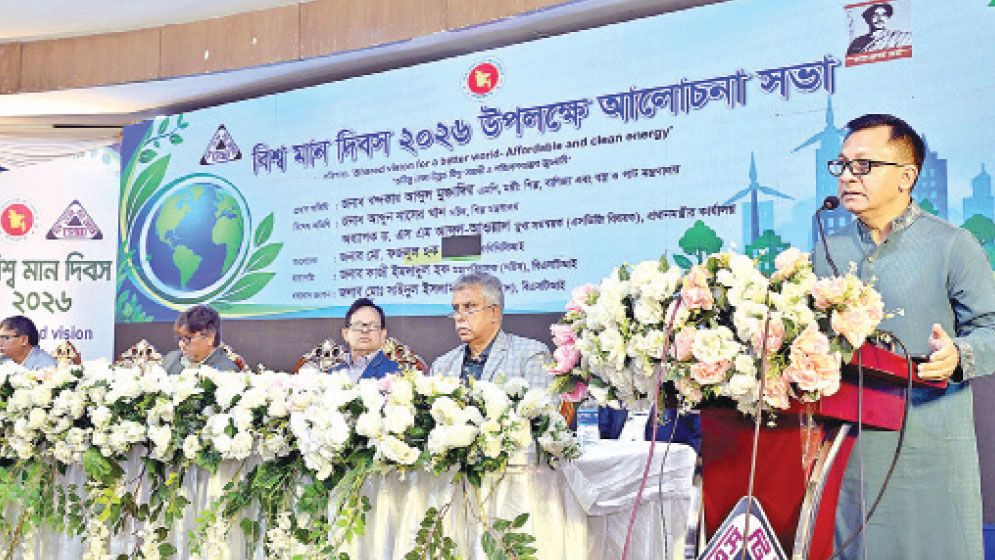
Industries Minister Khandakar Abdul Muktadir speaks at a discussion marking World Standards Day 2026 at the Officers’ Club in Dhaka on Wednesday. Photo: PID
The Bangladesh Standards and Testing Institution (BSTI) found no heavy metals in 193 samples of fortified soybean oil collected from the open market, Industries Minister Khandakar Abdul Muktadir said on Wednesday, dismissing concerns raised by a recently published research report about toxic metals in soybean oil.
“BSTI collected 193 samples of fortified soybean oil from the market and tested them at its accredited laboratories. The tests found no heavy metals in any of the samples,” he said, adding that soybean oil available in Bangladesh was safe.
He was speaking as the chief guest at a discussion marking World Standards Day 2026 at the Officers’ Club in Dhaka. The event’s theme was “Shared Vision for a Better World – Affordable and Clean Energy”.
The minister said the government would strengthen surveillance and strictly enforce the law to prevent the production and marketing of adulterated and substandard food products. Ensuring safe food was a key government priority, he said, adding that initiatives had been taken to increase BSTI’s manpower and expand its nationwide operational coverage to monitor product quality.
At the event, the Bangladesh Accreditation Board (BAB) handed over an accreditation certificate for halal certification to BSTI. Muktadir presented the certificate to BSTI Director General Kazi Imdadul Haque, while BAB Director General Md Aminul Islam handed it to the minister.
The accreditation of BSTI’s National Halal Laboratory is expected to enhance the credibility of halal certification, strengthen quality assurance and improve the competitiveness of Bangladeshi products internationally. It is also expected to create opportunities for local manufacturers and exporters in the global halal market. Industries Secretary Abdun Naser Khan said consumer confidence in product quality and safety, built through the BSTI certification mark, was one of the institution’s greatest achievements. He stressed that progress required coordinated efforts from all stakeholders to make “Made in Bangladesh” a symbol of quality, trust and credibility.
BSTI Director General Kazi Imdadul Haque highlighted growing challenges from counterfeit products, food adulteration and the illegal use of the BSTI certification mark. He called for a specialised enforcement and intelligence unit to tackle the problems in coordination with relevant law enforcement agencies.
“Standards are not merely a certificate on paper, they represent a pact of trust between the state and its citizens,” he said, adding that BSTI was working to fulfil this responsibility while strengthening its institutional capacity.
Prime Minister’s Office SDG Affairs Chief Coordinator Prof Dr SM Abdul Awal highlighted BSTI’s role in implementing the Sustainable Development Goals (SDGs). He stressed the need to develop national standards and testing facilities for affordable and clean energy, electrical appliances, environmentally friendly construction materials, green technologies and renewable energy products in line with international standards.
FBCCI Administrator Md Fazlul Haque said BSTI’s halal certification accreditation would help Bangladeshi products access the global halal market. He urged businesses and other stakeholders to support BSTI and strengthen its capacity to combat counterfeit products and adulteration.
The discussion was chaired by Kazi Imdadul Haque. Abdun Naser Khan and Prof Dr SM Abdul Awal attended as special guests, while Md Fazlul Haque delivered the keynote address. BSTI Director (Standards) Md Saidul Islam delivered the vote of thanks.
Senior officials from various ministries and government agencies, business leaders, manufacturing company executives, importers, exporters and standards development experts also attended.