


 For all latest news, follow the Daily Sun's Google News channel.


US cotton plan opens door to tariff benefits
Importers eye stronger Bangladesh-US trade relations

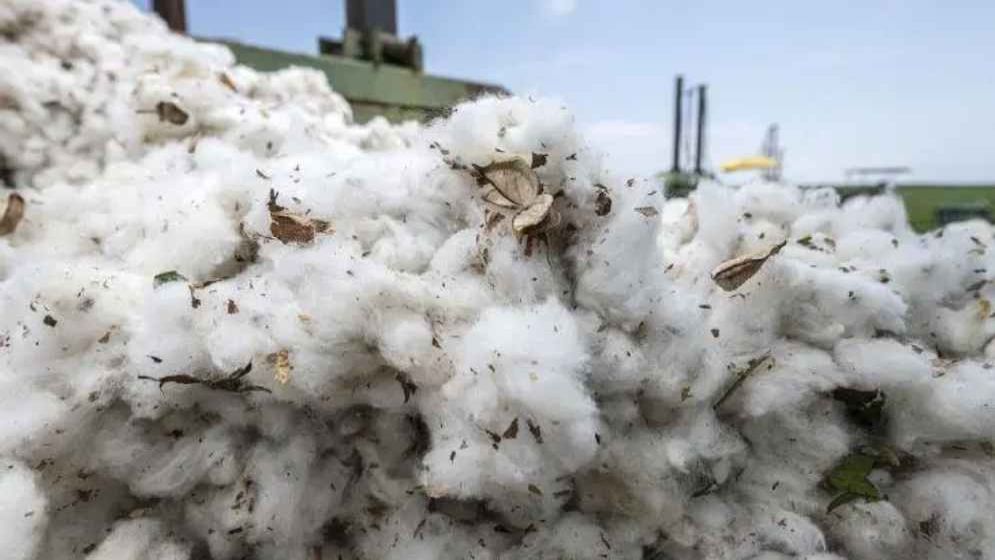
Photo: Collected
The United States has unveiled the “Great American Cotton Plan,” a comprehensive initiative led by the US Department of Agriculture (USDA).
The initiative aims to strengthen the cotton farm economy, revitalising domestic textile manufacturing, expanding cotton export opportunities, and increasing demand for products made from American-grown cotton.
As part of the initiative, the USDA and the Office of the United States Trade Representative (USTR) said they have secured commitments from Indonesia and Bangladesh that are expected to support future purchases of US cotton and boost textile production using American cotton.
According to the USDA, the agency will continue working with industry stakeholders, manufacturers, cotton growers, retailers and lawmakers to advance policies that strengthen the cotton supply chain from farm to finished product.
Bangladeshi cotton importers welcomed the initiative, saying it could create opportunities for tariff reductions on apparel manufactured using US cotton and textile inputs, alongside other trade-related concessions.
Industry leaders also noted that increased imports of American cotton could help reduce Bangladesh’s trade deficit with the US while strengthening bilateral trade ties.
Earlier, on 9 February, Bangladesh and the US signed the Agreement on Reciprocal Trade (ART), under which Washington committed to establishing a mechanism that would allow certain Bangladeshi textile and apparel products to enter the US market at a zero reciprocal tariff rate.
Bangladesh’s reciprocal tariff rate under the agreement was set at 19%. In August last year, the country had secured a reduction in US tariffs on its exports to 20%, down from 37% initially proposed by Washington.
Speaking to the Daily Sun, Bangladesh Textile Mills Association (BTMA) President Showkat Aziz Russell said the share of American cotton in Bangladesh’s nearly US$4 billion annual cotton import market has been increasing steadily as local spinners, millers and traders increasingly source cotton from the US.
“Currently, around 5% of our total cotton imports come from the US, and the share is gradually increasing,” he said. “The rest comes mainly from South American countries, India and other sources. However, the longer shipping distance from the US creates lead-time challenges.”
Russell noted that importing cotton from the US typically takes around 90 days, compared with about two weeks from India. Despite the longer delivery period, he said American cotton is preferred for its superior quality.
He also stressed the need for dedicated cotton warehousing facilities in Bangladesh.
“Many smaller mills lack adequate warehouse facilities and are forced to store cotton at their own premises, which increases costs,” he said. “Establishing a modern warehouse in the Chattogram region would provide significant benefits to the industry.”
Russell added that advances in traceability technology have made it much easier to identify the origin of cotton than in the past.
“Bangladesh could benefit from tariff reductions on apparel produced using US cotton. Increasing the use of American cotton would help narrow the trade gap and strengthen bilateral trade relations between Bangladesh and the US,” he said.
He said a meeting is scheduled for 8 June, where US Ambassador to Bangladesh Brent T Christensen is expected to attend. Another meeting with USDA representatives will also be held at the BTMA office.
“We will discuss these issues in detail,” he said.
Russell also welcomed the government’s recently announced Tk60,000 crore stimulus package, which aims to revive closed factories, boost exports and create employment opportunities through loans carrying interest rates as low as 4%.
“The government should formulate a clear policy to ensure smooth and timely disbursement of the funds,” he said.
“The industry urgently needs financing for modern machinery that can lower production costs and reduce electricity consumption by up to 30%. We also require working capital, as nearly 300 factories have shut down over the past 24 months.”
He added that Bangladesh imported yarn worth Tk14,000 crore from India in the fiscal 2021-22, a figure that rose to Tk26,000 crore in FY25.
“We have the capacity to produce much of this yarn domestically. We hope the government will provide policy support in the FY27 national budget,” he said.
According to the USTR, US goods imports from Bangladesh totalled $9.5 billion in 2025, an increase of 13.3%, or $1.1 billion, from the previous year.
The US goods trade deficit with Bangladesh rose to $7.1 billion, up 17.9% from 2024.
US Ambassador Brent T Christensen recently described the Agreement on Reciprocal Trade as a joint investment in the prosperity of both countries.
“This agreement creates the foundation for a modern, balanced trade and investment partnership,” he said.
According to Christensen, the agreement preserves Bangladesh’s access to the US market with a competitive 19% tariff rate, significantly lower than the 37% tariff that would have applied without the agreement.
“It supports a level playing field where businesses and workers in both economies can prosper and thrive,” he added.
As part of the Great American Cotton Plan, the USDA will also expand its “Plant Not Plastic” initiative, encouraging consumers to choose products made from natural American cotton fibres instead of synthetic, plastic-based alternatives.
The USDA estimates that every dollar generated at the cotton farm gate creates approximately $15 in economic activity across related industries.
Despite these efforts, the US cotton industry continues to face significant challenges. The USDA forecasts that cotton producers could collectively lose around $2.6 billion across nine million planted acres during the upcoming crop year.
Read More