



 For all latest news, follow the Daily Sun's Google News channel.


For millions of Bangladeshis, owning a home remains one of life’s most important aspirations. Yet as our cities expand, land and construction costs rise, and the middle class grows, turning that aspiration into reality is becoming increasingly difficult.
The challenge is no longer simply whether people want to own homes. It is whether they can access affordable, appropriate and sustainable long-term financing.
Bangladesh has a strong structural need for housing finance. Rapid urbanisation, demographic changes, rising household aspirations and a persistent housing deficit are all contributing to demand.
However, formal home-finance penetration remains significantly below its potential. Bridging this gap will require financial institutions to look beyond traditional lending approaches and address the affordability, accessibility and operational challenges faced by prospective homeowners.
The affordability challenge is perhaps the most visible. Rising land, construction and property prices, together with higher living and borrowing costs, have widened the gap between household incomes and the cost of homeownership. Middle-income families are particularly affected. Inflation and higher construction costs have moderated near-term housing demand, but the aspiration to own a home remains strong.
There are also less visible barriers. In peri-urban and emerging areas, property documentation, title verification and land-related complexities can make home financing difficult.
Many potential borrowers also earn legitimate income from businesses, professional activities or other sources that may not be fully captured through conventional income documentation. As a result, some customers with genuine repayment capacity may find it difficult to access formal financing.
This points to the need for a more holistic approach to home finance. We need better affordability, wider geographic coverage, simpler customer journeys, stronger documentation systems and responsible ways of assessing genuine repayment capacity.
At UCB, we are seeking to respond to these challenges by combining product flexibility, wider market reach and faster service while maintaining disciplined credit standards.
An important part of this strategy is reaching underserved and emerging markets beyond traditional metropolitan catchment areas, including eligible customers in peri-urban and rural areas.

Our Home Finance proposition provides financing ranging from Tk5 lakh to Tk4 crore for eligible customers seeking to purchase new or used apartments or to construct, extend, renovate or improve their homes. We also provide competitive variable-rate financing and use our nationwide distribution network to bring these services closer to customers.
Our objective is not simply to increase the volume of home loans. The broader objective is to responsibly expand the formal home-finance market and reach customers whose housing needs and repayment capacity are genuine but who may historically have had limited access to structured financing.
Because home finance is a long-term commitment, repayment structures must reflect customers’ actual cash-flow profiles. For eligible individual customers undertaking home construction, UCB provides a six-month moratorium during the construction phase.
This helps customers manage the initial period before the property becomes fully usable. We also provide early adjustment and takeover facilities with preferential interest rates for eligible borrowers, potentially helping them optimise their existing financing arrangements.
Customer experience is equally important. We are streamlining documentation and service processes for segments such as expatriates, working women and young professionals, recognising that their income patterns, documentation requirements and service expectations may differ.
At the same time, we recognise that faster approval should never mean weaker credit assessment or inadequate legal due diligence. Our approach is therefore to improve the process rather than dilute risk standards.
Credit assessment, property valuation and title verification are being rationalised through a more coordinated and parallel workflow involving competent credit teams and specialist legal panels.
Sequential processing can create avoidable delays. Better coordination among these work streams can reduce turnaround times while preserving rigorous verification of ownership, title, valuation and collateral quality.
We are also moving towards more data-driven assessments of repayment capacity. Where customers generate legitimate income through less conventional sources, the objective should be to assess their actual financial capacity through appropriate and verifiable information rather than relying solely on a single traditional income document.
Women and first-time homebuyers will also be increasingly important to the future of the housing-finance market. UCB does not currently operate standalone home-finance schemes exclusively for these groups.
However, we recognise their growing importance and see opportunities to develop propositions that address their specific needs in areas such as affordability, documentation, convenience and customer education. Tailored propositions and simplified processes are being evaluated as part of our future product-development agenda.
Digital transformation will be another important driver. UCB is working to streamline credit processing through end-to-end digital onboarding and technology-enabled internal approval mechanisms.
We are also working to enhance the digital Home Finance journey through faster pre-approval, data-driven credit assessment and AI-enabled tools. The objective is to make the application process simpler, faster and more transparent while maintaining prudent risk management.
However, banks alone cannot address all the barriers to housing finance. A supportive policy and institutional environment is equally important.
A centralised system for authenticating and verifying legal documents could make the loan process faster and more transparent. Reducing property registration costs could lower the overall cost of homeownership. Similarly, allowing home loans against alternative forms of acceptable security could bring more borrowers into the formal housing-finance system.
Bangladesh Bank can also play an important role by strengthening long-term refinancing facilities, particularly for affordable housing. A stable and predictable interest-rate environment would further support sustainable long-term lending and give prospective homeowners greater confidence in making major financial commitments.
Ultimately, expanding home finance is about more than increasing bank lending. It is about creating an ecosystem in which genuine borrowers can access appropriate financing through transparent, efficient and responsible processes.
Stronger documentation systems, improved property verification, digital solutions, flexible products and supportive policy measures can collectively help bridge the gap between housing aspirations and financial accessibility.
With coordinated efforts by the government, Bangladesh Bank, financial institutions and the real estate sector, we can make formal home finance more accessible and better respond to the housing needs of Bangladesh’s growing urban population.
At UCB, our focus will remain on combining wider market reach, product flexibility, improved customer service, digital transformation and responsible lending. As housing needs continue to evolve, our aim is to contribute to a more accessible and sustainable formal home-finance market in Bangladesh.
___________________________________________
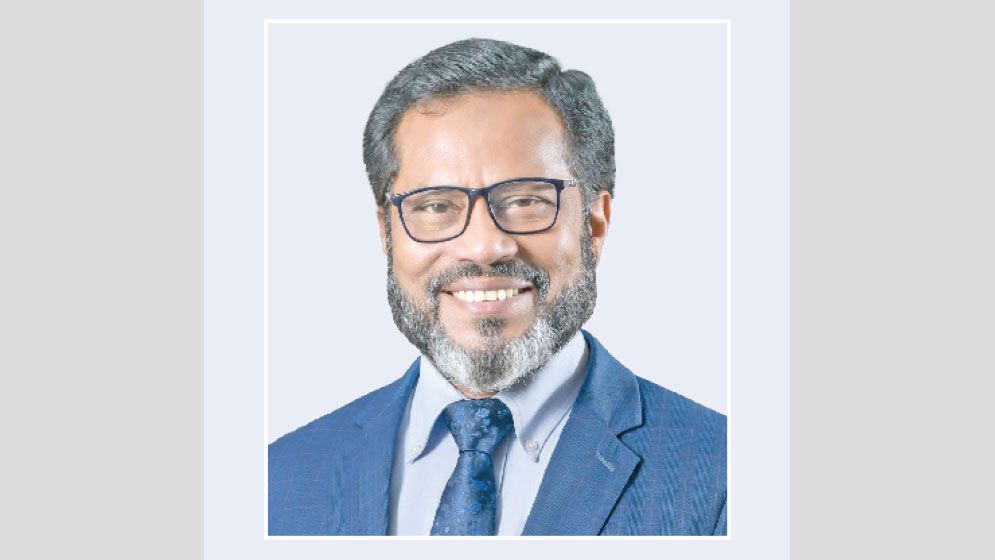
The writer is the Chief Executive Officer (CEO) of United Commercial Bank
PLC (UCB)
Read More