


 For all latest news, follow the Daily Sun's Google News channel.


22-day ban on hilsa fishing from 8 October
Daily Sun Report, Dhaka
Published: 15 Sep 2026, 04:53 PM
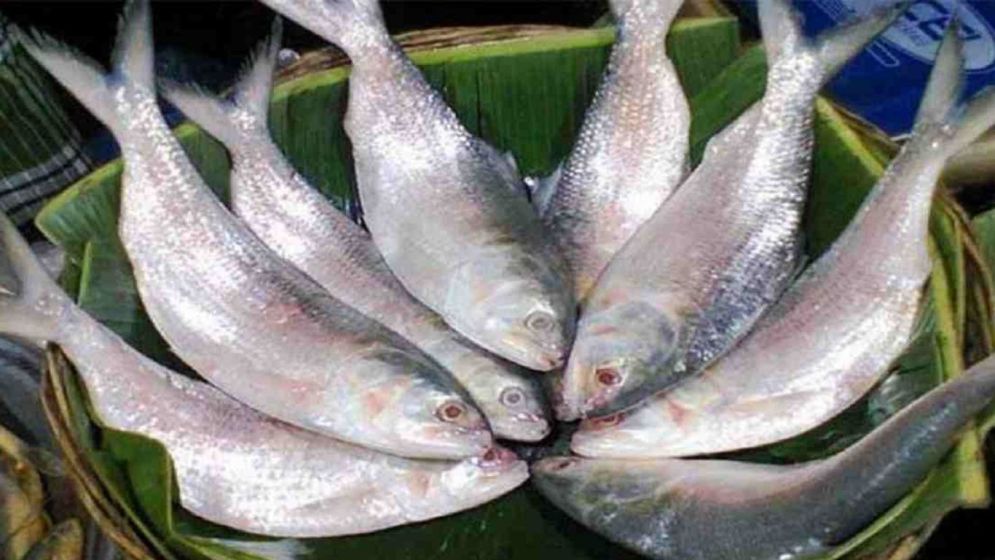
Photo: Collected
Hilsa fishing will remain banned across Bangladesh for 22 days from 8 October to 29 October to ensure safe breeding of the national fish during its peak breeding season.
The decision was taken at a meeting of the National Taskforce Committee on Hilsa Resource Development, held at the Ministry of Fisheries and Livestock on Tuesday (15 September) to set the fishing ban period and implement the 2026 Mother Hilsa Conservation Campaign.
Fisheries and Livestock and Agriculture Minister Mohammed Aminur Rashid chaired the meeting.
During the ban, transportation and storage, marketing, buying, selling and exchange of hilsa will also remain prohibited across the country. The government will provide VGF food assistance to fishermen who refrain from fishing during the period.
Addressing the meeting, Minister Aminur Rashid said there would be no compromise in protecting mother hilsa to ensure sustainable production of the fish.
“Surveillance and drives must be intensified in major hilsa breeding areas, including Barishal, Chandpur and Bhola,” he said.
He instructed the district administrations, naval police, Coast Guard and Department of Fisheries to work in coordination to strictly enforce the fishing ban during the breeding season. If necessary, additional vessels and logistical support will be provided at key hotspots, he added.
The minister also called for increased monitoring at ice factories, fish landing centres and markets to prevent illegally caught hilsa from being marketed.
He ordered strict drives to remove illegal fishing nets from hilsa breeding grounds, including the Chandpur confluence, saying that no one would be allowed to catch or market hilsa during the prohibited period under any circumstances.
“If all relevant agencies continue their coordinated efforts to conserve mother hilsa, hilsa production will increase further in the next season,” he said.
State Minister for Fisheries and Livestock Sultan Salahuddin Tuku said the reasons behind the declining production of hilsa must be identified through research.
“Any weaknesses or gaps in ongoing activities need to be identified and necessary measures taken,” he said.
Emphasising the need to curb illegal fishing nets, the state minister said effective measures must be taken to stop the production and sale of banned nets.
He also called on fishermen’s representatives to raise awareness among fishermen so that they do not purchase such nets.
The government is providing incentives to fishermen to keep them away from fishing during the ban period, he said, adding that monitoring would be strengthened to ensure the assistance reaches genuine fishermen.
The state minister expressed concern that Bangladesh has had to import fish from abroad due to declining hilsa production.
“This is a matter of concern. We need to identify why such a situation has emerged and work in a coordinated manner to address it,” he said.
He said an integrated action plan would be undertaken in the coming days to protect hilsa as a national resource and a GI product and increase its production.
Fisheries and Livestock Ministry Secretary Md Delwar Hossain, Bangladesh Fisheries Development Corporation Chairman Md Mir Hossain, Department of Fisheries Director General Dr Md Khaled Kanak and Bangladesh Fisheries Research Institute Director General Dr Md Latiful Islam attended the meeting.
Representatives from the Cabinet Division, Ministry of Shipping, Ministry of Commerce, district administrations, RAB, Coast Guard, Bangladesh Air Force, naval police and Border Guard Bangladesh (BGB) also participated.