


 For all latest news, follow the Daily Sun's Google News channel.


Renewable energy use must be increased in govt institutions: Minister
Daily Sun Report, Dhaka
Published: 09 Sep 2026, 10:21 PM
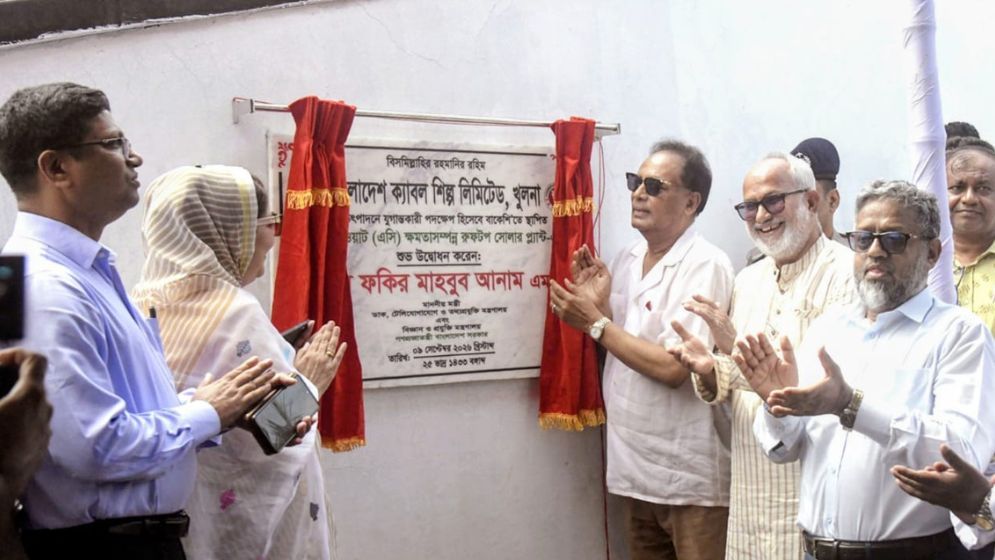
Photo: Courtesy
Renewable energy use must be expanded to meet rising electricity demand, reduce costs and protect the environment, Posts, Telecommunications and Information Technology Minister Faqir Mahbub Anam said on Wednesday.
He made the remarks at the inauguration of a 1MW rooftop solar power plant at Bangladesh Cable Shilpa Limited in Khulna.
The minister said government and state-owned institutions should use rooftops and other suitable spaces to generate solar power, as such projects would reduce electricity costs and ease pressure on the national grid.
He said the government led by Prime Minister Tarique Rahman has introduced a six-month tax exemption on imported solar equipment and incentives for surplus rooftop solar power supplied to the grid, with customers receiving Tk10.50 per unit.
Mahbub urged institutions to adopt energy-efficient practices and expand solar capacity, praising Bangladesh Cable Shilpa Limited’s initiative as a model for others.
Posts and Telecommunications Division Secretary and Bangladesh Cable Shilpa Limited Chairman Bilquis Jahan Rimi said the project would reduce electricity costs and support the government’s sustainable development goals.
The programme was attended by Khulna City Corporation Administrator Nazrul Islam Manju, Khulna Divisional Commissioner Md Abdullah Harun, and Additional Deputy Commissioner (General) Bitan Kumar Mandal.
Bangladesh Cable Shilpa Limited Managing Director Md Shohidul Islam delivered the welcome address.
The plant, with an estimated cost of Tk5.15 crore, is expected to save about Tk15 lakh a month.
After meeting the institution’s demand of around 900 kilowatts, surplus power will be supplied to the national grid. The investment is expected to be recovered within four years.