



 For all latest news, follow the Daily Sun's Google News channel.


'Plastic-free' campaign launched to build sustainable schools nationwide
The initiative is not limited to plastic pollution but is an umbrella project for incorporating comprehensive environmental education
Daily Sun Report, Dhaka
Published: 30 Aug 2026, 05:49 PM
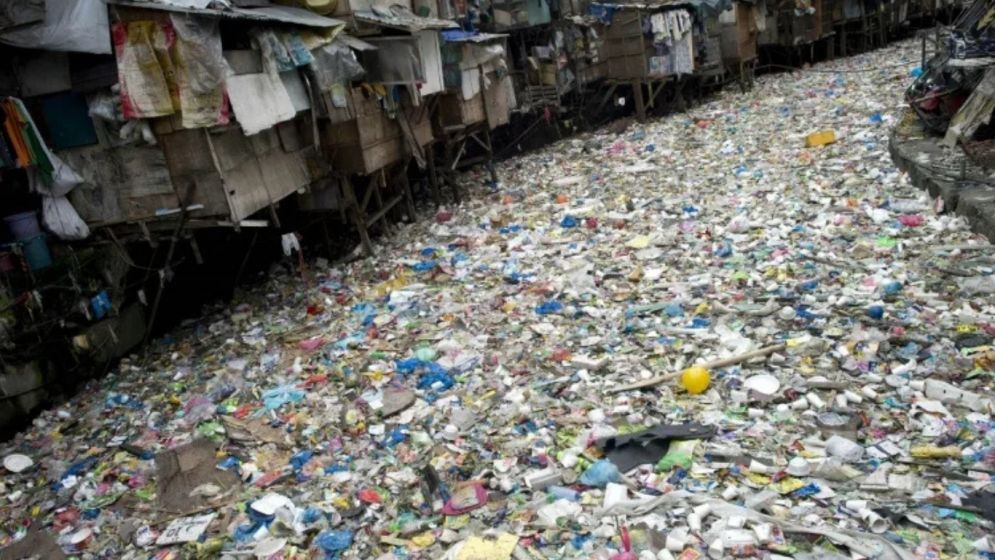
File Photo
Environment and Social Development Organization-ESDO, with the support of Mutual Trust Bank PLC, has officially launched the “Plastic-Free Campus Manual,” a practical environmental education and action guide designed to help schools across Bangladesh reduce plastic pollution and build healthier, safer, and more sustainable learning environments.
The inauguration took place at the auditorium of the
Department of Environment, in the presence of State Minister of Environment,
Forest and Climate Change Shaikh Faridul Islam.
Senior government officials across multiple
ministries and wings, development professionals, academicians, and youth groups
were also present at the Inception Workshop.
Since 2022, the Environment and Social Development
Organization (ESDO) has been implementing the ongoing “Plastic-Free Campus”
initiative to reduce plastic use and pollution in schools across Bangladesh and
promote a clean, safe, and sustainable environment.
Implemented across all eight divisions of
Bangladesh, the initiative initially targeted 16 schools in its first phase,
followed by the inclusion of seven additional schools in the second phase.
As the environmental crisis deepens in Bangladesh,
ESDO is working in the policy area to incorporate structural changes aimed at
conservation and pollution reduction. The core objective of the “Plastic-Free
Campus” initiative is to bridge the gap between theory and practice among young
learners.
The initiative seeks to move environmental education
beyond textbooks and classrooms by encouraging students, teachers, school authorities,
and communities to translate environmental knowledge into everyday action.
The manual was developed through a comprehensive and
meticulous process that included input from the Ministry of Environment, Forest
and Climate Change (MoEFCC), the National Curriculum and Textbook Board (NCTB),
and the Secondary and Higher Education Division of the Ministry of Education.
International partners, including Break Free From Plastic (BFFP) and the
Plastic Solutions Fund (PSF), also provided research-driven insights.
As a result of this diverse, expert-led approach,
the document is set to reflect global best practices in the environmental
sector.
The manual was launched against the background of
the alarming findings of the Environmental Performance Index (EPI), which
ranked Bangladesh 175th among 177 countries worldwide. Such statistics indicate
that drastic measures, a combination of both short-term and long-term
initiatives, are needed to improve the national environmental performance.
The initiative is not limited to plastic pollution
but is an umbrella project for incorporating comprehensive environmental
education. The project is set to educate students on plastic pollution, promote
sustainable behavioral change, and inspire actionable solutions to reduce
single-use plastics.
It aims to transform participating educational
institutions into plastic-free campuses by fostering sustainable practices,
strengthening student-led environmental leadership, and developing scalable
models for replication across other campuses. Building on previous successes,
the next phase of the initiative equips students and teachers with practical
skills in waste segregation, eco-friendly alternatives, and environmental
leadership to foster zero-waste habits in both private and shared spaces.
Speaking on the occasion, Shaikh Faridul Islam said,
“Environmental initiatives cannot succeed without enforcement. Everyone must
take responsibility. The Extended Producer Responsibility (EPR) policy was
passed last week, so plastic producers must also take responsibility.”
“If students clean their schools and gardens and
take responsibility for the environment, it will have a positive impact. No
brick kiln should be allowed to operate by burning wood. Our fundamental
problem is that we are prioritising business profits over the environment,
which is not right,” he added.
Syed Marghub Murshed, chairperson of Environment and
Social Development Organization (ESDO), said in his closing remarks,
“Environmental challenges cannot be addressed through isolated efforts. Strong
collaboration among government, the private sector, civil society, educational
institutions, and young people is essential to creating lasting solutions for a
cleaner and more sustainable Bangladesh.”
Dr Fahmida Khanom, acting secretary of Ministry of
Environment, Forest and Climate Change, said, “Students who perform well in
school should be made Environmental Ambassadors and should be given the
opportunity to train students at neighbouring schools.”
“Students tend to listen more to their peers. When
ordering food through Foodpanda, customers should specify that they do not want
single-use plastic and request paper packaging. We also need to revive the
demand for paper craft bags,” she added.
Dr Md Lutfor Rahman, director general of Department
of Environment (DoE), said, “Environmental protection requires collective action
from government institutions, educational institutions, development organisations,
and young people. Initiatives such as the Plastic-Free Campus Manual can play
an important role in translating environmental awareness into practical
action.”
Dr Shahriar Hossain, senior technical adviser at
ESDO, said, “Addressing plastic pollution requires not only policy-level
interventions but also meaningful behavioral change. Through the Plastic-Free
Campus initiative, we are working to empower the younger generation to become
active participants in creating a cleaner and more sustainable future.”
Siddika Sultana, executive director of ESDO, said in
her opening remarks, “The Plastic-Free Campus initiative reflects our
commitment to making environmental education practical and actionable for young
learners. By equipping students and teachers with knowledge and practical
skills, we aim to foster sustainable habits and stronger environmental
leadership within educational institutions.”
Usman Rashed Muyeen, DMD & GCRO of Mutual Trust
Bank PLC, said, “Mutual Trust Bank PLC is committed to supporting initiatives
that promote environmental awareness and sustainable practices. We believe that
engaging young people through education is essential to building a more
environmentally responsible society.”
The Plastic Free Campus project has potential for
bringing transformative behavioral change across the developing minds in
Bangladesh. The model uses schools as training ground for shaping the next
generation of changemakers and leaders. Therefore, the organization calls upon
teachers, students, parents, local authorities, development partners, and civil
society organisations to join the movement and help transform Bangladesh’s
campuses into cleaner, healthier, and environmentally responsible spaces.