


 For all latest news, follow the Daily Sun's Google News channel.


Key provisions of MIDA Act challenged in High Court
Daily Sun Report, Dhaka
Published: 25 Aug 2026, 10:10 PM
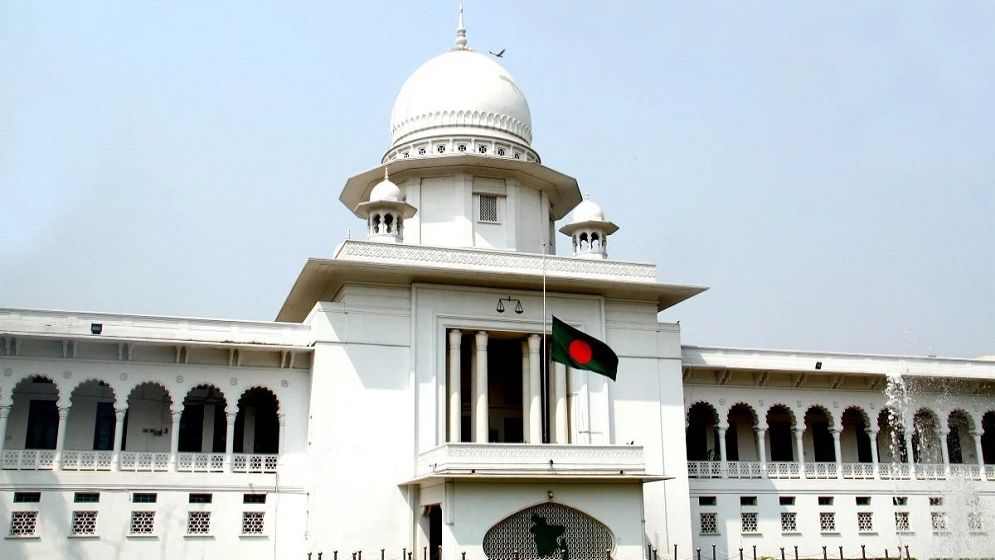
The High Court has issued a rule questioning the
constitutional validity of several provisions of the Moheshkhali Integrated
Development Authority (MIDA) Act, 2026, particularly those relating to
development planning, land use, environmental management and local governance.
A Division Bench comprising Justice Ahmed Sohel and Justice
S M Iftekhar Uddin Mahmud issued the rule following a writ petition filed by
Lawyers for Energy, Environment and Development (LEED) and Coastal Livelihood
and Environmental Action Network (CLEAN).
The court asked the respondents to explain why Sections 7,
8, 10, 11, 13, 14, 15, 20 and 24 of the Act should not be declared illegal,
unconstitutional and without lawful authority.
Advocate Abdullah Al Noman filed the petition, while
Advocate Monira Haque Moni appeared for the petitioners during the hearing.
The petitioners argue that the challenged provisions give
MIDA extensive authority over development master plans, land-use planning,
environmental management and regulatory matters in Moheshkhali. They contend
that concentrating such powers in a specialised executive authority raises
questions regarding their compatibility with Articles 18A, 27, 31, 32, 36, 40,
42, 59 and 60 of the Constitution.
These constitutional provisions relate, among other matters,
to environmental protection, equality before law, protection of law, life and
personal liberty, freedom of movement, freedom of profession or occupation,
property rights and local government.
The petitioners have also raised concerns about the
environmental governance structure of MIDA. Moheshkhali is a coastal and
wetland area with significant biodiversity and ecological sensitivity. However,
the 12-member governing board of MIDA does not include a representative from
the Ministry of Environment, Forest and Climate Change, according to the
petition.
They argue that this omission raises questions about the
government's constitutional responsibility under Article 18A to protect the
environment, natural resources and biodiversity.
The petitioners further contend that development activities
undertaken by MIDA must remain subject to the Constitution, the Bangladesh
Environment Conservation Act, 1995, the Environment Conservation Rules, 1997,
and other applicable environmental and land laws.
In particular, they maintain that the MIDA Act cannot be
interpreted or applied in a manner that allows industries or projects legally
requiring environmental clearance to bypass the approval process of the
Department of Environment.
Another major concern raised in the petition is the absence
of an effective mechanism for meaningful participation by local residents and
affected communities in MIDA's decision-making process.
The petitioners state that the MIDA Ordinance, 2025, which
preceded the 2026 Act, was introduced without adequate public hearings or
meaningful consultation with affected communities. They argue that excluding
people from decisions that may have far-reaching consequences for land,
livelihoods, the environment and settlements is inconsistent with the
participatory principles reflected in Article 11 of the Constitution.
The writ petition specifically challenges Sections 10, 11,
13, 14 and 15, which give MIDA broad powers relating to the development master
plan, land-use planning and restrictions concerning land, as well as the
formulation of related rules and regulations.
According to the petitioners, the exercise of these powers
is not sufficiently linked to mandatory public consultation, disclosure of
information, public hearings, opportunities for affected people to raise
objections or adequate procedural safeguards for landowners.
They argue that, without such safeguards, executive
decisions under the Act could have significant consequences for land, property,
settlements, livelihoods and economic activities without adequate due process.
The petition also highlights the dependence of local
communities in Moheshkhali on traditional economic activities, including salt
cultivation, fishing and shrimp farming.
The petitioners contend that converting salt fields and
other livelihood-dependent land into industrial or development zones could
affect the longstanding sources of income of local communities. In their view,
the absence of adequate safeguards, rehabilitation and compensation could raise
constitutional concerns regarding the freedom of profession or occupation
guaranteed under Article 40.
Referring to Articles 31 and 32, the petitioners further
argue that the exercise of MIDA's powers could potentially lead to displacement
of communities, disruption of traditional occupations, interference with
settlements and loss of access to land and natural resources. Such
consequences, they say, could directly affect people's constitutional rights to
life, personal liberty and protection of law.
The petitioners, however, have clarified that they are not
opposed to development, industrialisation, infrastructure expansion or economic
transformation in Moheshkhali.
Their contention is that such development must take place
within the framework of the Constitution, fundamental rights, democratic
governance, environmental principles and the rule of law.
They argue that no development authority should be given
powers that could arbitrarily interfere with people's constitutional rights and
property or undermine the constitutionally recognised role of elected local
government institutions.
At the broader level, the petition raises concerns about the
concentration of authority over development planning, land use, environmental
management, economic regulation and enforcement within a single executive
authority without what the petitioners consider to be adequate mechanisms for
democratic accountability, public participation and procedural safeguards.
The High Court's issuance of the rule does not amount to a
final determination on the constitutional validity of the challenged
provisions. The respondents will now have an opportunity to explain why the
provisions should not be declared unconstitutional and unlawful.