


 For all latest news, follow the Daily Sun's Google News channel.


Zaima calls for reforms to make Bangladesh’s roads safer
Daily Sun Report, Dhaka
Published: 12 Aug 2026, 06:57 PM
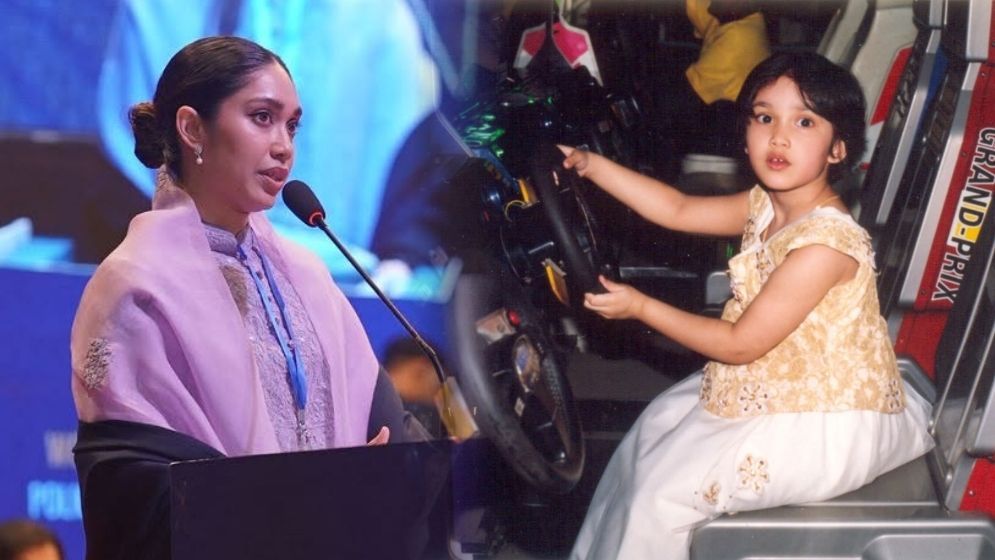
Barrister Zaima Rahman, daughter of Prime Minister Tarique Rahman, has called for fundamental reforms in Bangladesh’s road safety and transport systems, saying the focus should go beyond licences, vehicles and punishment to ensure safer and fairer roads for all.
In a Facebook post, Zaima said she recently
took her second driving test in her life to obtain permission to drive in
Bangladesh. Her first test was taken in London more than a decade ago, and she
passed both tests on her first attempt.
However, she said the two tests had not
prepared her equally for the realities of driving.
“Going through the whole process here, I
thought not only about the driving test or licence, but about the overall
experience of using our roads and our relationship with the systems designed to
regulate them,” she said.
Zaima said many young Bangladeshis,
particularly in Dhaka, were frustrated by being expected to follow rules within
a system that did not always feel safe or predictable.
She pointed to the difficulties faced by
pedestrians, passengers and new drivers.
Pedestrians may have to cross busy roads
without adequate crossings, walk along pavements that suddenly end or are
occupied, and navigate traffic involving buses, motorcycles, rickshaws and
private cars, each operating according to different unwritten rules, she said.
Passengers, she added, often have no control
over whether a bus races another vehicle to pick up passengers, brakes
suddenly, is mechanically fit or is being driven by a properly trained and
rested driver.
For new drivers, she said, following the
rules could raise a different set of questions, including what the rules
actually are, why they appear to differ from person to person, why online
procedures are not always sufficient and why brokers can sometimes make
processes faster.
She also questioned why people have to wait
for months after passing a driving test to receive documents confirming that
they had passed.
Zaima acknowledged that the Bangladesh Road
Transport Authority (BRTA) had digitised many of its services, describing it as
important progress.
“Digitalisation only works when it genuinely
makes people’s lives easier,” she said, adding that if an issue that begins
online ultimately ends with a request to visit an office, the problem has not
really been solved.
She said every unnecessary in-person
interaction created opportunities for delays, bias and transactions, allowing
brokers to exploit weaknesses in the system.
“People do not turn to brokers because they
want to break the law. They do so because the government process becomes so
difficult that an intermediary appears to be the easiest route,” she said.
According to Zaima, this is particularly
harmful because corruption can become normalised rather than remaining an
exception.
She also criticised inconsistent enforcement
of laws on driving licences, vehicle fitness, training and road safety.
“If rules appear to be selectively enforced,
people quickly lose respect for them,” she said, questioning why new drivers
were expected to follow rules while unfit vehicles, reckless driving and other
violations continued in plain sight.
She said the biggest problem with corruption was not only that wrongdoing occurred but also how complaints were handled.
“If people believe that making a complaint
will achieve nothing and instead cause them further trouble, the natural
response becomes: ‘Why bother? I will ask someone I know,’” she said.
Zaima argued that road safety should
therefore not be viewed merely as an issue of vehicles, licences and
punishment.
“It has to be about the people who use the
roads every day,” she said.
Zaima also recalled the 2018 student protests
over road safety, when school and college students took to the streets, checked
driving licences, attempted to manage traffic and demanded action against unfit
vehicles and unlicensed drivers.
“Eight years later, many of those concerns
remain,” she said.
She said the question should no longer simply
be whether Bangladesh’s roads were unsafe.
“The question is: ‘We identified the problems
long ago. Why has the system still not fixed them?’” she said.
Zaima called for equal access to services
regardless of personal connections, fair and consistent law enforcement, safe
and meaningful mechanisms for reporting wrongdoing, and road designs that
prevent a simple mistake from resulting in loss of life.
“If we genuinely want change, we need to
rethink the framework through which we approach these issues,” she said.