


 For all latest news, follow the Daily Sun's Google News channel.


Eid holiday travel may be marred by severe traffic jams
94 congestion-prone spots identified on seven highways
Daily Sun Report, Dhaka
Published: 21 May 2026, 08:43 AM
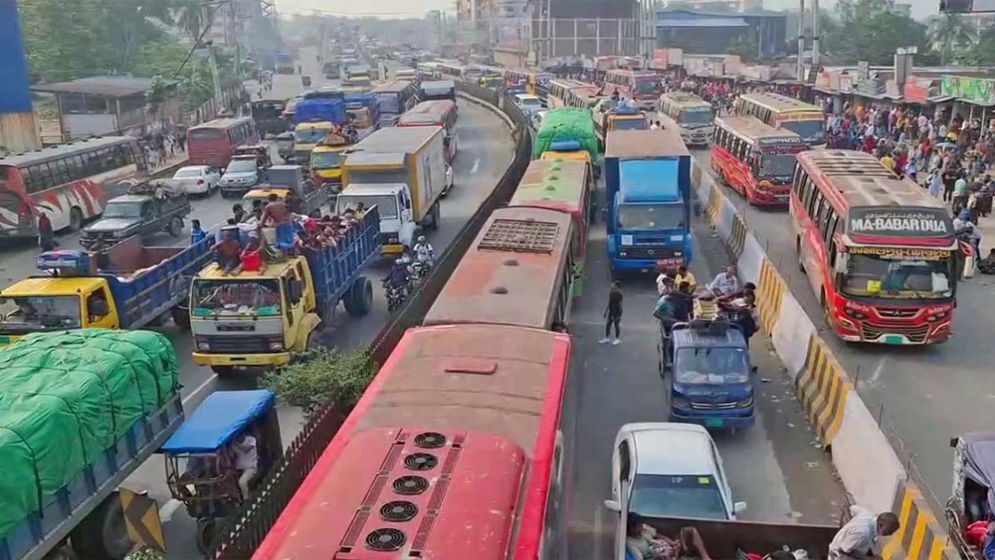
At least 1 crore people are expected to travel from Dhaka to different parts of the country for Eid-ul-Azha this year. Around 85 percent of Eid travelers are expected to use highways.
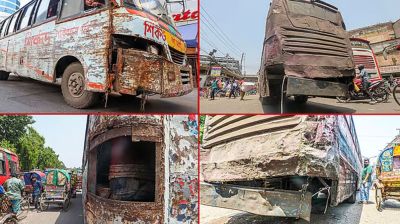
However, traffic congestion is feared at least 94 locations across seven major highways, including the Dhaka-Chattogram route. According to highway police, transport associations, and related sources, several factors may trigger congestion, including vehicle breakdowns due to poor fitness, lack of management in handling both passenger buses and livestock-carrying vehicles, roadside cattle markets, illegal structures along highways, and unrepaired damaged road sections.
Transport owners, workers, and related stakeholders say stronger management and better coordination are essential to reduce traffic congestion.
BUET professor Dr. Shamsul Hoque said traffic congestion during Eid travel has decreased compared to previous years, but proper coordination among relevant agencies remains crucial.
Hanif Khokon, General Secretary of the Bangladesh Auto-Rickshaw, Auto Tempo, and Taxi Car Drivers Federation, said three-wheeler vehicles continue to move freely on highways and contribute to congestion even during normal times. He stressed that both auto-rickshaws and motorcycles should be controlled during Eid travel.
Santosh Kumar Roy, supervising engineer at the Roads and Highways Department and a traffic expert, said vehicle pressure increases significantly during Eid travel, while Eid-ul-Azha also brings additional livestock transport traffic. He noted that integrated management by all agencies is essential to handle the increased load. On normal days, about 35,000 vehicles travel on the Dhaka–Chattogram highway, which rises to around 60,000 during Eid. On the Dhaka–Tangail–Rangpur highway, vehicle numbers increase from 22,000 to nearly 64,000.
The government has already held coordination meetings involving representatives from various agencies to ensure smooth travel during Eid-ul-Azha. Emphasis is being placed on integrated management and increased monitoring. Experts warn that even minor gaps in coordination could worsen congestion.
Additional DIG of Highway Police, Muntasirul Islam, said traffic patterns during Eid-ul-Azha differ from Eid-ul-Fitr. While people leave Dhaka, livestock-carrying trucks and other vehicles simultaneously enter the city, increasing pressure on highways. He said additional personnel and special measures have already been planned. Control rooms will be set up in areas with heavy passenger movement, CCTV monitoring will continue around the clock, and an extra 1,000 personnel will strengthen highway patrol operations.
According to a Highway Police report, there are 94 congestion-prone locations across seven highways: 25 on Dhaka–Chattogram, 25 on Dhaka–Tangail–Rangpur, 21 on Dhaka–Sylhet, seven on Dhaka–Mymensingh, seven on Dhaka–Aricha, eight on Chattogram–Cox’s Bazar, and one on the Dhaka–Barishal highway. Traffic congestion has already begun appearing on sections of major highways ahead of Eid travel.
Transport sources say more than 15 million people leave Dhaka during Eid travel periods, and approximately 85 percent rely on highways. Eid-ul-Azha is expected to be observed on May 28, while government holidays will begin after office hours on May 24.
Highway Police sources said that despite various initiatives, more than 200 cattle markets were set up along highways during last year’s Eid-ul-Azha season. Authorities have announced that roadside cattle markets will not be allowed this year, but experts believe effective implementation will require strong coordination among agencies.
Data also indicate a growing number of Eid travelers. Last year, nearly 10 million people left Dhaka for Eid-ul-Azha. Telecommunications data showed millions of mobile SIM cards moving outside the capital during the Eid period, suggesting that the actual number of travelers, including children and people without mobile phones, likely exceeded 11 million.
Transport experts say the opening of the Padma Bridge has significantly increased travel to the southwest region, while the Jamuna Bridge continues to serve as a key gateway for northern districts, with both bridges witnessing record vehicle movement during Eid travel seasons.
Source : Kaler Kantho