


 For all latest news, follow the Daily Sun's Google News channel.


UNFPA lauds govt for adopting inclusive, climate-resilient healthcare plan
Daily Sun Report, Dhaka
Published: 31 Mar 2026, 09:28 PM
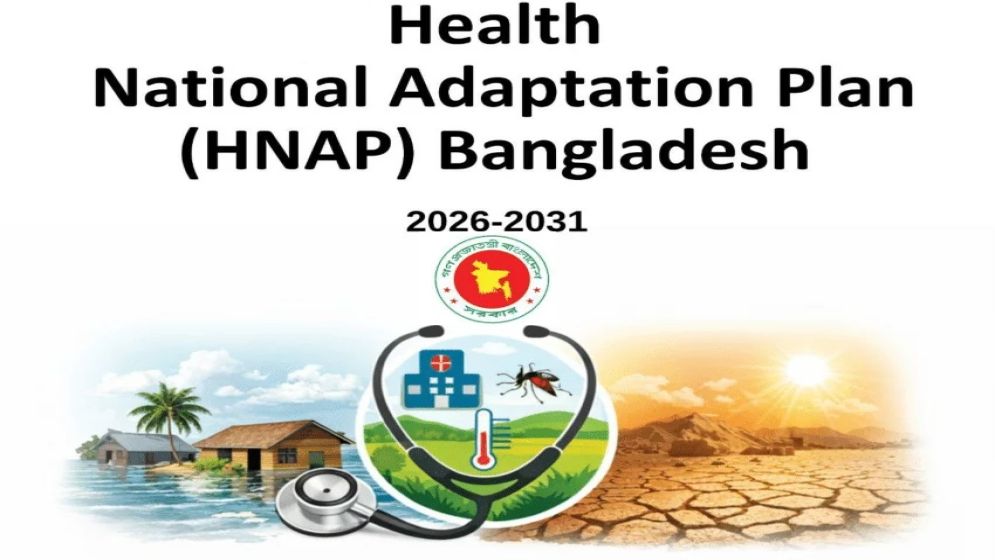
The UNFPA in Bangladesh on Tuesday lauded the government for
adopting the Health National Adaptation Plan (HNAP) 2026–2031, a landmark step
toward building a climate-resilient, inclusive low carbon and
sustainable health system.
The Plan was formally launched at a national dissemination
workshop in Dhaka, bringing together government leaders, development partners,
UN agencies, academia and civil society.
The HNAP provides a strategic framework to address the
growing health risks posed by climate change, including rising temperatures,
floods, cyclones and shifting disease patterns. It outlines strategies and
priority actions to strengthen health system preparedness and resilience to
ensure continuity of essential services, and better protect vulnerable
populations from climate-related health impacts.
The UNFPA said it is proud to have supported the Ministry of
Health and Family Welfare in the development of the HNAP, in close partnership
with the World Health Organization, the Institute of Epidemiology, Disease
Control and Research, and the Climate Change and Health Promotion Unit of the
Ministry along with other partners.
The Plan also benefited from the generous support of the
Government of the United Kingdom and the Government of Sweden, whose commitment
has been instrumental in advancing Bangladesh’s climate and health agenda.
Bangladesh is among the countries most vulnerable to climate
change, with increasing exposure to extreme weather events and
climate-sensitive diseases. Climate shocks limit access to sexual and
reproductive health services, increase maternal health risks, and heighten
exposure to gender-based violence, making climate-resilient health systems not
only a necessity, but a matter of rights and equity.
“The adoption of the Health National Adaptation Plan marks a
critical milestone for Bangladesh. Climate change is a public health crisis,
affecting women and girls the most,” said Catherine Breen Kamkong, UNFPA
Representative in Bangladesh. “This Plan provides a clear pathway to ensure
that even in the face of climate shocks, women can give birth safely, women and
girls are protected from gender-based violence, young people can access
essential services, and communities can rely on resilient, responsive health
systems.”
The HNAP reportedly aligns with Bangladesh’s broader
National Adaptation Plan and global commitments, and emphasizes coordinated,
multi-sectoral action to reduce the health burden of climate change while
strengthening preparedness and response systems. Its successful implementation
will be key to safeguarding the health, dignity and future of millions of
people in Bangladesh.