


 For all latest news, follow the Daily Sun's Google News channel.


Experts question transformation of local govt bodies into rehabilitation centres for BNP leaders
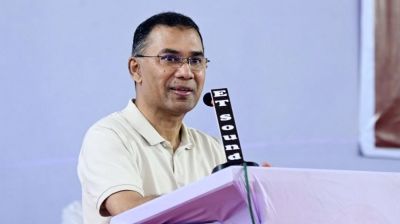
Tarikul Islam, a member of the Local Government Reform Commission formed during the interim government, said reforms should be passed quickly and elections should be held soon
Daily Sun Report, Dhaka
Published: 16 Mar 2026, 09:37 PM
Photo: BSS
The government’s decision to appoint Bangladesh Nationalist Party (BNP) leaders as administrators in city corporations and 42 Zila Parishads across the country has triggered widespread political debate.
While BNP leaders and activists have welcomed the
move, critics and governance experts have questioned whether local government
institutions are being turned into political “rehabilitation centers.”
The government, however, has defended the decision,
stating that political administrators were appointed to make inactive local
government bodies functional again.
According to officials, political leaders may
perform more effectively than bureaucrats because of their closer connections
with the public. The government also expressed hope that the new appointments
would make administrative activities more dynamic, transparent, and effective.
Earlier, Local Government, Rural Development and
Cooperratives Minister Mirza Fakhrul Islam Alamgir had said that elections to
local government institutions would be held as soon as possible.
However, the appointment of party leaders has raised
concerns among observers that such elections might be delayed.
Following the fall of the Awami League government in
August 2024, the interim administration removed mayors and chairmen from city
corporations, Zila Parishads, upazila parishads and municipalities, most of
whom were affiliated with the previous ruling party.
Many of those leaders later went into hiding, while
some were arrested. At that time, administrators—mostly government
officials—were appointed to manage these institutions.
After the national election and the formation of a
BNP-led government under Tarique Rahman on 17 February, the administration
began replacing government officials with BNP leaders as administrators in
several city corporations. These appointments included leaders who had either
lost parliamentary elections or did not receive party nominations.
Among the key appointments, Abdus Salam, a member of
the BNP chairperson’s advisory council, was made administrator of Dhaka South
City Corporation, while BNP leader Shafiqul Islam Khan was appointed to Dhaka
North City Corporation.
In Khulna, BNP central Organising Secretary Nazrul
Islam Manju was appointed administrator, while Gazipur BNP President Shawkat
Hossain Sarkar received a similar role.
Other appointments included Sakhaowat Hossain in
Narayanganj and Abdul Kaiyum Chowdhury in Sylhet.
Subsequently, BNP leaders were also appointed as
administrators in Barishal, Rajshahi, Mymensingh, Rangpur, and Cumilla city
corporations. More recently, the government appointed BNP leaders as
administrators in 42 Zila Parishads, further intensifying the discussion.
Local government experts have offered mixed
reactions. Some believe that elected representatives are essential for
effective local governance, while others argue that political leaders may
perform better than civil servants who often manage these responsibilities as
additional duties.
Tarikul Islam, a member of the Local Government
Reform Commission formed during the interim government, said reforms should be
passed quickly and elections should be held soon. Until then, he believes
political administrators may function more effectively.
However, other experts expressed concern that the
move could delay local government elections and strengthen partisan control. Kazi
Maruful Islam, a Dhaka University professor and former member of the reform
commission, noted that the commission had recommended non-partisan elections
and direct voting to reduce political influence and increase public
participation in local governance.
Urban governance expert Adil Muhammad Khan,
executive director of the Institute for Planning and Development (IPD),
criticised the decision, saying that sustainable urban development is not
possible without elected representatives.
He emphasised that the government should have
prioritized elections instead of appointing administrators and warned that such
appointments could influence future elections and weaken accountability.
Political reactions have also been strong.
Jamaat-e-Islami, the main opposition party in parliament, protested the earlier
appointments of BNP leaders as administrators in city corporations.
In a statement, the party’s Secretary General Mia
Golam Parwar said appointing partisan figures to such posts contradicts
democratic values and could be part of a strategy to delay elections.
Despite the criticism, the government maintains that
the appointments are intended to ensure better public services. However,
experts say that the absence of elected councillors in city corporations is already
affecting service delivery. The debate continues over whether these
appointments are a temporary administrative measure or a politically motivated
decision that could influence the future of local governance in Bangladesh.
Source: BBC Bangla