


 For all latest news, follow the Daily Sun's Google News channel.


Emotion cannot guide implementation of July Charter: Home Minister tells Parliament
Daily Sun Report, Dhaka
Published: 15 Mar 2026, 01:54 PM
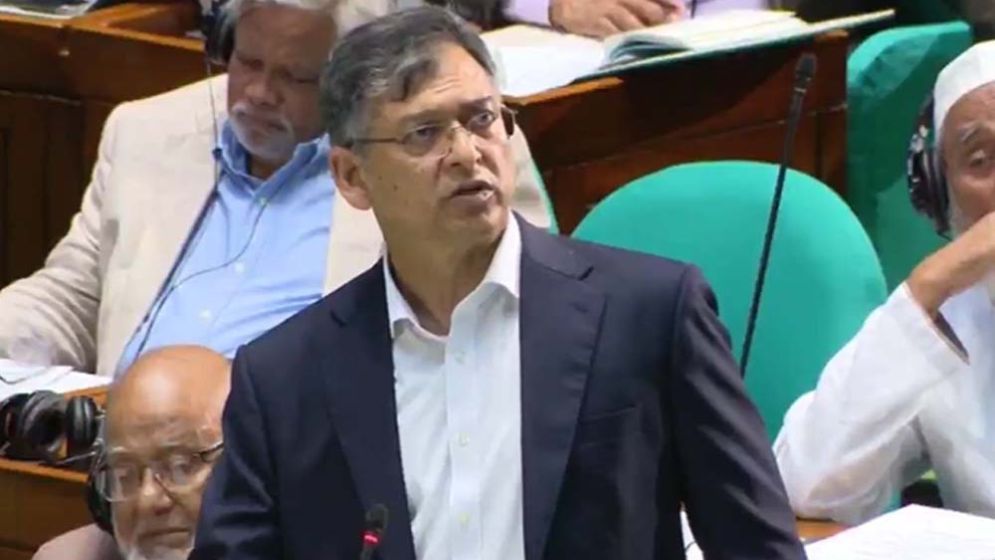
Home Minister Salahuddin Ahmed. Photo: Collected
Home Minister Salahuddin Ahmed said that a state cannot run on emotion, it runs according to the Constitution and the law. The government is committed to implementing the historic “July National Charter.” However, it must be implemented through constitutional and legal processes, not through any illegal or imposed orders.
He made these remarks on Sunday while participating in an unscheduled discussion in the National Parliament.
Earlier, the Leader of the Opposition, Dr Shafiqur Rahman, delivered a statement in parliament regarding the implementation of the July Charter, to which the Home Minister responded.
At the beginning of his speech, the Home Minister reminded the House of parliamentary procedures. He said that to raise any urgent matter of public importance through an adjournment motion or a short discussion, notice must be given under Rules 62 or 68 of the Rules of Procedure. He questioned whether the Leader of the Opposition had submitted such a notice.
Referring to the “July National Charter Constitutional Reform Implementation Order 2025” read out by the opposition leader, the Home Minister said: “According to Article 93(1) of the Constitution, the President may promulgate an ordinance when parliament is not in session. However, any matter relating to constitutional amendment or change cannot come through an ordinance. Yet the order issued on 13 November last year is neither an ordinance nor a law. It is rather an unusual matter.”
He further said that taking oath of members of the Constitutional Reform Council and demanding that the President convene a parliamentary session based on that order would be unconstitutional.
Regarding the recently held referendum, Salahuddin Ahmed said, “We respect the people’s verdict in the referendum. But in the middle of the order, certain questions were forcibly inserted that were not part of the political consensus of the July Charter. Four different questions were combined into a single ‘yes’ or ‘no’ vote, which was not logical.”
Explaining the legal process of implementing the referendum verdict, the Home Minister said, “To implement the referendum result, the Constitution must first be amended. Once the issue is incorporated into the Constitution, then matters such as the oath of the Reform Council and other steps will follow.”
He also expressed doubt about introducing a constitutional amendment bill during the current session. “On the very first day of parliament, 133 ordinances were placed before the House. These must be resolved within the next 30 days. There is also a long recess ahead. So there may not be enough time in this session. However, if the Advisory Committee on Parliamentary Affairs decides, we may introduce the constitutional amendment bill in the upcoming budget session.”
Finally, the Home Minister invited the opposition leader to discuss the matter in the Advisory Committee on Parliamentary Affairs. He said, “Let us discuss the issue in the Advisory Committee. We have pledged to the nation that we respect every word of the July National Charter as a document of political consensus. Let us adopt the bill in parliament through consensus and move the state forward constitutionally.”