


 For all latest news, follow the Daily Sun's Google News channel.


AL must face trial, seek apology before returning to politics: Ali Riaz
UNB, Dhaka
Published: 29 Jan 2026, 07:39 PM
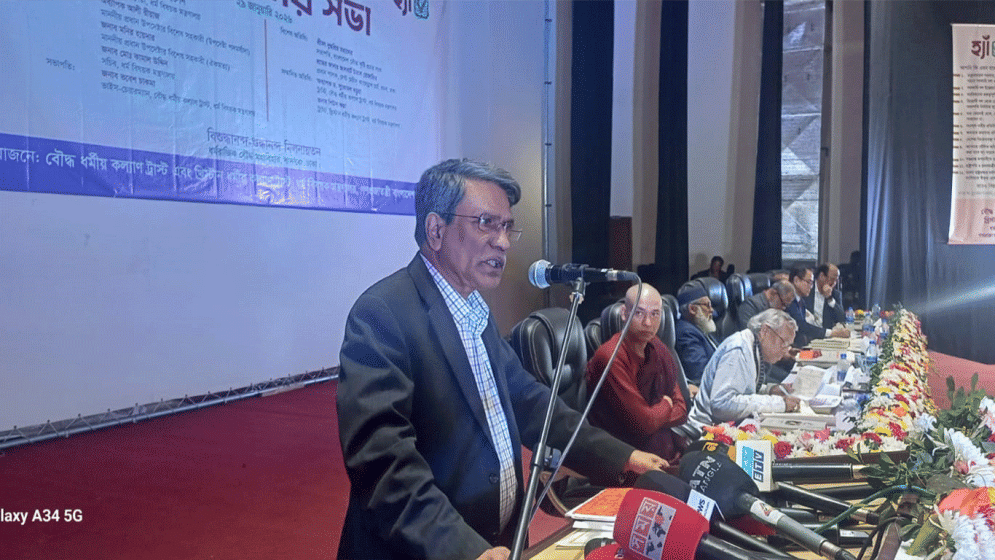
Photo: Daily Sun
Awami League must face the ongoing judicial process over the July Uprising killings and seek apology if it wants to return to active politics, said Prof Ali Riaz, special assistant to the chief adviser.
Speaking at a seminar titled “Rapture, Reform and
Reimagining Democracy: Navigating the Agony of Transition” organised by the
BRAC Institute of Governance and Development (BIGD) at BRAC Centre in
Mohakhali, Ali Riaz said the party has neither acknowledged the July uprising
nor expressed any regret.
“Sheikh Hasina still believes the July Uprising was
an Islamic militant movement backed by the West and meticulously designed by
Prof Muhammad Yunus. With this mindset, there is no scope for making AL
relevant in politics,” he said.
Rejecting commonly cited estimates of AL’s support
base as flawed and baseless, Ali Riaz said claims that the party enjoys 40% or
even 20% public support lack any credible justification. “If someone cites the
42% turnout in the staged 2024 election, then there is nothing more to say.”
He termed arguments about keeping a large number of
Awami supporters outside the reform process as “crippled logic”, noting that
the reform exercise was inclusive.
“About 56,000 people shared opinions through our
website and surveys were conducted in 46,000 households. These were ordinary
citizens. We did not work based on whether someone was AL or BNP,” Riaz said.
Explaining whether the absence of AL from the
Consensus Commission made the dialogue less democratic, Ali Riaz said there was
no practical way to involve the party.
“Can anyone give me Sheikh Hasina’s address so that
I could send her a letter inviting her to the commission? Those who were around
have fled with laundered money. Others are either in hiding or in jail. Under
these circumstances, how could discussions take place with them?” he said.
Highlighting the limitations of the interim
government, Ali Riaz said the bureaucracy has become stronger than before,
while the government failed to exert effective control.
“The command AL had over bureaucrats does not exist
for the interim government. Bureaucrats have taken advantage of this vacuum.”
On the failure to implement many recommendations of
the reform commissions, he said the government lacked either the necessary will
or the required authority in different cases. “As a result, many reforms never
saw the light of day.”
Criticising civil society, Ali Riaz said it
completely failed to work in solidarity with the interim government.
“They aligned themselves with one political party or
another and did not stand by the government even for a moment,” he said,
predicting that civil society would again fail to play a meaningful role in
reform efforts under the next government.
Referring to the July movement, Ali Riaz said it was
not a “revolution” but an “uprising”.
Although it failed to push the state decisively
towards reform, he noted that significant changes are still possible through a
referendum.