


 For all latest news, follow the Daily Sun's Google News channel.


Awareness, proper treatment essential for mental well-being: Experts
Daily Sun Report, Dhaka
Published: 27 Jan 2026, 10:19 PM
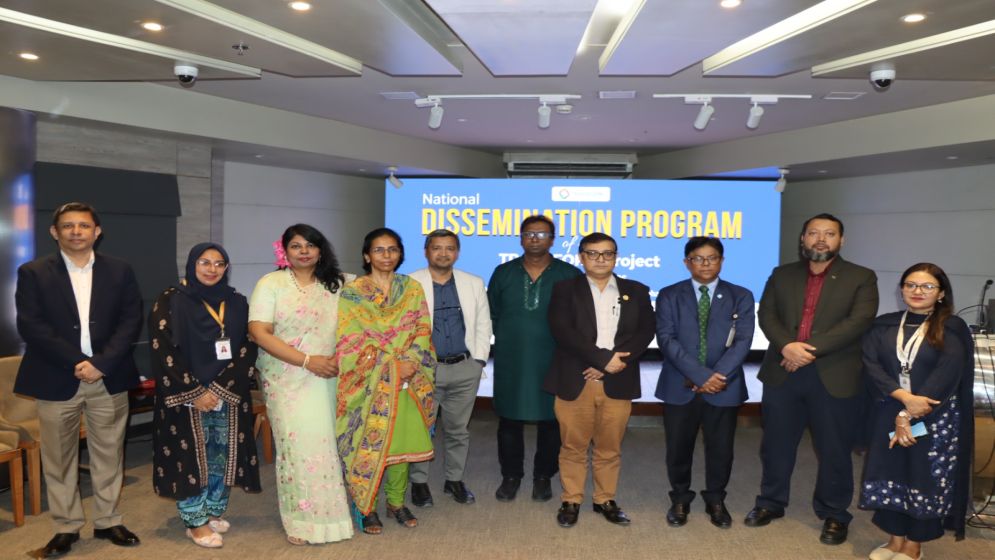
Photo: Courtesy
Psychiatrists and government officials highlighted widespread
misconceptions about mental illness across the country, particularly in backward areas, and the alarming impact
from lack of knowledge at a research finding disclosure event on Tuesday.
The results of a four-year research project by Transform
Bangladesh — aimed at ensuring science-based mental healthcare for slum
dwellers—were presented on the closing day of a two-day event at the BRAC
Centre in Mohakhali, Dhaka.
The research project titled “Transforming Access to Care for
Serious Mental Disorders in Slums (TRANSFORM)” was funded by the UK’s National
Institute for Health Research (NIHR).
Dr Md Shibbir Ahmed Osmani, joint secretary (Public Health
Wing) of the Ministry of Health and Family Welfare, said that mental health
issues in the country are still neglected and public awareness remains very
low. When people fall ill, they often believe they are possessed by spirits or
affected by black magic and seek spiritual or traditional remedies. Due to lack
of proper medical treatment, the condition of mental health patients
deteriorates further. To understand the true picture of mental health in the
country and bring the majority of patients under proper care, nationwide field
surveys focusing on disease patterns, patient conditions, and treatment
practices, along with awareness activities, are necessary.
He added that it is difficult for the government to carry
out such initiatives alone. Therefore, he urged development partners to
implement more such projects to uncover the real mental health situation in the
country. The government, he said, is willing to work with local and
international organizations to improve mental health services.
Md Mamunur Rashid, joint secretary (World Health Wing) of
the Ministry of Health and Family Welfare, stated that primary healthcare
services in the country have expanded significantly. Community clinics, union
sub-centers, and upazila health complexes are actively functioning. By
involving these institutions, it is possible to implement field survey projects
to determine the actual mental health status of the population and raise
awareness among patients and their families. If such initiatives are
undertaken, people across the country will benefit, be protected from incorrect
treatment, and become aware of where to access appropriate mental healthcare.
The research project’s Bangladesh Principal Investigator, Dr
Tanzir Rashid Saran, presented the key paper. He discussed various stages and
methodologies of the research, its findings, and how the research could
contribute at the national level.
Speakers at the event included Professor Dr Farzana Dina
from the Department of Community and Social Psychiatry at the National
Institute of Mental Health and Hospital, Professor Dr Nahid Mahzabin Morshed
from the Department of Child and Adolescent Psychiatry at Bangabandhu Sheikh
Mujib Medical University, Professor Dr Khalequzzaman from the Department of
Health and Informatics, and Dr Nazma Akter, assistant director of the Planning
and Research Division of the Directorate General of Health Services, among
others. The event was inaugurated by Professor Dr Nizam Uddin, member secretary general of the Bangladesh Psychiatric Association.
Organizers said that participants over the two-day event
included representatives from government and non-government organizations,
university teachers, public health experts, representatives from the World
Health Organization, various NGOs, traditional healers (Kabiraj) from the
Korail slum area, drug sellers, and community health workers.
During the workshop, young researchers from the project gave
presentations, and panel discussions, plenary sessions, and experience-sharing
sessions were held involving those engaged in research conducted among
residents of the Korail slum.