




 For all latest news, follow the Daily Sun's Google News channel.


Khulna BSCIC Industrial Estate struggles as numerous units shut down
Gazi Moniruzzaman, Khulna
Published: 12 Nov 2025, 01:13 AM
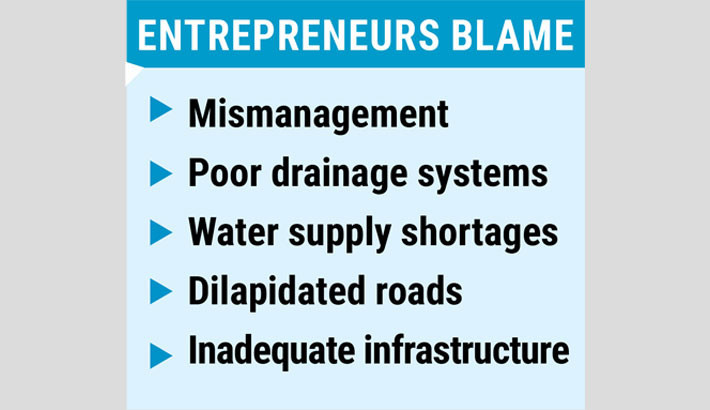
A large number of industrial units in Khulna Bangladesh Small and Cottage Industries Corporation (BSCIC) industrial city are gradually shutting down due to long-standing infrastructural deficiencies and lack of proper management.
Entrepreneurs said they are losing confidence in the area as the BSCIC has failed to ensure the necessary facilities for smooth industrial operations.
According to the BSCIC sources, currently, around 40% of the industrial and factory units in the area have closed, while many others are struggling to survive. New investors are also showing little interest in setting up businesses due to inadequate infrastructure and an unfavorable business environment.
A recent visit to the area revealed severe mismanagement, poor drainage systems, water supply shortages, and dilapidated roads. Locals also complained that the absence of streetlights turns the area into a “ghost town” after dark.
Established in 1957 through a parliamentary act, BSCIC is the main government body responsible for promoting and developing small and cottage industries in the country. It has contributed significantly to creating entrepreneurs, generating employment, and achieving balanced regional development. According to Md Khairul Islam, officer of Khulna BSCIC Industrial City, the project was completed in September 1978 at a cost of Tk53.71 lakh on about 44 acres of land. Of the 244 plots, 240 have already been allotted. Industrial units have been set up in 84 plots, and 66 factories are currently operational. Among these operational units, 19 are food-based, 4 are jute-based, 6 are forest-based, 34 are chemical industries, 5 are printing and packaging factories, and 12 are engineering enterprises. The rest include electrical, electronic, leather, textile, and glass-ceramic industries. These factories collectively employ around 5,000 people and contribute approximately Tk5.5 crore in annual revenue.
However, nine industrial establishments have been identified as “sick industries,” including Mahasin Textile Mills, Sohana Industries Ltd, Madhumoti Coke and Briquettes, Zaman Associates, AR Flour Mills, Work Leather, Aqua Resources, Khulna Paper Board and Packaging, and Messrs Global Enterprises.
“These industries have become sick mainly due to excessive bank loans, poor marketing, ownership disputes, and rising production costs,” said BSCIC Officer Khairul Islam.
Sheikh Ashraf-uz-Zaman, president of the Brihottor Khulna Unnayan Songram Somonnoy Committee, blamed mismanagement for the gradual decline of Khulna BSCIC Industrial City. “Despite immense potential, no large-scale industries have developed here. The rest of the country is moving forward with industrialisation, but Khulna BSCIC is falling behind,” he said.
“Now that the communication network is strong and the Padma Bridge has opened, there is no reason this area should remain neglected. The Industrial Adviser of the interim government should take immediate steps to revitalise the city.”
Meanwhile, Khulna Divisional Coordinator of the Bangladesh Environmental Lawyers Association (BELA), Mahfuzur Rahman Mukul, alleged that several factories in the BSCIC area are severely polluting the environment.
“Industrial waste from these factories is being discharged into nearby ponds, canals, and streams, spreading foul odor and killing aquatic life, including fish,” he said.
Locals and experts have urged the authorities to take urgent measures to restore infrastructure, ensure environmental compliance, and create an investor-friendly atmosphere to save Khulna BSCIC Industrial City from further decline.