



 For all latest news, follow the Daily Sun's Google News channel.


A record number of Bangladeshi-origin candidates are standing in Sweden’s general election on 13 September, contesting seats across national, regional and municipal bodies for parties spanning the political spectrum, from the Left Party to the Moderates.
Advance voting began on 26 August, with voters able to cast ballots at designated centres in cities across the country ahead of polling day.
The election will decide the composition of the Riksdag (national parliament) alongside Sweden’s regional councils (regionfullmäktige) and municipal councils (kommunfullmäktige) for the next four years.
The candidates are campaigning on a wide range of issues, including migration policy, healthcare, education, public safety, employment and housing, with priorities shifting according to party and constituency.
Riksdag and municipal candidates
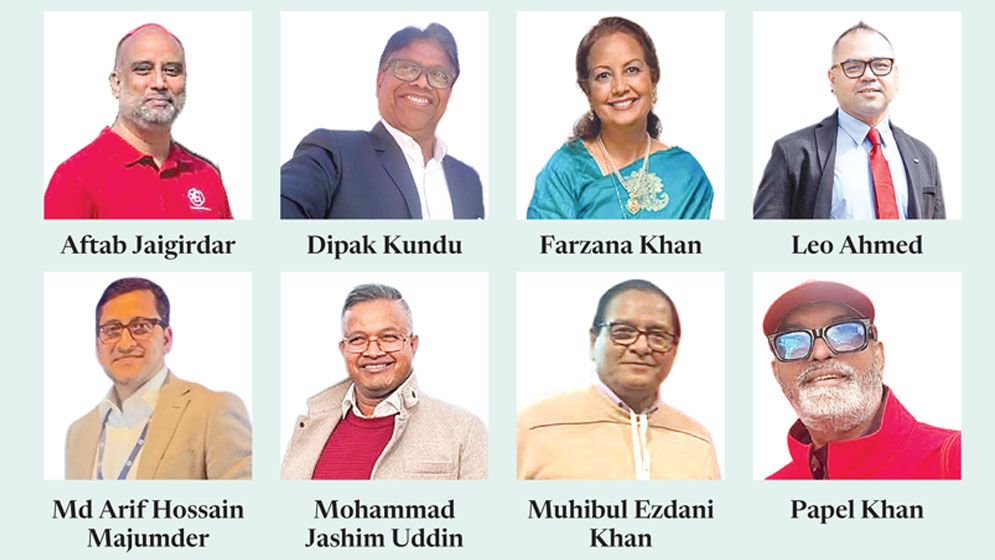
Leo Ahmed is running for the Left Party (Vänsterpartiet), ranked 34th on its Riksdag ballot and first on its list for Sigtuna Municipality.
He has worked on Swedish immigration policy and social issues for nearly two decades, and has centred his campaign on the impact of migration rules on families and on children who grew up in Sweden but face deportation.
“The election is an opportunity to influence the kind of society we want to build and the future our children will have,” Leo told the Daily Sun, urging voters to decide based on verified information.
Farzana Khan is contesting both the Riksdag and the municipal election in Salem, where she says her political outlook took shape.
Her campaign, built on more than 25 years in social services, focuses on safety, integration, employment, language and social cohesion, along with support for victims of crime and violence prevention in close relationships. “A strong society requires both responsibility and opportunity,” Farzana told the Daily Sun.
In Uppsala, Mohammad Jashim Uddin is standing for both the Riksdag and the municipal council.
Much of his campaign has centred on turnout, encouraging voters to cast ballots in advance rather than wait for election day.
“Plan your voting early,” Jashim told the Daily Sun, adding that residents should check they are receiving voting information digitally through Kivra or by post.
Regional council candidates
Several Bangladeshi-origin candidates are also standing for Stockholm’s Regional Council.
Muhibul Ezdani Khan is contesting the seat for the Left Party across Bromma-Kungsholmen, Yttre Väst and Nordväst och Nordost.
His campaign has emphasised workers’ rights, the fair distribution of social resources and opposition to racism and discrimination.
“The Left Party stands for the rights of working people, a fair distribution of society’s resources and a society where all people have equal dignity and value,” Muhibul told the Daily Sun, calling on voters to strengthen the party’s representation at every level.
Dipak Kundu, standing for the Moderate Party (Moderaterna) at No. 19, is campaigning on work, responsibility, public safety and healthcare.
He argues that people who work and take responsibility should keep more of their income rather than face heavy taxation.
“The safety of law-abiding citizens must always come first,” Dipak told the Daily Sun, calling for zero tolerance towards gang crime and shorter healthcare waiting times.
Papel Khan, a Social Democratic Party (Socialdemokraterna) candidate standing at No. 20 in East Söderort, has lived in Rågsved for 18 years and has campaigned door-to-door in areas including Hagsätra.
His platform centres on accessible healthcare, safer public transport and housing, and reducing privatisation in healthcare.
“Healthcare should be accessible to everyone,” Papel told the Daily Sun, encouraging Social Democratic supporters to give him a personal vote.
Municipal council candidates
Architect Tawhid Amanullah is standing for the Left Party in Sundbyberg, campaigning under the slogan “På din sida” (“On your side”).
His platform covers welfare, healthcare, education, housing, fair wages, climate transition and human rights.
“My political vision is centred on building a fairer and stronger Sweden where welfare and public services work for ordinary people,” Tawhid told the Daily Sun.
Aftab Jaigirdar, a mother-tongue teacher standing for the Social Democrats at No. 33 in Botkyrka, has made education his central issue, calling for more teachers and smaller classes.
“Every student should have better opportunities,” Aftab told the Daily Sun, asking voters to mark No. 33 alongside the Social Democratic ballot.
Shimul Sanaullah, standing for the Moderates at No. 23 in Sollentuna, is campaigning on schooling, elderly care, local business conditions and support for sports and associations.
“Local politics should focus on what matters most to residents,” Shimul told the Daily Sun.
Md Arif Hossain Majumder, a Täby resident and parent of two schoolchildren, is standing for the Moderates at No. 37.
Drawing on more than 14 years in healthcare and social services, including LSS and social psychiatry, he is campaigning on education, elderly care, safety and local business development, and wants continued investment in preschool and school support for children who need it most.
A politically diverse field
The candidates reflect the political diversity of Sweden’s Bangladeshi-origin population.
Left Party candidates have concentrated on social equality, workers’ rights and migration; Social Democrats on healthcare, education and public services; and Moderates on public safety, work incentives and local development.
Most say their campaigns are aimed at the wider electorate in their constituencies, not solely at Bangladeshi-origin voters.
Healthcare, education, housing, employment, public safety and migration policy are expected to weigh heavily on immigrant voters as they decide their ballots.
Beyond the outcome for individual candidates, the 13 September vote will show how far Sweden’s Bangladeshi community has moved from casting ballots to standing for office – and how many of this year’s candidates go on to hold seats in the Riksdag, and in regional and municipal councils, over the next four years.