


 For all latest news, follow the Daily Sun's Google News channel.


Default loans hit Tk5.45 lakh crore; MPs owe Tk11,117cr
Bangladesh targets a trillion-dollar economy by 2034 as per capita income hits $2,769; Minister reveals top defaulters in parliament
Daily Sun Report, Dhaka
Published: 07 Apr 2026, 12:00 AM
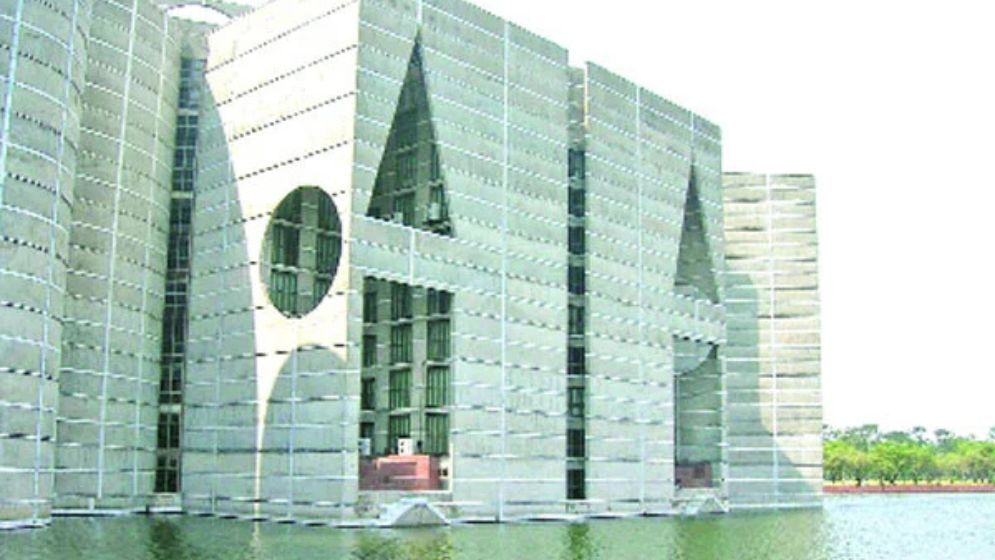
Photo: Collected
Finance Minister Amir Khosru Mahmud Chowdhury has said that the total volume of defaulted loans in the country has crossed Tk5.44 lakh crore as of 31 December 2025.
The minister revealed the information in parliament on Monday in response to a written question from NCP MP Md Abul Hasanat of Comilla-4. At that time, Deputy Speaker Barrister Kaiser Kamal was presiding over the session.
Responding to the specific inquiry regarding the identity of those responsible for this fiscal drain, he also tabled a list of the top 20 loan defaulters in the country. This list includes major industrial conglomerates and business entities that have failed to service their debts over a prolonged period.
The entities of the top loan defaulters include S Alam Super Edible Oil Limited, S Alam Vegetable Oil Limited, S Alam Cold Rolled Steels Limited, Sonali Traders, Bangladesh Export Import Company Limited, Global Trading Corporation Limited, S Alam Trading Company Private Limited, Infinite CR Strips Industries Limited, Keya Cosmetics Limited, Deshbandhu Sugar Mills Limited, Power PAC Mutiara Keraniganj Power Plant Limited, Power PAC Mutiara Jamalpur Power Plant Limited, Karnaphuli Foods (Pvt) Limited, Beximco Communications Limited and Rangdhanu Builders (Pvt) Ltd.
Amir Khosru Mahmud emphasised that the government aims to hold these entities accountable before the public eye. “The government is taking a firm stance against wilful defaulters. The list presented in the House is a testament to our commitment to identifying the bottlenecks in our financial system,” he said.
He assured the House that the Bangladesh Bank and the Ministry of Finance are working in tandem to strengthen the recovery process through the Money Loan Court (Artha Rin Adalat). The process of amending the Bank Company Act and some other related laws is underway to give the central bank more teeth in dealing with board members of defaulting banks, said the minister.
The minister also informed parliament that the amount of loans from banks and finance companies of current MPs and organisations related to their interests is Tk11,117.31 crore.
Bad loans of Tk3,330 crore have not been shown as defaulted, as per the court’s instructions.
In response to another question tabled by Dhaka-18 MP SM Jahangir Hossain, the finance minister informed the parliament that Bangladesh’s per capita income has reached $2,769 for the fiscal year 2024–25. The announcement comes as part of a broader strategic roadmap aimed at transforming the nation into a trillion-dollar economy by the year 2034.
Citing the latest official data from the Bangladesh Bureau of Statistics (BBS), the minister highlighted that the current per capita income reflects the steady resilience of the economy. He, however, emphasised that the government’s ambitions go far beyond current figures.
“Our goal is to hit the trillion-dollar milestone within the next decade. To achieve this, the government is drafting action plans,” he said.
The minister underscored that increasing per capita income is not the result of a single policy but a synchronised effort across multiple pillars of the economy. The government is prioritising a holistic approach focusing on employment, investment, production, exports, and macroeconomic stability, he added.
He said, “We are taking steps that will not only increase individual income and reduce unemployment but also strengthen exports and remittances while protecting the purchasing power of the common people.”
He outlined some strategic areas that are currently being prioritised to boost the national income.
The minister said that the government is placing the highest priority on reducing unemployment by expanding opportunities in manufacturing, construction, IT, and agro-processing. Efforts are underway to simplify the process of starting businesses and create an investment-friendly environment to encourage capital flow into productive sectors, he added.
He said, beyond the ready-made garment sector, the government is exploring new markets and incentivising export-oriented industries to increase foreign currency inflow.
The minister further said that they are taking plans to enhance the skills of migrant workers and simplify the process of sending remittances through legal channels to bolster the rural economy.
The reporter can be reached at: [email protected]