


 For all latest news, follow the Daily Sun's Google News channel.


BPC reallocates Tk19,500cr project funds to sustain fuel imports
Daily Sun Report, Dhaka
Published: 01 Oct 2026, 12:00 AM
The Bangladesh Petroleum Corporation (BPC) has reallocated around Tk19,500 crore from several project funds, including the Eastern Refinery Unit-2 project, to sustain fuel imports amid supply disruptions caused by the conflict in West Asia.
The information was disclosed in a working paper BPC prepared for the first meeting of the Parliamentary Standing Committee on Public Undertakings on Tuesday.
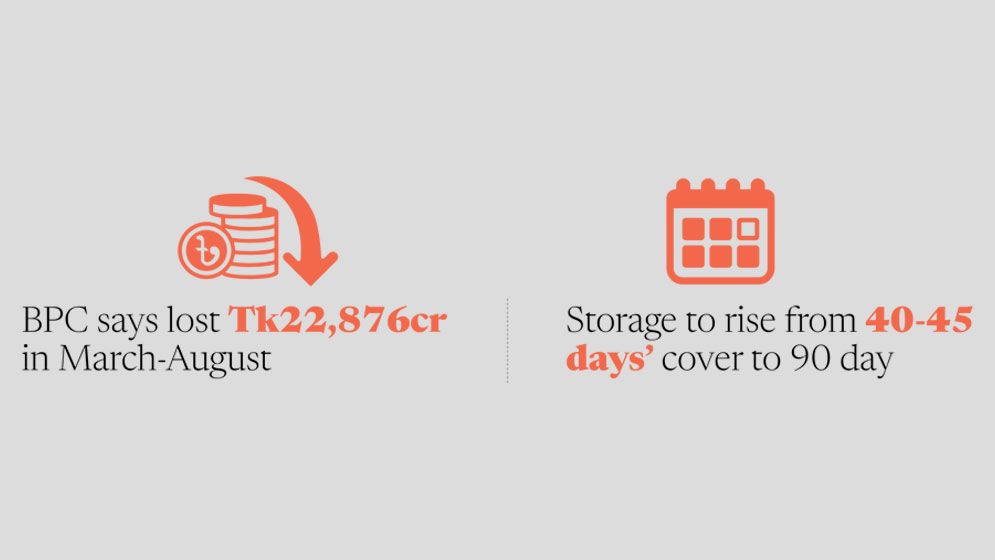
The paper said the corporation incurred losses of around Tk22,876 crore between March and August while maintaining uninterrupted domestic fuel supplies. BPC Chairman Rafiqul Islam said the reallocation would not affect project implementation, as the money belonged to BPC.
“We reallocated the money after considering when and how much each project would need in the current and next fiscal years. No fresh funds were sought from the ministry for this,” he said.
He added that ensuring fuel imports was BPC’s top priority during the crisis and that funds would be arranged for projects whenever required.
According to the paper, BPC needs Tk15,000 crore to Tk20,000 crore in working capital, equivalent to about two months’ fuel costs, to ensure energy security.
Its working capital has shrunk because fuel is sold at subsidised prices.
Rafiqul said diesel accounted for a major portion of the losses, as it makes up around 65% of petroleum products consumed in the country.
The paper said diesel cost around Tk205 per litre at international prices and the prevailing exchange rate when it was prepared, while it was sold domestically at Tk115.
The average international diesel price rose from $86 per barrel in February to $186.59 in March and peaked at $284.95 in April. It averaged $165.82 in September.
BPC would need an international price of around $110 per barrel to recover costs at the latest domestic retail price, the paper said.
Bangladesh introduced an automatic fuel pricing mechanism in March 2024, under which prices are adjusted monthly in line with international markets.
However, the government kept domestic prices largely unchanged for around five months after international prices surged from March, citing public interest.
Diesel was raised from Tk100 to Tk115 per litre on 19 April.
On 1 June, kerosene was set at Tk135, octane at Tk145 and petrol at Tk140, while diesel stayed at Tk115.
On 21 September, prices of all four products were raised by Tk20 per litre, taking diesel to Tk135, kerosene to Tk155, octane to Tk165 and petrol to Tk160.
BPC said the latest increase was aimed at reducing losses and the risk of fuel smuggling to neighbouring countries.
The parliamentary committee asked BPC to submit detailed information at its next meeting on fuel demand, storage capacity and preparations to meet future demand, along with a realistic plan to keep prices affordable.
BPC and its subsidiaries have storage capacity for 1,600,273 tonnes of fuel at 64 depots and installations, providing 40-45 days of security depending on the product. The corporation plans to raise this to 90 days.
Rafiqul said subsidiary companies had begun expanding storage using their own budgets, while the total investment required would be determined after reviewing their plans.