


 For all latest news, follow the Daily Sun's Google News channel.


Govt launches national plastic action partnership to boost circular economy
Daily Sun Report, Dhaka
Published: 14 Oct 2026, 03:08 PM
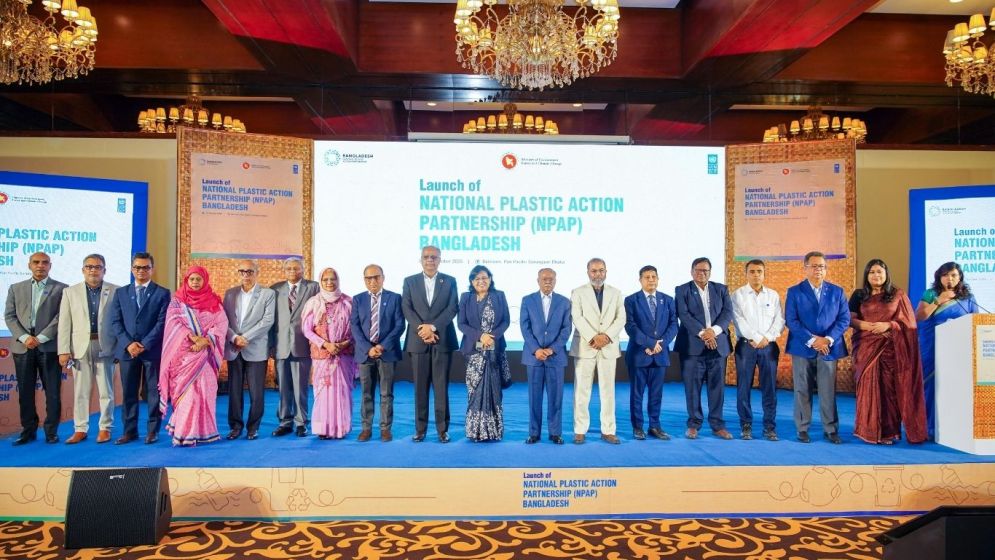
Photo: Courtesy
Bangladesh has launched the National Plastic Action Partnership (NPAP) to tackle plastic pollution, improve waste management and accelerate the transition to a circular economy.
The government launched the initiative in partnership with the United Nations Development Programme (UNDP) and the World Economic Forum’s Global Plastic Action Partnership (GPAP) at a hotel in Dhaka.
Led by the Ministry of Environment, Forest and Climate Change, NPAP Bangladesh brings together government agencies, businesses, development partners, academics, civil society and waste-sector stakeholders to coordinate policies, investment and practical solutions. UNDP Bangladesh will host the partnership’s secretariat.
The initiative comes as Bangladesh faces mounting plastic waste challenges. A World Bank report published in 2024, drawing on earlier national data, estimated that the country generates nearly one million tonnes of plastic waste annually, with almost 70% dumped, littered or openly burned, contributing to pollution, flooding and public health risks.
Addressing the launch as chief guest, Environment, Forest and Climate Change Minister Abdul Awal Mintoo called for collective action to reduce unnecessary plastic use, improve product design, expand reuse and strengthen collection and recycling.
State Minister for Environment, Forest and Climate Change Shaikh Faridul Islam said a circular economy was not simply about changing waste management practices but also about using resources responsibly, protecting the environment and ensuring that people could benefit from the system.
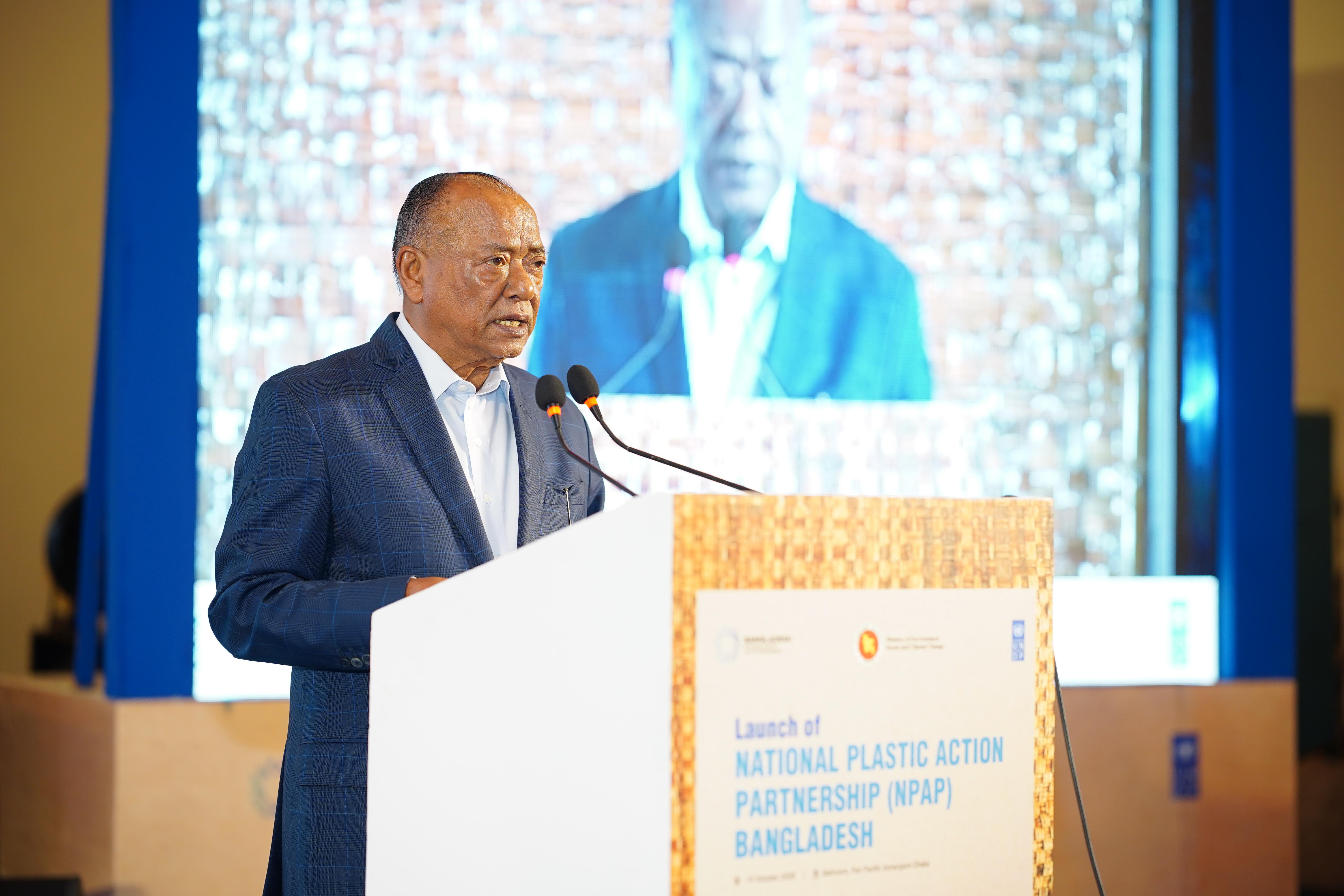
UNDP Bangladesh Resident Representative Stephen Rodriques urged stakeholders to focus on measurable results, including reducing unnecessary plastic use and increasing collection and recycling.
He said the partnership should be able to demonstrate concrete progress by 2027, including improvements in rivers, cities and communities.
Clémence Schmid, director of GPAP at the World Economic Forum, stressed the importance of evidence-based collaboration to translate existing strengths into coordinated action.
Acting Secretary of the Ministry of Environment, Forest and Climate Change Fahmida Khanom chaired the event, which was also attended by UNDP Bangladesh Assistant Resident Representative Sarder M Asaduzzaman. Sayed Monjurul Hoque, project manager of NPAP Bangladesh at UNDP, delivered the key presentation.
A high-level panel discussion focused on breaking institutional barriers and building an integrated plastic circularity ecosystem.
Bangladesh joined the GPAP network in 2025, becoming part of a global initiative covering 25 national partnerships.
The launch follows the introduction of the Extended Producer Responsibility Guidelines for Plastic Waste Management, 2026, which define responsibilities for manufacturers, importers and brand owners.
NPAP Bangladesh will initially work to establish a shared national evidence base and develop a National Plastics Action Roadmap to identify priorities, support policy implementation and mobilise investment. The partnership will also promote extended producer responsibility, strengthen collection and recycling systems, and increase the participation of informal waste workers.
The initiative aims to improve resource efficiency, encourage innovation and support a cleaner, more inclusive and sustainable circular economy.