


 For all latest news, follow the Daily Sun's Google News channel.


3 kidney patients survive 18–20 years on dialysis, defying odds
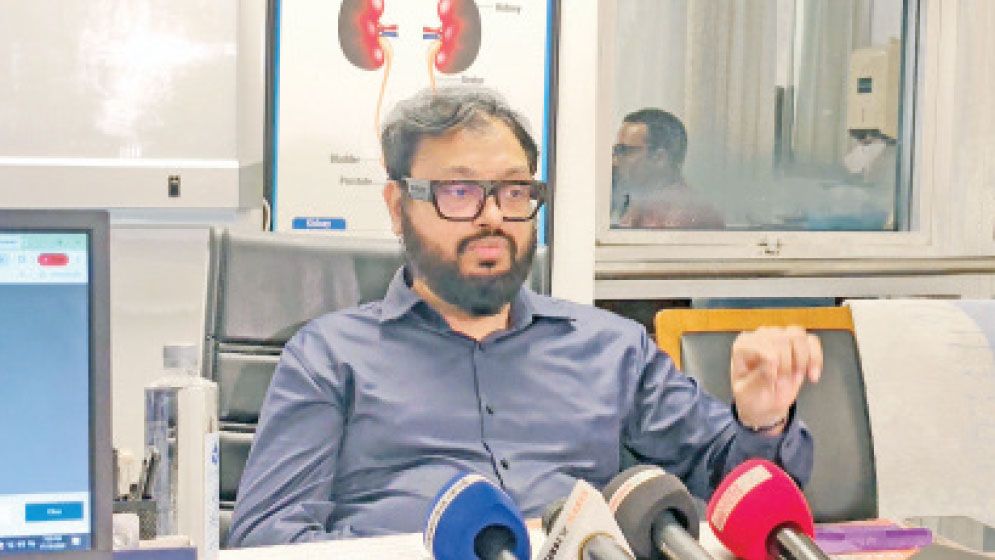
Prof Dr Ebadur Rahman highlights the need for affordable dialysis, improved transplant services and long-term support for kidney patients

Three kidney patients in Bangladesh have survived 18 to 20 years with end-stage kidney disease through regular dialysis, highlighting the long and difficult journey faced by people dependent on life-sustaining treatment.
Their experiences vary widely. One has survived for nearly two decades despite suffering five cardiac arrests, while another has undergone dialysis since the age of 17 because of a congenital bladder condition. A third has continued treatment for 18 years despite complications following a kidney transplant.
According to Prof Dr Ebadur Rahman, coordinator and senior consultant in the Nephrology Department at Evercare Hospital, three patients under his hospital’s care have survived 18, 19 and 20 years on dialysis.
One of them underwent a kidney transplant before returning to dialysis, making his medical journey particularly challenging.
“During my career, the longest survival I have seen on dialysis was 34 years in England, followed by 28 years in Saudi Arabia,” Prof Dr Ebadur Rahman said, describing the patients in Bangladesh as among the longest-surviving dialysis patients he has encountered in the country.
The stories of Aftab Uddin Ahmed, Tawhidul Alam and Mariam Akhter Lipi highlight the determination required to live with kidney failure. They also underscore the importance of regular treatment, family support and access to specialised medical care.
However, doctors caution that these cases of long-term survival should not overshadow the difficulties faced by thousands of patients struggling to afford treatment or access adequate facilities.
Kidney disease is a growing public health concern in Bangladesh, with diabetes and high blood pressure among its major causes. Expanding dialysis services, strengthening kidney transplantation programmes and improving early detection are essential to reducing preventable deaths and improving patients’ quality of life, Prof Dr Ebadur Rahman told Daily Sun.
Nearly 20 years on dialysis despite five cardiac arrests
Aftab Uddin Ahmed was 36 when he suddenly fell ill. He initially experienced a loss of appetite and vomiting, but medical tests later revealed that both his kidneys had failed.
Dialysis became an essential part of his life. Now 56, he undergoes the treatment three days a week and has lived with kidney failure for nearly two decades.
His journey has been marked by repeated medical emergencies. According to his wife, Kamrun Nahar Sheuly, he has suffered five cardiac arrests, each requiring life support. He recovered from every episode with the help of doctors.
Sheuly, a teacher, has remained closely involved in managing his treatment and daily care. She ensures that he attends dialysis regularly, takes prescribed medicines and follows dietary recommendations.
A kidney transplant was considered, but the family ultimately decided to continue with dialysis because of concerns about possible complications.
For the couple, maintaining a regular treatment schedule and managing emergencies have become part of everyday life. Sheuly said the support of doctors, nurses and family members had been crucial throughout their long journey.
Born with a bladder condition, began dialysis at 17
Tawhidul Alam began dialysis in 2007, aged just 17. Now 36, he has spent nearly 19 years living with kidney disease caused by a congenital condition known as neurogenic bladder.
The condition affects bladder function and can put the kidneys at risk. Speaking to Daily Sun, Tawhidul said it had complicated the prospect of a kidney transplant, as a transplanted kidney could also be damaged if the underlying problem was not adequately managed.
He and his family sought treatment in Singapore, Malaysia, Thailand and India but found no permanent solution.
Initially, he received dialysis at Apollo Hospital in Dhaka, now known as Evercare Hospital. He recalled that a session cost around Tk3,600 in 2007, raising concerns about how his family would manage the expense over the long term.
Tawhidul now undergoes dialysis twice a week and remains involved in his family’s travel agency business.
His treatment costs extend beyond dialysis. He estimated that medicines, medical consultations and other healthcare expenses could bring his total monthly expenditure to Tk80,000–Tk1,00,000.
Despite the challenges, he has developed a different perspective on his condition.
“I was born with an illness. I have never really experienced what it feels like to be healthy,” he said.
When he first began dialysis, another patient told him that people receiving the treatment supposedly did not live for more than three years. The comment frightened him, but learning that the same patient had already been undergoing dialysis for four and a half years changed his outlook.
“I could look at this suffering in two ways—as something painful, or I could learn to love and embrace it. I chose the second option,” he said.
He now regards dialysis as part of his routine rather than an interruption to his life. Meeting and talking to other patients during treatment has also helped him cope.
18 years of treatment after a kidney transplant
Mariam Akhter Lipi was 29 when she developed kidney failure in 2009 following complications associated with high blood pressure. Her condition became critical, requiring hospitalisation, life support and dialysis.
Although she subsequently underwent a kidney transplant, the procedure did not end her medical difficulties.
According to Lipi, the initial estimated cost of the transplant was Tk7,50,000, but the total bill eventually reached around Tk20,00,000, including a repeat operation.
She developed an infection about a week after the transplant and required prolonged treatment. Her wound had to be dressed twice daily for nearly five months, while antibiotic injections and specialised medicines added substantially to the cost.
She estimated that treatment for the infection alone cost around Tk10,00,000–Tk15,00,000.
Lipi also experienced bone weakness and severe pain in her knees and thigh bones, which at one point forced her to use a wheelchair. She continued to face other health complications alongside her kidney problems.
Now living in the Goran area of Khilgaon in the capital, she undergoes dialysis three days a week. Her monthly medical expenses, including dialysis, injections, medicines and check-ups, amount to around Tk1,20,000, she said.
Her husband has been a constant source of support, helping her prepare for dialysis, manage her medicines and meet her daily healthcare needs.
During the early months of her illness, the thought of leaving her young child at home while going to hospital often overwhelmed her. Her determination to raise her child and secure his future gradually became a major source of strength, Lipi said.
Despite years of treatment and financial pressure, she continues to follow medical advice and maintain her treatment schedule.
Access to dialysis remains a major challenge
While these patients have managed to continue treatment for many years, access to dialysis remains a significant challenge for people with kidney failure across Bangladesh.
Prof Dr Ebadur Rahman estimated that kidney disease could affect around 20% of the population, potentially translating into more than three crore people. He also estimated that more than 1,00,000 people may have reached the stage requiring dialysis.
The country’s dialysis facilities remain insufficient to meet the needs of all patients requiring treatment. Many cannot afford private healthcare, while public hospitals have limited machines and capacity, he said.
Without adequate dialysis, patients with kidney failure can develop life-threatening complications, including fluid accumulation in the lungs, dangerously high potassium levels and a build-up of waste products in the blood, Prof Dr Ebadur Rahman said.
He called for expanding dialysis services at public hospitals and improving access to peritoneal dialysis, which can be performed at home under appropriate medical supervision.
Although the government provides some financial assistance to kidney patients, existing support and public-sector facilities remain inadequate compared with overall demand, he said.
Kidney transplantation needs stronger oversight
Prof Dr Ebadur Rahman also emphasised the need to expand kidney transplantation services through specialised training, transparent reporting of outcomes and regular clinical audits.
He said living-donor kidney transplants should ideally achieve success rates of around 98%, presenting this as a benchmark for treatment quality rather than a verified national success rate.
Bangladesh has expanded the scope of organ donation, including provisions for emotional donors. However, he stressed the need for effective regulation to prevent abuse and ensure ethical practices.
He also called for developing a deceased-donor transplantation programme, which could increase the supply of kidneys for patients unable to find suitable living donors.
Countries with established deceased-donor systems have specialised organisations to coordinate donor identification, recipient matching and organ retrieval. Bangladesh could develop a similar framework alongside training dedicated transplant teams, Prof Dr Ebadur Rahman said.
Early detection and prevention remain crucial
Prof Dr Ebadur Rahman said long-term treatment alone could not address the growing burden of kidney disease. Prevention, early diagnosis and better management of underlying conditions were equally important. Diabetes and hypertension are major risk factors, while kidney inflammation, congenital conditions and other medical problems can also contribute to kidney damage.
Kidney disease may progress without noticeable symptoms, meaning some patients seek medical attention only after substantial damage has occurred. Weakness, nausea, loss of appetite, itching, swelling and changes in urination can appear in advanced stages, although these symptoms may also result from other conditions, he said.
Prof Dr Ebadur Rahman advised people with diabetes or high blood pressure to undergo regular kidney-function assessments and cautioned against taking painkillers or other medicines without appropriate medical guidance.
He also highlighted the importance of safe drinking water, food safety, proper sanitation and protective measures for agricultural workers handling pesticides and fertilisers. Stopping smoking, maintaining adequate hydration and seeking timely treatment for urinary tract infections are other important preventive measures.
Prof Dr Ebadur Rahman called for stronger public awareness programmes, expanded dialysis services, improved access to kidney transplantation and regular audits of treatment outcomes.