


 For all latest news, follow the Daily Sun's Google News channel.


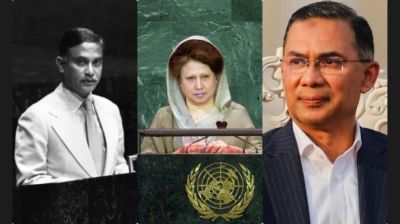
Tarique Rahman to take the story of a changing Bangladesh to the UN
Special Correspondent
Published: 20 Sep 2026, 12:00 AM
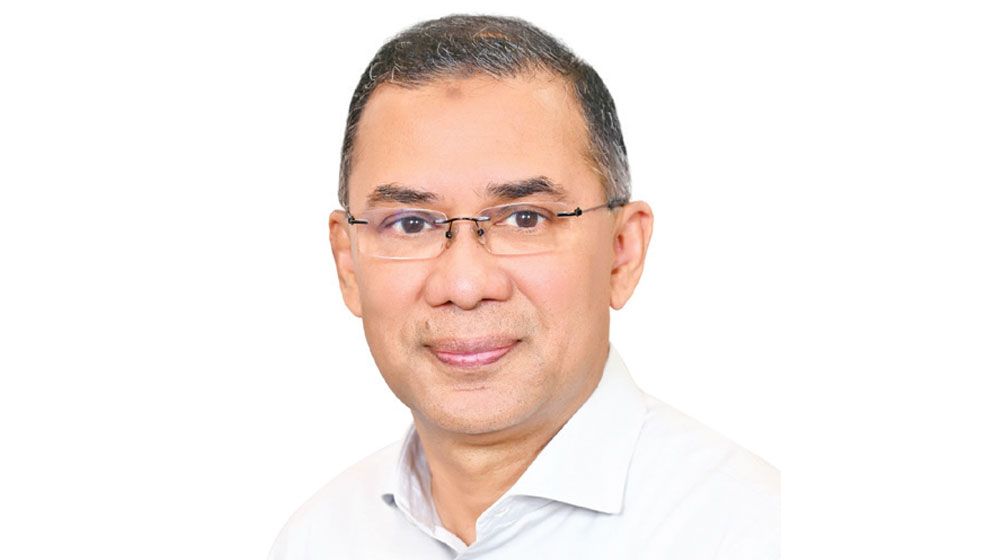
Prime Minister Tarique Rahman. Photo: Collected
Bangladesh’s participation in the upcoming session of the United Nations General Assembly (UNGA) is distinct from that of previous years. In the past, participation often meant plane-loads of entourage members – a massive delegation enjoying what amounted to a picnic at the state’s expense. Days were spent idling, wasting public money and inflating insignificant meetings to attract media attention.
In contrast, the previous UNGA session was led by Prof Muhammad Yunus, who travelled to New York with a large delegation, using public funds for meetings related to his own organisation and brief courtesy calls. Bangladesh’s achievements from that trip were zero, mirroring Yunus’s “Zero Theory”.
Prime Minister Tarique Rahman’s UN trip is fundamentally different. He is travelling to the United States with a lean, purposeful delegation in which every member has specific responsibilities. The prime minister’s visit is extremely brief yet highly significant, with every moment dedicated to public welfare and national interests. Marking the shortest New York visit by any Bangladeshi head of government in 17 years, and with the smallest delegation, it promises to be one of the nation’s most focused diplomatic endeavours.
According to Foreign Ministry sources, the schedule has been streamlined. Following his address on 24 September, Prime Minister Tarique Rahman will depart New York for Dhaka on the night of 25 September. The trip was initially planned for 21-29 September, with preparations for travel from New York to San Francisco, but the prime minister personally curtailed the visit in consideration of national realities. This reflects the core philosophy of a changed Bangladesh under his leadership: Bangladesh First. While engaging with the global community, the prime minister has ensured that unnecessary luxury and waste are avoided.
Since assuming office, Tarique Rahman has led the fight against waste and corruption from the front. Overturning the old culture of excessive expenditure, elaborate protocol and misuse of state funds, he established a rare precedent from day one. By reducing official protocol and having a simple lunch costing just Tk150, he earned national respect. When a leader practises austerity and integrity, it sets a standard across government, helping to reduce systemic waste and corruption – a reality demonstrated over the past seven months.
Prime Minister Tarique Rahman took charge during a critical period. Over a year and a half, the Yunus-led administration had left the country’s economy severely battered, marked by rising unemployment, increasing poverty and stagnation in the private sector. Shortly after the BNP government took office, the outbreak of the Iran war triggered a global oil crisis, sending energy prices soaring and increasing costs worldwide. Even developed nations such as the UK, France and Germany struggled to cope with runaway inflation.
Yet, through strategic planning and austerity, the seven-month-old administration not only tackled the fuel crisis but also successfully brought inflation down. Following months of price pressures, inflation fell for the third consecutive month to 8.26% in August, a 10-month low, while food inflation fell to the 7% range, signalling some relief in commodity markets.
While currencies around the world depreciated against the US dollar, Bangladesh maintained a strong exchange rate through fiscal prudence, zero tolerance for corruption and strict spending controls. By curtailing unnecessary expenditure, first at the top executive level and then across ministries, the government stabilised a fragile economy.
Upon taking office, the administration also confronted a severe energy crisis caused by years of mismanagement and alleged looting in the power sector, which had crippled production and led to widespread gas shortages and factory closures. To secure a long-term solution, the prime minister ordered a medium-term programme to drill 150 new gas wells, to be followed by another 150 in the second phase. Plans are also under way to operationalise a third Floating Storage Regasification Unit (FSRU) before 2028, with a long-term goal of having five FSRUs.
The government has approved the import of 18 LNG cargoes, signed a $1 billion international funding deal to expand the Eastern Refinery in Chattogram, resolved technical issues to add 1,046.73MW to the national grid, announced a 500MW power plant and fertiliser factory in Bhola, and integrated 200MW of solar power. Further plans, such as converting all diesel irrigation pumps to solar power over the next five years, introducing rooftop solar incentives, offering tax exemptions on solar equipment and beginning work on a 42.5MW waste-to-energy plant in Aminbazar, aim to ensure a more sustainable energy future. In just seven months, the government has crafted a clear roadmap to address 17 years of accumulated challenges, paving the way for industrial revival.
Reversing the stagnation of the previous period, when private-sector confidence was shaken by what the government described as false cases against entrepreneurs, arson and factory vandalism that left thousands unemployed, the government prioritised reopening closed factories. Prime Minister Tarique Rahman personally met with business leaders and issued key directives to revive the private sector, sparking renewed enthusiasm among entrepreneurs.
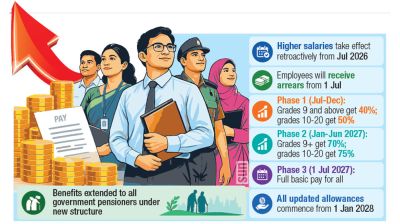
At the same time, social welfare initiatives such as the Family Card and Farmer Card were introduced to support low-income households. The prime minister has travelled across the country to connect directly with citizens and understand their challenges, enabling the government to refine its policies more effectively. Despite economic constraints, the implementation of a new pay scale for public servants highlights the administration’s decisive approach to rebuilding the nation.
At the 81st UNGA session in New York, the prime minister will share this narrative of recovery and resilience with the international community. Alongside high-level UN meetings focusing on development, pandemic preparedness, sea-level rise and nuclear disarmament, Bangladesh will host side-event discussions on the Rohingya crisis.
Diplomatic sources indicate that Prime Minister Tarique Rahman is scheduled to hold bilateral meetings with several world leaders on the sidelines of the assembly, including Pakistan Prime Minister Shehbaz Sharif, Kuwait Crown Prince Sheikh Sabah Al-Khalid Al-Sabah, Canadian Prime Minister Mark Carney, Thai Prime Minister Anutin Charnvirakul, Bhutanese Prime Minister Tshering Tobgay, Croatian Prime Minister Andrej Plenković and Saudi Arabia’s Foreign Minister Faisal bin Farhan Al Saud.
He is also expected to meet key international figures and heads of organisations, including UN Secretary-General António Guterres; UN High Commissioner for Human Rights Volker Türk; UN High Commissioner for Refugees Barham Salih; European Council President António Costa; World Bank Group President Ajay Banga; and Boeing Global Brendan Nelson President.
Additionally, the prime minister is scheduled to attend a dinner hosted by US President Donald Trump.
At this global assembly, the prime minister will present a changing Bangladesh – a nation overcoming obstacles under pragmatic, grounded leadership and moving towards a new horizon on the world stage.
Recommended Stories