


 For all latest news, follow the Daily Sun's Google News channel.


PM’s residence to go solar from Oct
Daily Sun Report, Dhaka
Published: 20 Sep 2026, 12:00 AM
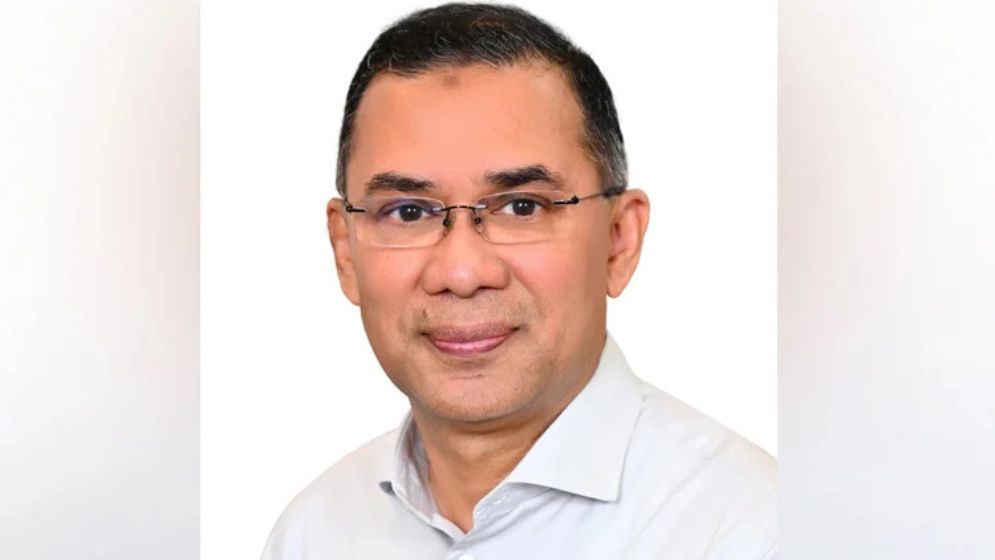
Prime Minister Tarique Rahman’s residence in Gulshan will start using solar power from 1 October as the government moves to gradually bring key public institutions under renewable energy.
State Minister for Local Government, Rural Development and Cooperatives (LGRD) Mir Shahe Alam disclosed the plan at a discussion organised by the Local Government Engineering Department (LGED) in Agargaon, Dhaka, on Saturday.
He said solar power would be introduced at other important government installations in phases after its launch at the prime minister’s residence.
Installation of solar panels has already begun at the Prime Minister’s Office and the National Parliament, he said.
The state minister instructed executive and upazila engineers to take steps to install solar power systems at offices and institutions under their supervision.
He also said he wanted government headquarters and rest houses to be brought under solar power during his visits to different districts.
Shahe Alam said the government had developed a framework with relevant institutions to determine the cost of installing solar power systems at government establishments.
Under the framework, maximum costs have been set for solar systems of specified capacities, along with the cost of batteries providing two to four hours of backup power.
He said the government would sign 20-year agreements with companies installing the systems, with the companies providing free maintenance throughout the contract period.
“If any fault or problem occurs in the system, the companies will be responsible for resolving it,” he said.
The relevant electricity distribution companies would also provide net-metering facilities free of charge, the state minister said.
“After meeting their own electricity demand, government institutions will be able to supply surplus electricity generated by solar panels to the national grid,” he added.
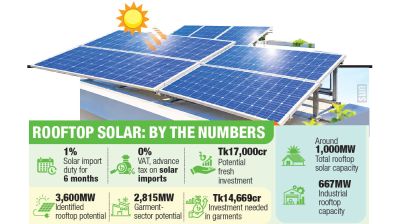
The government’s renewable energy drive is also in line with the National Renewable Energy Development Strategy, which aims to meet at least 20% of the country’s total electricity generation from renewable sources by 2030.
Solar power is expected to account for a major share of that target, with plans to generate around 5,500MW from rooftop solar panels and 4,500MW from ground-mounted solar projects.