



 For all latest news, follow the Daily Sun's Google News channel.


Saudi Arabia, Yemen turn into powder keg
Riyadh vows to take all necessary measures after Houthis ‘attack’ Makkah
Agencies, Riyadh/Sanaa
Published: 17 Sep 2026, 12:00 AM
Saudi Arabia and Yemen Houthi rebels have engaged in active warfare over the past week, turning the border regions between the two countries into a dangerous powder keg.
The region has seen an intense escalation of heavy airstrikes, cross-border ballistic missile barrages, and highly coordinated maneuvers targeting global energy markets and vital maritime choke points.
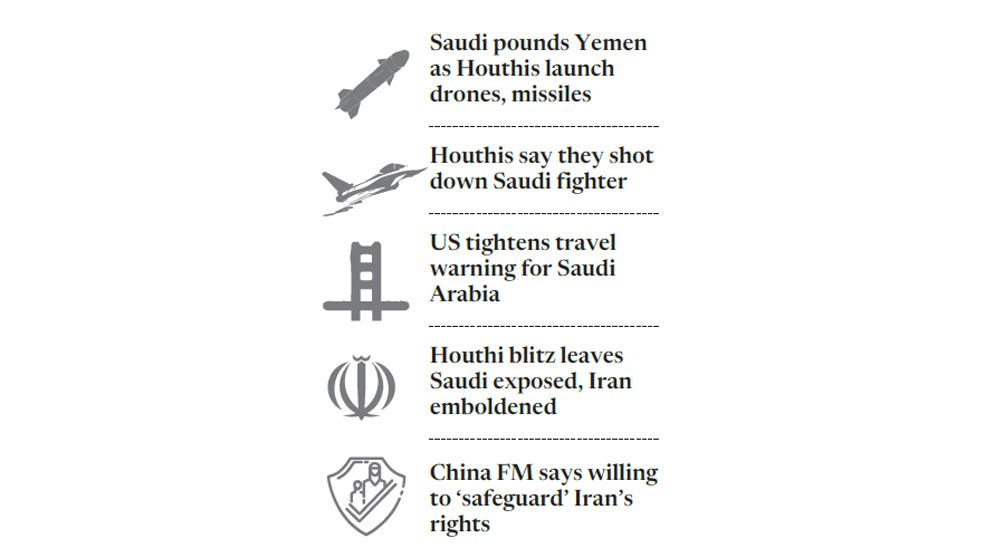
On Wednesday, Saudi warplanes pounded Yemen and Houthi fighters launched drones and missiles at Saudi cities, the Iran-backed movement, after a lightning advance that has extended Tehran’s reach in the Middle East war.
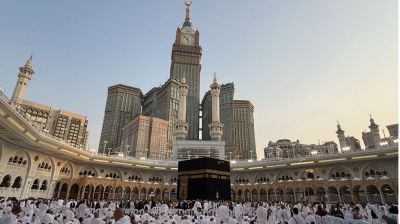
Saudi Arabia condemned the Houthi militia’s drone attack targeting Makkah on Tuesday, reiterating its legitimate right to take all necessary measures to defend the Two Holy Mosques, their pilgrims and the Kingdom.
In a statement, the Ministry of Foreign Affairs described the incident as a cowardly terrorist attack targeting the Holy City — the land of the Message, the birthplace of revelation and the Qibla of Muslims — and a provocation to the sentiments of Muslims worldwide.
The ministry said the attack represented a continuation of the Houthi militia’s practices of targeting and violating holy sites and provoking the sentiments of Muslims around the world.
The Kingdom also noted that this was the militia’s second attempt to target Makkah, following its first attempt on 27 July 2017.
In a sign of the worsening conflict in a new theatre, the US tightened its travel warning for Saudi Arabia, banning government employees from travelling within 20 miles of the Yemen border.
The Houthis, who since last week have swept through Yemeni towns along the Red Sea coast and seized islands in the Bab el-Mandeb strait at its mouth, released battlefield video overnight of fighters seizing armoured vehicles from Saudi-backed forces. Warplanes flew overhead and huge explosions billowed into the sky from desert dunes, the video showed.
Houthi military spokesman Yahya Saree said the group had launched fresh drone and missile strikes on the major Saudi Red Sea oil port of Yanbu, and at a southern Saudi airbase at Khamis Mushait. He did not say when the strikes had taken place.
Both cities were among a wide range of locations where Saudi Arabia announced alerts on Tuesday, although there were no similar announcements on Wednesday.
Saudi officials and oil company Aramco did not immediately respond to emails seeking comment.
Earlier, Saree said the Houthis had also shot down a Saudi F-15 fighter jet. No immediate evidence was presented of that incident.
Saree said the Saudis had carried out as many as 450 air strikes on Yemen this week.
The Houthis have fired repeatedly into Saudi Arabia over the past week causing alarms over cities in the south and west. An attack blamed on Iran-aligned fighters in Iraq last week also knocked out Saudi Arabia’s East-West Pipeline, the main route used to divert oil exports from the blockaded Strait of Hormuz.
The Houthi capture of ground overlooking the Bab el-Mandeb Strait has dealt Saudi Arabia its gravest setback in Yemen in years, exposing intelligence failures, the collapse of Yemeni allies and the limits of US protection.
A Houthi advance this week along the Red Sea coast and the capture of islands at the mouth of the strait, a vital artery for global oil supplies, has also left the kingdom scrambling for backing as Iran and its allies expand their reach.
Senior Western, regional and Yemeni officials and sources said the Houthi breakthrough reflected various factors: deep divisions among anti-Houthi Yemeni factions, an untested Saudi-led command structure that replaced Emirati oversight, limited Saudi air support and an underestimation of Houthi preparations.
The diplomat said the Houthis had quietly assembled about 100,000 fighters, vastly outnumbering forces on the opposing side, adding: “Everyone, including the Saudis, missed this build-up and miscalculated the Houthis’ intentions.”
Neil Quilliam, a fellow at London’s Chatham House think tank, described the offensive as a glaring intelligence failure, saying: “They just weren’t picking up the signal. They just weren’t seeing the signs.”
Yemeni political analyst Farea Al-Muslimi added: “The Saudis were caught off guard in Yemen.”
The collapse of Saudi-backed forces handed the Houthis another prize beyond territory — a sizeable cache of advanced US- and Saudi-supplied weaponry abandoned during the retreat.
The haul, according to regional sources, is likely to bolster the group’s military capabilities, provide valuable intelligence on adversaries’ equipment and further reinforce perceptions of a humiliating Saudi defeat.
“The Yemeni government forces were like a house of cards. They didn’t resist. Completely. Completely,” said Abdulkhaleq Abdallah, a political analyst in the United Arab Emirates.
The setback has also exposed how limited international support for a counteroffensive may be. Two Western officials said neither the United States nor European countries were prepared to offer direct military backing, and that Washington and its allies had not even joined a Saudi-led maritime defence coalition announced in July.
Saudi officials did not respond to a request to comment for this article.
For a third time, the US House has voted to end the war in Iran, approving a war powers resolution that would halt President Donald Trump’s ability to continue military action without congressional approval.
Meanwhile, China’s foreign minister Wang Yi said Beijing was willing to “safeguard” Iran’s rights during talks with his counterpart Abbas Araghchi on Wednesday, as Beijing seeks to mediate in Tehran’s war with the United States.
“China is also willing to strengthen dialogue and cooperation with Iran, and safeguard Iran’s legitimate rights and interests,” Wang told Araghchi as they met in the Chinese capital.
Araqchi stressed Iran’s desire to restore calm to the region and establish friendly, peaceful relations with neighboring countries, saying Tehran has begun talks with regional states toward that goal.
Araqchi referred to the longstanding ties between Iran and China, describing China as a close friend and strategic partner of Iran.
On the other hand, Gaza rescuers on Wednesday searched through the wreckage of a bombed-out apartment building that collapsed overnight, killing at least 20 Palestinians including children and trapping dozens of others beneath the rubble. Tens of thousands of Palestinians are living in some 2,000 buildings damaged by Israeli airstrikes across Gaza.
Rescue workers from Gaza’s civil defence said at least 20 people, including six children, were killed and 14 others injured when the seven-storey building collapsed. Nearly 100 more people were believed to be under the rubble.