


 For all latest news, follow the Daily Sun's Google News channel.


Iran, US agree preliminary to end war, signing set for Friday
Agencies, Washington, Tehran
Published: 16 Jun 2026, 12:00 AM
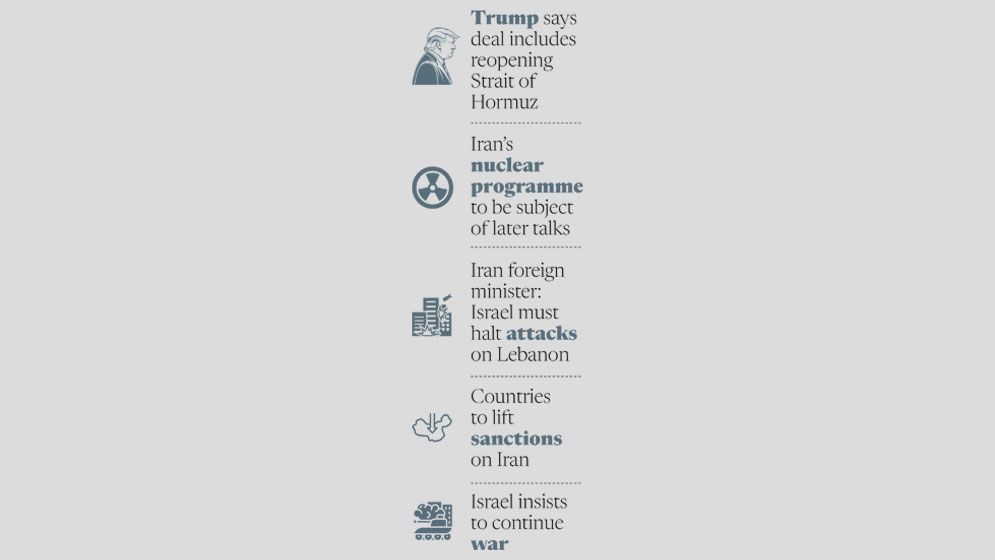
US and Iranian officials said they had agreed on a framework to end their war, halt the US blockade of Iran and reopen the Strait of Hormuz, a preliminary pact that sent oil prices falling but leaves the fate of Iran’s nuclear programme to further negotiations.
“The Deal with the Islamic Republic of Iran is now complete,” US President Donald Trump wrote on his Truth Social platform at around 5:30pm in Washington (2130 GMT) on Sunday.
The memorandum of understanding is scheduled to be officially signed on Friday in Switzerland.
The precise terms were not immediately known. Sharif said in a post on X that the pact called for “the immediate and permanent termination of military operations on all fronts, including in Lebanon.”
Lebanon has been a sticking point in negotiations, with Israel and Hezbollah ignoring calls from Trump and others to stop their attacks on each other in recent weeks.
Iran’s Foreign Minister Abbas Araqchi said there must be a complete halt to Israeli attacks against Lebanon and wrote on Telegram that the US bears responsibility for implementing the framework deal.
“Lebanon is an integral part of the agreement to end the war,” Iran’s foreign ministry spokesperson Esmaeil Baghaei said, adding the text
calls for an end to war on all fronts, as well as the respect of Lebanon’s territorial integrity.
In a statement, the secretariat of Iran’s Supreme National Security Council said war and military operations on all fronts, including Lebanon, would end permanently starting on Monday night.
Iran’s deputy foreign minister, Kazem Gharibabadi, said a more expansive agreement would be negotiated during a 60-day ceasefire period, including sanctions relief for Iran.
The fate of Iran’s nuclear programme, another thorny issue, will also be addressed in those later talks, sources previously told Reuters.
There was no immediate reaction to the announcement from Israel, which has said it was not party to the US-Iran talks.
Israel slams the deal
Israeli figures across the political spectrum on Monday slammed the deal to end the Middle East war, including in Lebanon, saying it would not protect their country’s security.
“Trump’s agreement does not bind us... we are not party to this agreement. It does not safeguard our security,” National Security Minister Itamar Ben Gvir said on his Telegram channel, in the first reaction from an Israeli official to the deal.
Finance Minister Bezalel Smotrich said, “The joint (US-Israeli) campaign achieved many successes in weakening Iran, and those achievements have not been in vain.”
“We will have to continue the campaign to bring down the regime ourselves, using creative means, and ensure that Iran never acquires nuclear weapons.”
Strait to reopen
Trump said the Strait of Hormuz, a major shipping route for global oil and gas supplies that Iran has effectively shut down for months, would open on Friday, and that he had ordered the end of the US blockade of Iranian ports.
“Ships of the World, start your engines. Let the oil flow!” Trump wrote.
Oil prices fell on the news. Brent crude futures fell 4% in early trading on Monday, while US West Texas Intermediate slid more than 4.6%. Stock markets in Asia jumped.
During his first term, Trump withdrew the US from a 2015 multilateral Iran deal, negotiated by Democratic President Barack Obama, that lifted sanctions on Tehran in exchange for limits on its nuclear programme, including international inspections.
Iran responded by ramping up its enrichment of uranium, producing more than 400 kg (around 900 pounds) of material at close to bomb-grade purity. The eventual fate of that uranium is likely to be a key negotiating point during the upcoming talks.
Countries welcome the deal
The United Arab Emirates and Kuwait have welcomed the US Iran deal, expressing support for diplomatic efforts aimed at enhancing regional stability.
The UAE’s Ministry of Foreign Affairs stressed the importance of full compliance with the agreement and commended diplomatic efforts led by US President Donald Trump.
Kuwait’s Foreign Ministry reiterated its support for resolving conflicts through peaceful means and called on all parties to engage in the next round of negotiations with a positive and constructive attitude, Aljazeera reported.
Saudi Arabia on Monday welcomed the deal with its foreign ministry’s statement on social media, which said, “The agreement reached between the United States of America and the Islamic Republic of Iran to end military operations and initiate detailed negotiations within 60 days to reach a permanent agreement.”
Welcoming the agreement, Egyptian foreign ministry said, “Hopes that this agreement will constitute a major turning point toward strengthening mutual trust, laying new foundations for cooperation, creating a supportive environment for peace and advancing diplomatic efforts aimed at addressing remaining regional issues.”
Leaders outside the Middle East, who have kept a wary eye on the conflict, welcomed the announcement as well.
In a joint statement, the United Kingdom, Germany, France and Italy said they are prepared to lift sanctions on Iran in response to “clear, verifiable steps” to limit its nuclear programme.
“We are clear that toll-free freedom of navigation must now be restored in the Strait of Hormuz,” British Prime Minister Keir Starmer said. “Iran must never have a nuclear weapon.”
Chinese foreign ministry spokesperson Lin Jian, in a news briefing, said, “China welcomes the agreement... and expresses appreciation for the mediation efforts made by Pakistan,” adding that Beijing hopes the deal would be signed as scheduled.
China “hopes that safe and free passage through the strait will be restored as soon as possible”, Lin added.
Before the deal was announced, a senior Iranian official told Reuters that, under the terms of the draft, the United States would agree to release $25 billion of frozen Iranian assets. The Trump administration has previously said any release of Iranian money would only take place once Iran has fulfilled certain conditions under a peace deal.
Lebanon PM seeks complete Israeli withdrawal
Lebanon’s Prime Minister Nawaf Salam says the country will doubles efforts “to secure the complete Israeli withdrawal from our lands and the release of our prisoners” after the US-Iran ceasefire agreement was announced.
Salam said in a statement it hopes this deal “will succeed in putting an end to this war and halting the killing, destruction, displacement, and all the tragedies and pains inflicted upon the Lebanese”.
He thanked “all those who contributed to achieving this outcome”.
“We look forward to our people being able to return safely and with dignity as quickly as possible to their cities and villages and will intensify efforts with partners to secure the requirements for reconstruction.”
After the deal was announced, the pace of Israeli attacks in Lebanon decreased dramatically, Lebanese and foreign security sources told Reuters.
Earlier, a Hezbollah official told Reuters that the group has not carried out any operations since the deal was announced and that its position on the ceasefire was linked to Israel’s adherence to it.
Trump said before the memorandum was announced that there should be no more Israeli attacks on Lebanon or Hezbollah attacks on Israel.
Thousands of people have been killed, mostly in Iran and Lebanon, since US and Israeli forces first attacked Iran on 28 February. In response, Iran has struck Israel and Gulf states hosting US military bases and has effectively blockaded the Strait of Hormuz. To counter the blockade, US forces have blockaded Iranian ports, driving up global energy prices.