


 For all latest news, follow the Daily Sun's Google News channel.


Trump’s coercive diplomacy meets resistance in Iran
Agencies, Washington
Published: 17 May 2026, 12:00 AM
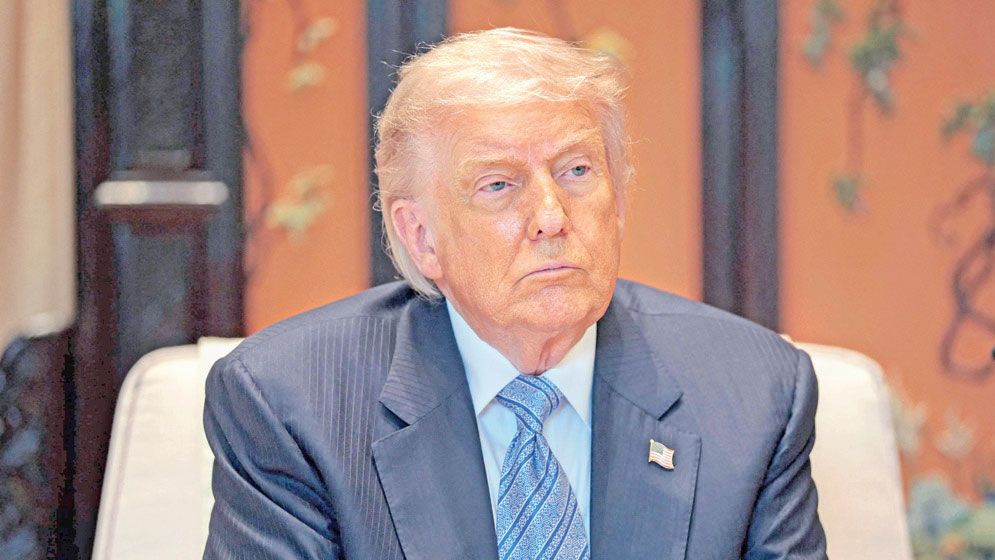
As Donald Trump grew increasingly frustrated with diplomatic efforts to end the war with Iran, administration officials were closely watching whether the president’s trip to China — a nation with close ties to Tehran — would yield a significant breakthrough. Recommended Stories
But Trump landed stateside Friday with seemingly no progress to report.
Speaking to reporters on his journey back to Washington, the US president claimed Chinese leader Xi Jinping said he would like the Strait of Hormuz to be reopened and that he agrees Iran should not develop a nuclear weapon. But those were statements China had made previously.
“He would like to see it end. He would like to help. If he wants to help, that’s great. But we don’t need help,” Trump told Fox News’ Bret Baier about his Chinese counterpart in an interview airing Friday.
Several administration officials said they wanted to see how the talks between Trump and Xi played out before determining a path forward on Iran.
But now the president has to decide whether launching more strikes on Iran is his best option for ending a conflict that has dragged on well past the six weeks he initially projected, spiking gas prices and sinking his approval ratings on the economy.
In a Truth Social post made Friday morning China time, Trump said his military campaign against Iran is “to be continued!”
There have been differing views within the administration about how to proceed, sources familiar with the talks said. Some, including officials in the Pentagon, have argued for a more aggressive approach — including targeted strikes — that they hope would further pressure Iran into compromising.
Others, however, have argued for a continued focus on diplomacy. Trump himself has leaned into this approach in recent weeks, in hopes the combination of direct negotiations and economic pressure would convince Iran to strike a deal. But Tehran hasn’t moved much in its terms for a deal since Trump announced a ceasefire in April.
“Well, I looked at it and if I don’t like the first sentence, I just throw it away,” Trump told reporters on Air Force One on Friday about the latest Iranian proposal.
During his first year back in office, Trump’s blustery negotiating style won him concessions from countries on issues ranging from tariffs to armed conflict.
But with Iran that same brand of coercive diplomacy, marked by public threats, insults and ultimatums, seems to have hit a wall and may be undermining his own efforts to end a war that has shaken the global economy.
With the two sides deadlocked, Trump has signaled growing frustration over the 11-week-old crisis but has shown little inclination to soften his harsh diplomatic approach toward Iran’s leaders.
That does not bode well for a quick negotiated settlement, fueling fears that the current standoff – and its unprecedented shock to world energy supplies - could drag on indefinitely with periodic bouts of brinkmanship.
The continuing impasse with Iran comes as Trump faces domestic pressure over high US gasoline prices and his own low approval ratings after he embarked on an unpopular war ahead of November’s midterm elections. His Republican Party is struggling to maintain control of Congress.
Trump ultimately backed down and agreed to a truce. But since his profanity-laced Easter Sunday threat to destroy Iran’s bridges and power grid, he has repeated that warning, including to reporters on Air Force One returning from China on Friday.
And last week, Trump told reporters they would know that the current ceasefire had collapsed if they saw “one big glow coming out of Iran,” which some interpreted as a threat to deploy nuclear weapons, something he has insisted he would never do.
During Trump’s visit to Beijing, he mostly refrained from tough verbal attacks on Iran while preoccupied with important relations with China, Tehran’s ally and oil customer.
With the Iranians, Trump – who campaigned on a promise to keep the US out of foreign wars – wants to look dangerous to intimidate them into giving ground over their nuclear program and other issues, analysts say.
But former US officials who have negotiated with Iran say this is not likely to work, especially given the entrenchment of its clerical and military establishments and the country’s pride in its long history.
In fact, Trump’s threats may have emboldened Iran’s new rulers, considered more hardline than their slain predecessors, who have even less trust for him following US attacks twice in the past year while the two sides were still in negotiations, analysts say.
And some experts believe Trump’s approach, which he has said is primarily aimed at ensuring Iran has no path to a nuclear weapon, could backfire.
The US military campaign coupled with Trump’s coercive diplomacy might make Iran more – rather than less – likely to ramp up efforts to eventually develop a nuclear bomb so that it might shield itself like nuclear-armed North Korea, analysts say. Iran has long insisted on its right to enrich uranium but says it is only for peaceful purposes.
Meanwhile, the US and Israel are making intense preparations for the possible resumption of attacks on Iran as early as next week, as President Donald Trump weighs whether to restart military strikes after stalled peace negotiations, The New York Times reported.
If Trump resumes strikes, options include more aggressive bombing runs against Iranian military and infrastructure targets, US officials said.
Another option would be to send Special Operations forces after nuclear material buried deep underground, including Iran’s highly enriched uranium at the Isfahan nuclear site. Several hundred Special Operations troops arrived in the Middle East in March to give Trump that option.
However, Trump has said he would accept a 20-year suspension by Iran of its nuclear programme, in what appears to be confirmation of a shift in position away from a demand for a total end to it.
Trump said it had to be a “real 20 years”. But he also said his patience with Iran was running out, with no sign of a breakthrough in talks.
Pakistan’s interior minister arrived in Tehran on Saturday “to facilitate” the peace talks between Iran and the United States that have stalled despite a fragile ceasefire, Iranian media reported.
On the other hand, Iranian state television said European countries were in talks with Tehran over transit for ships through the Strait of Hormuz.
“Following the passage of ships from East Asian countries, notably China, Japan and Pakistan, we received information today indicating that Europeans have also begun negotiations with the Revolutionary Guards navy” to get permission to pass, state television reported, without specifying which countries.