


 For all latest news, follow the Daily Sun's Google News channel.


‘Constitutional reforms to reflect public expectations, July aspirations’
Salahuddin vows police force free from partisan influence
Daily Sun Report, Dhaka
Published: 29 Mar 2026, 12:00 AM
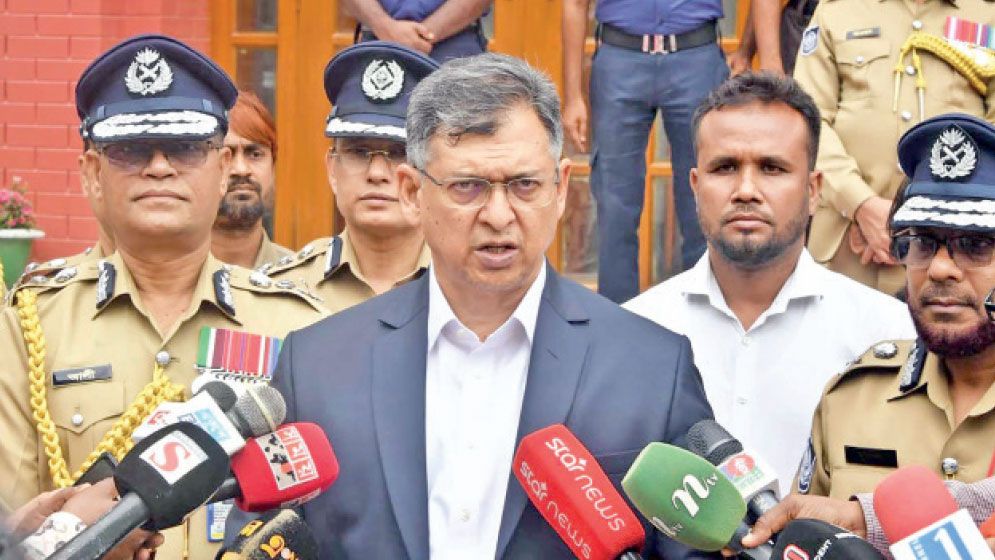
Home Minister Salahuddin Ahmed said on Saturday that public expectations and the aspirations of those martyred in the student-led mass uprising would receive the highest priority in the process of constitutional reform.
“All reform proposals will be considered on a priority basis in line with the July National Charter. The expectations of the people of Bangladesh and the dreams of those martyred in the July mass uprising will be given due importance,” he said.
He made the remarks while responding to questions from journalists after attending the passing-out parade of the 43rd BCS (Police) batch at the Bangladesh Police Academy in Sardah, Rajshahi.
The one-year basic training of trainee Assistant Superintendents of Police (ASPs) concluded with the parade.
Responding to a question on whether the name of former President Ziaur Rahman would be included in the Constitution as the declarer of independence, the minister said a constitutional reform committee would be formed to discuss such issues in detail.
He added that the constitutional amendment committee would prepare draft proposals based on the July National Charter, which has been signed by political parties as a document of political consensus. The proposals will later be discussed in Parliament through the required first, second and third readings before a final decision is taken.
Addressing the police graduates during the certificate distribution ceremony, Salahuddin said the government believes the police should not act on behalf of any particular party or faction but should function as a friend of the public.
“It is not a stick-wielding force for any political party or group,” he said, referring to the BNP’s election manifesto, which vows to transform the police into a modern, service-oriented and humane organisation free from partisan influence.
The home minister said the government has already undertaken several initiatives, including increasing manpower, to build a professional and modern police force and to instil the right institutional mindset.
He said the government is working to establish an independent and strong Police Reform Commission.
“Be servants of the people,” he told the new cadres, adding that outdated colonial-era police laws are being revised to reflect modern needs.
Salahuddin Ahmed described the current period as a “historic transformation”, noting that the responsibility of new officers is greater in building a “new Bangladesh” shaped by the sacrifices of the 2024 student movement.
He reminded the new officers that all citizens are equal before the law, regardless of status or political affiliation.
The home minister further addressed objections to the current police uniform, saying a decision would be taken at the highest policy-making level so that the force may revert to any of the previous suitable uniforms.
He inspected the parade and received a formal salute before distributing medals among officers who excelled in different training categories.
A total of 72 trainees participated in the batch, which began on 1 March 2025.
Land Minister Mizanur Rahman Minu, Inspector General of Police (IGP) Ali Hossain Fakir, Police Academy Principal Additional IGP GM Azizur Rahman and Vice Principal DIG Basu Deb Banik, among other senior officials, were present at the event.
Probationary ASP Ahmed Sadman Sakib served as parade commander during the ceremony. Md Fahim Faisal earned top honours, winning both the “Best Probationer” and “Best Academic” awards.
Other awardees included Md Arafat Hossain (Best in Field Activities), Shaon Reza (Best Horsemanship), and Bapi Kumar Das (Best Shooter).
Following the ceremony, the newly commissioned ASPs will be deployed to different districts across the country for six months of practical field training.