


 For all latest news, follow the Daily Sun's Google News channel.


A weekend with SEVA in Sirajganj
Abid Fahad, back from Sirajganj
Published: 12 Nov 2026, 10:55 PM
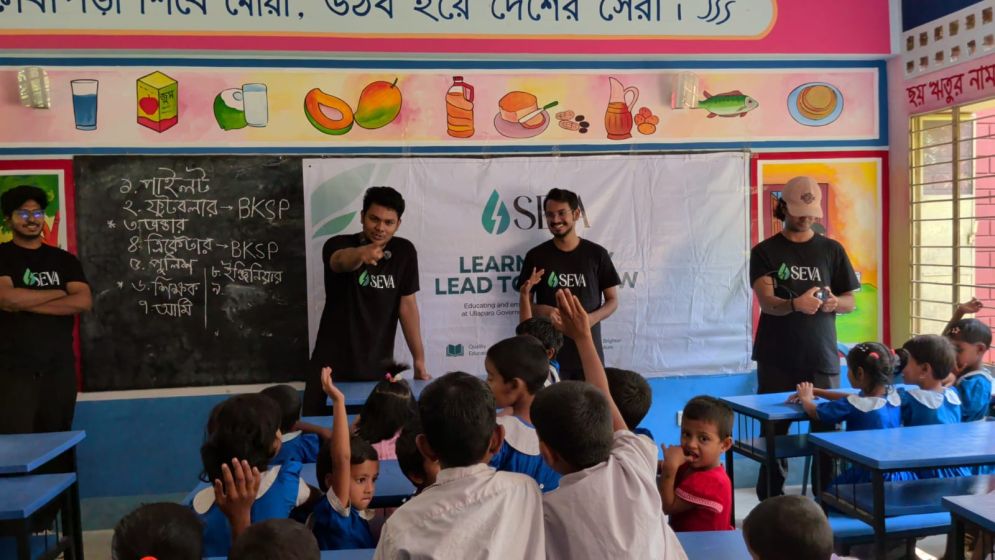
Photo: Courtesy
The train was set to leave at 10:20am. In the Kamalapur
railway station, spotting a fellow volunteer was easy in the crowd. I just kept
an eye for the SEVA t-shirt.
There were 16 of us, all in matching SEVA t-shirts. We
greeted each other, took photos and climbed aboard. I had joined the trip as a
volunteer, so for the next two days I was one of the t-shirts.
SEVA, short for Social Empowerment & Value Advancement,
is a young civic group founded by Abdul Mutaquabbir Lasker, Mahiyat Siddiquee
and Rubayat Hassan Eshan. The initiative was strategically aligned with the
United Nations Sustainable Development Goals (SDGs), particularly Quality
Education (SDG 4), Gender Equality (SDG 5), Climate Action (SDG 13), and Life
on Land (SDG 15).
Their first project, “SEVA for Sirajganj,” ran from November
6 to 7 and had a simple plan: plant seeds, meet schoolchildren and learn
something along the way.
As always the train was overcrowded. We shouldered through the carriages, found our seats and spent the first stretch chatting and gossiping. Then the train left Gazipur and the group's mood changed. It was time to get to work.
We went to the gap where two carriages connect and one by one each of us threw a handful out into the passing countryside. A few volunteers preferred the windows. Nobody could say where each seed would land, which was rather the point.
SEVA’s founder Lasker said that more than 12,000 seeds were
planted over the two days, along the Dhaka–Sirajganj railway line and at
selected spots in Sirajganj. The campaign went by the motto “Seeds Today,
Greener Tomorrow.”
We reached Ullapara station at around 3:30pm and headed
straight to the home of Mahiyat, one of the co-founders. His family had cooked
for us and calling it lunch would be an understatement. It was a feast.
Afterwards, full and a little sleepy, we explored the area.
The next morning we went to Nabogram Government Primary
School. The group organised a workshop, held under the principle “Learn Today,
Lead Tomorrow.”
The workshop was conducted by Mahiyat and Sami Hossain. They
started opened with a simple question: what do you want to be when you grow up?
The answers were a pleasant surprise. One child wanted to be
a pilot, another a footballer, another a police officer, and another an Army
officer.
The session conductors listened to each child. Then they
explained, step by step, what it would take to get there and introduced some
professions the children had never heard of.
The reasoning was simple. The students come from
working-class families and the village is quite remote. Ideas about what is
possible for the future haven't always reached them. They wanted to show the
kids how much they could achieve.
The conductors also spoke about women's empowerment and
raised awareness about domestic violence. SEVA also held awareness discussions
with local women in Ullapara and the school session put special emphasis on
encouraging the girls to take part confidently.
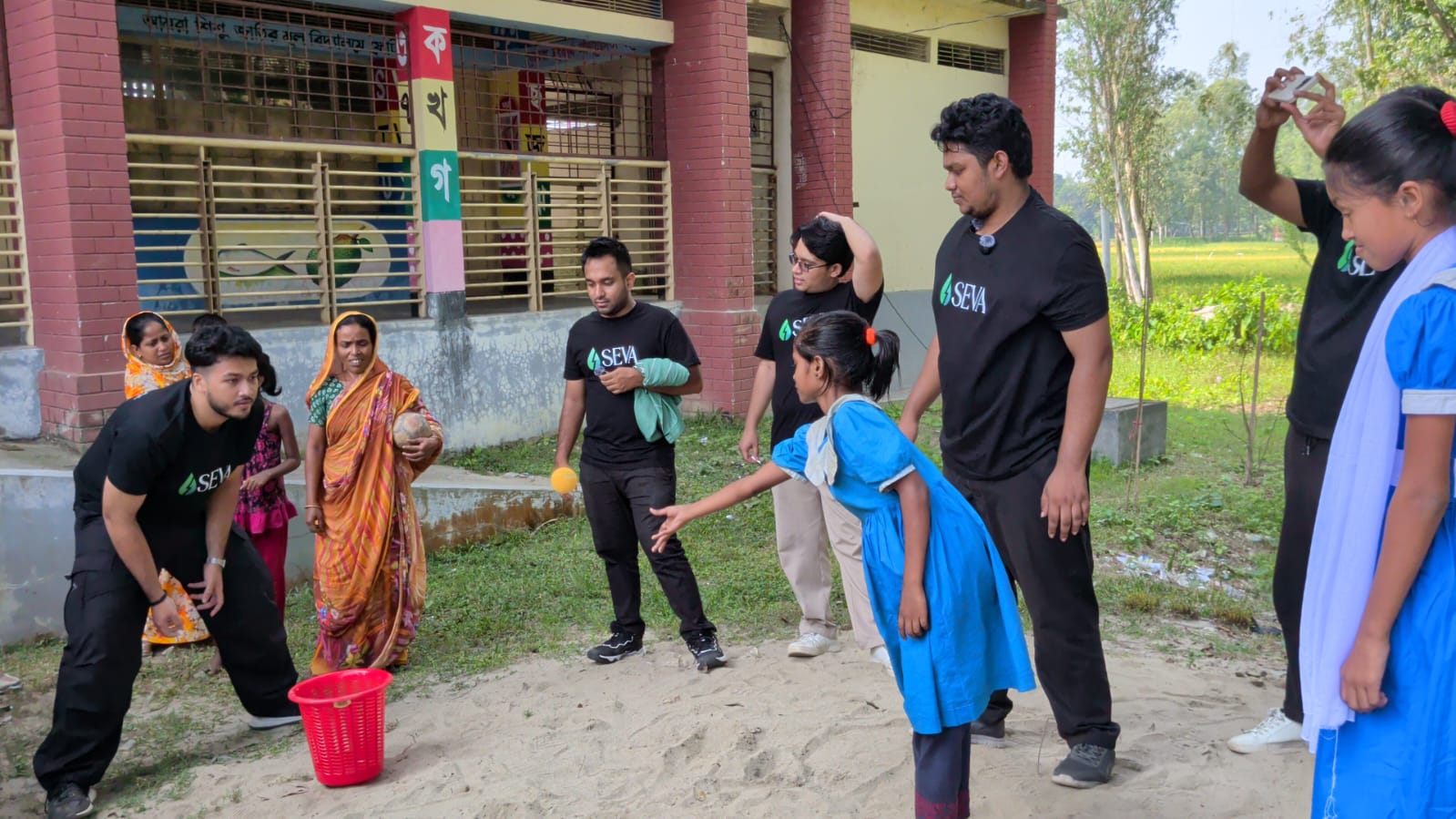
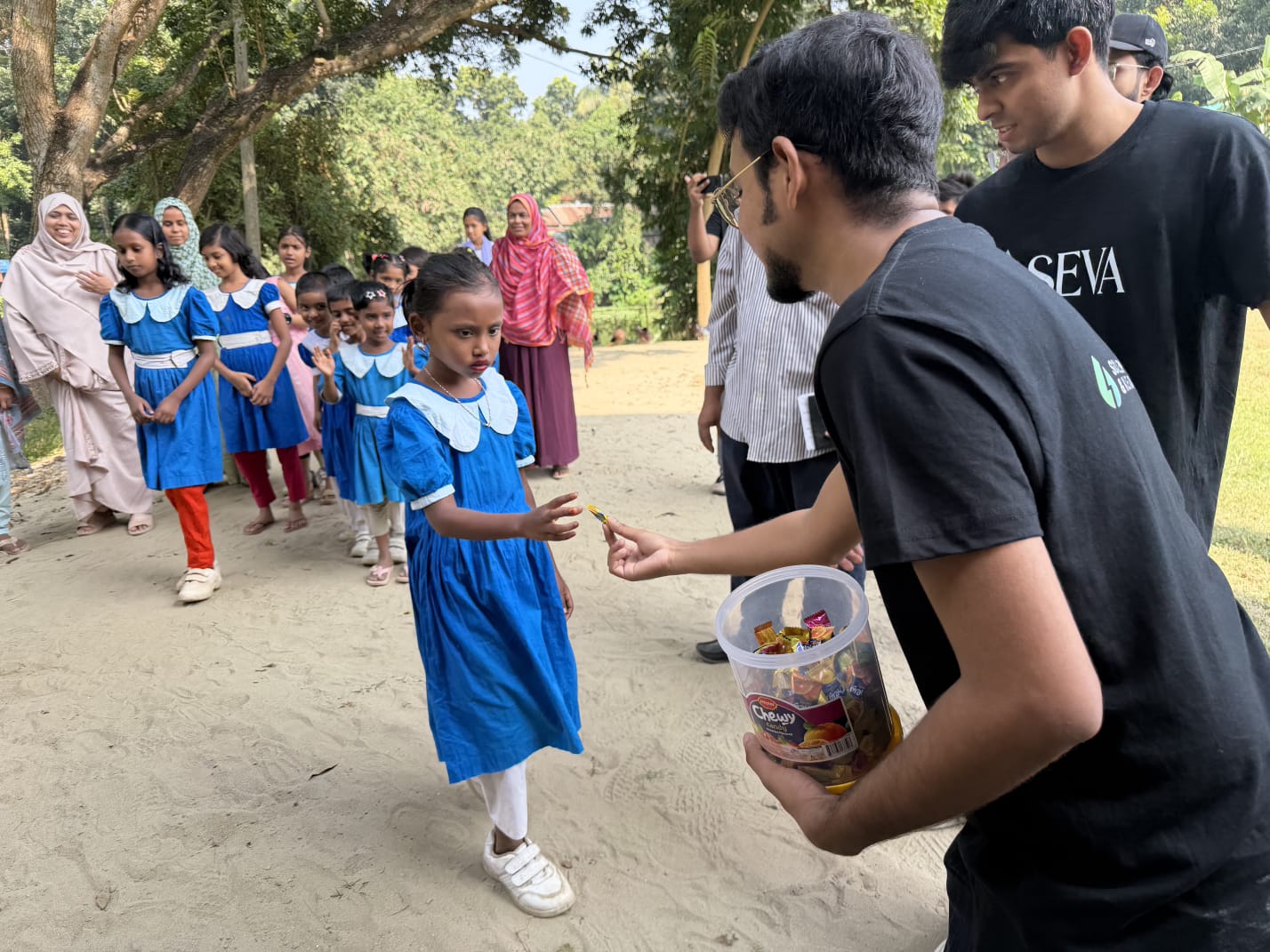
Then came the part the kids had been waiting for. Sami ran a
game show in which contestants had to land a ball in a basket. It got everyone
involved, including some teachers who cheered on for the students. Every
student went home with chocolates and the five winners got a set of colour
pencils.
After the game came the meal. Biryani was served to the students,
the teachers and the parents who were there that day. The teachers and parents
seemed happy with the visit. We took that as a good sign, though I suspect the
biryani helped.
Around 1pm, with plates empty and the workshop done, the
three founders handed us certificates of appreciation for our contribution.
Between the train ride, the feast and the school, there had
also been time for team-building and a bit of cultural exploration. Several of
us who barely knew each other on Friday were swapping jokes by Saturday.
Then we headed back to Dhaka, tired but a lot happier. Whether the seeds will grow into trees, nobody can say yet. But the volunteers got to see a village school full of children with big dreams. For a first project, that was a good place to start.