


 For all latest news, follow the Daily Sun's Google News channel.


Explainer
Cop31: what is at stake at the UN climate summit and what can it achieve?
Delegates from more than 190 countries are gathering in Turkey for climate talks, but the US will be absent
Fiona Harvey, The Guardian
Published: 09 Nov 2026, 03:33 PM
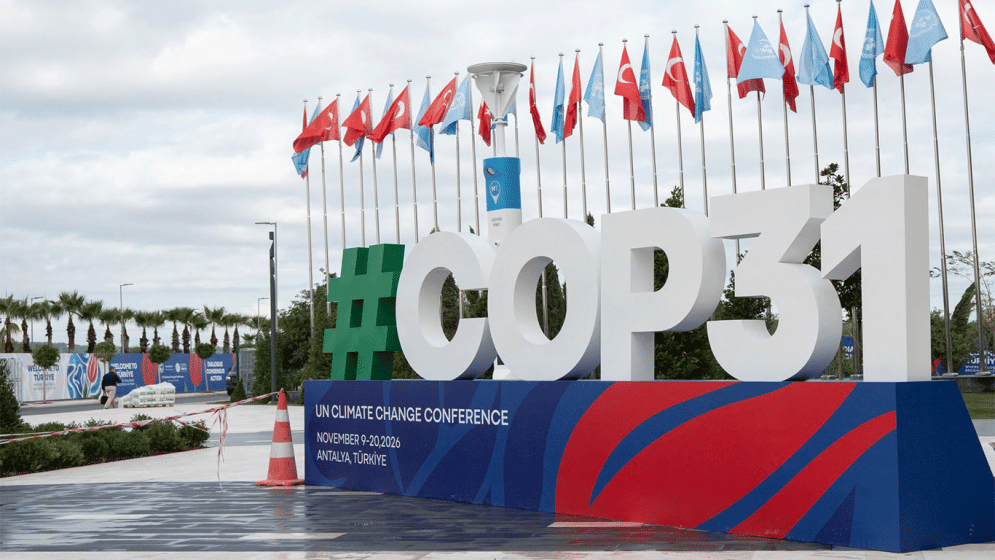
Photo: Collected
As the planet faces unprecedented human-caused global heating, heads of government are meeting for the next fortnight for the latest round of climate talks. We ask why it matters and what is likely to be achieved.
What is Cop31?
From 9-20 November, world leaders, ministers and
high-ranking officials from more than 190 countries are expected to convene in
Antalya in Turkey, for the annual UN climate talks. This year, the summit will
be hosted by Turkey, but in an unusual twist the negotiations will be presided
over by Australia in a compromise deal struck after the two countries vied for
the presidency.
How will co-convening work?
Australia will take charge of the formal
negotiations where countries thrash out the details of work programmes such as
the “just transition”, climate finance and putting the world on track to stick
as closely as possible to the Paris agreement goal of limiting temperature
rises to 1.5C above pre-industrial levels.
Turkey will take charge of the “action agenda”, the
voluntary agreements that work towards the Paris goals but are not legally
binding: programmes on cutting waste and achieving a circular economy, cutting
methane, improving food security, and – perhaps most important – the
electrification of the global economy.
What are likely to be the key issues?
The Paris goal of 1.5C has been breached, but the UN
argues that rapid action to cut greenhouse gas emissions would limit the
“overshoot” and allow for a return to lower temperatures by the end of this
century. For that to happen, countries need to break dependence on fossil fuels
and adopt low-carbon technologies faster. The two roadmaps from Brazil – on the
“transition away from fossil fuels” and on halting deforestation – will present
ways of doing so.
Developing countries are also in dire need of help
to cope with the hastening impacts of the climate crisis. After the disaster in
Nepal, the country has been granted access to the global fund for “loss and
damage” – the rescue and rehabilitation of communities stricken by
climate-related disasters. But it is not enough, and poor countries also lack
the means to adapt their infrastructure to worsening extreme weather.
Rich countries have been cutting their overseas aid,
while rising interest rates have loaded further debt on to the poor.
What about fossil fuels?
It was not until 2023 at Cop28 that the final
agreement directly addressed fossil fuels for the first time, due to long-term
strident opposition from producing countries. The agreement included a
resolution to “transition away from fossil fuels” but no deadline or plan for
doing so. It is still tricky to get fossil fuels directly on to the Cop agenda,
which requires consensus from nearly all parties, but this year the issue will
be addressed through a non-binding “roadmap” for the global transition away from
fossil fuels.
What would success look like?
Given the tense and fragile geopolitical situation –
some commentators believe we are already in the midst of an unacknowledged
third world war, while inflation and a rising far right are upsetting economies
– countries might be tempted to settle for a quiet meeting.
But there are hopes for a better outcome, which
could include: acceptance of the plans Brazil has produced and a promise to
carry them forward; progress on climate finance for developing countries; a
resolution to the row over climate science that has plagued recent meetings of
the Intergovernmental Panel on Climate Change; and the fleshing out of the
“just transition mechanism” designed to help workers reliant on fossil fuels to
adjust to a low-carbon economy.
Progress is also possible through Cop-related means
outside the formal negotiations. Earlier this year, more than 60 countries,
including the UK, the EU and dozens of developing nations, gathered in Colombia
to vow to “transition away from fossil fuels”. This “coalition of the willing”
could be boosted at Cop31 by new members, as well as fresh impetus from the
recent success of political movements in several countries – Brazil, Canada,
Serbia, Hungary and the US in states that decisively rejected Donald Trump at
the midterms.
What can be achieved without the US?
Several prominent members of the US Congress may
attend, along with businesspeople and US civil society groups, so there will be
representation beyond the White House’s absence. Trump appears intent on
boosting fossil fuel interests as much as possible in the US, but with oil
prices still high after his war in Iran, the economics of low-carbon energy
look ever more favourable.
Are there any reasons to be cheerful?
The geopolitics and the technology. Although the
winds of conflict have upended international relations, they have also shown
countries can benefit from the energy security that results from decentralised
renewable generation. China’s oil imports, for instance, are likely to be down
about 12% this year owing to a massive uptake of electric vehicles, and its
renewable generation capacity has now outstripped coal. This is saving billions
of dollars for consumers and businesses as the oil price soars.
Solar is booming in Africa at last, while in
Pakistan a consumer-led rooftop revolution now produces about a quarter of the
electricity used. Close to half of new cars in countries from Vietnam to some
EU members are now electric.
Electrification will be a key focus of Cop31, and
the high efficiency of electric technology means it could reduce the amount of
primary energy use by half across the world, according to University of Oxford
professor Jan Rosenow.
Politically, the re-election of Lula as president in
Brazil has also cheered climate supporters. Lula will attend Cop, his first
international visit since re-election, and is likely to be a fiery presence,
showing progressive parties around the world how to win while championing the
climate.