



 For all latest news, follow the Daily Sun's Google News channel.


Ramadan 2027 to begin on 8 Feb in UAE: Report
Astronomical projections indicate that Ramadan will last either 29 or 30 days
Gulf News, Dubai
Published: 10 Oct 2026, 09:10 PM
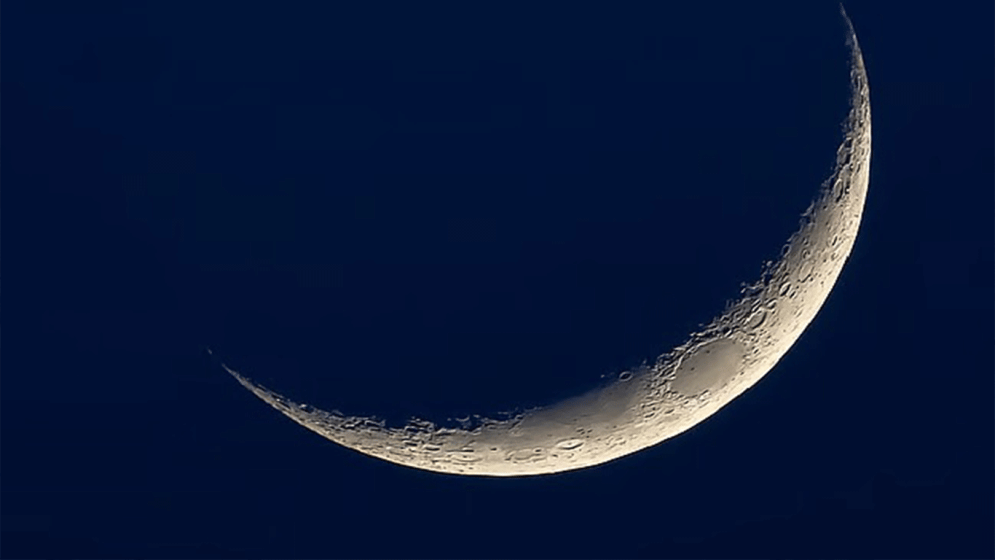
Photo: Collected
Ramadan 2027 is just 121 days away, with the holy month expected to begin on Monday, 8 February, according to astronomical forecasts, while the start of Jumada Al Awwal on 12 October will mark four lunar months until Ramadan.
Ibrahim Al Jarwan, chairman of the Board of
Directors of the Emirates Astronomical Society and member of the Arab Union for
Astronomy and Space Sciences, said the astronomical new moon would occur at
approximately 7.50pm UAE time on Saturday, after sunset, Gulf News reports.
According to Al Khaleej newspaper, Al Jarwan said
the crescent could potentially be visible to the naked eye on Sunday evening, 11
October, making Monday, 12 October, the expected first day of Jumada Al Awwal
1448 AH.
The start of the new Islamic month would mean just
four lunar months remain before Ramadan, which is expected to begin on 8
February 2027, subject to official moon-sighting confirmation.
Astronomical projections indicate that Ramadan will
last either 29 or 30 days, placing Eid Al Fitr on Tuesday, 9 March, or
Wednesday, 10 March.
Al Jarwan explained that one of the defining
features of the Islamic lunar calendar is that its progression can be observed
without specialised equipment or astronomical calculations.
By watching the moon's changing appearance, people
can identify the different stages of the lunar month, from the first crescent
to the first quarter and full moon, followed by its gradual waning and eventual
disappearance.
These visible phases provide a natural way of
tracking the passage of lunar months, which form the basis of the Islamic
calendar.
Meanwhile, the Sharjah Space and Astronomy Hub,
affiliated with the University of Sharjah, issued a different assessment of the
crescent's visibility.
The centre said astronomical calculations indicate
that the crescent marking the beginning of Jumada Al Awwal will not be visible
to the naked eye or through conventional telescopes after sunset on Sunday, 11
October.
However, it said the crescent could potentially be
detected before sunset using advanced astrophotography techniques.
According to the centre, countries that rely on
astronomical calculations or observations supported by such calculations are
expected to begin Jumada Al Awwal on Monday, 12 October.
Countries requiring the crescent to be sighted with
the naked eye or through an optical telescope after sunset could instead begin
the month on Tuesday, 13 October.
The hub confirmed that the moon would reach central
conjunction, the astronomical new moon, at 7.50pm on Saturday, 10 October,
while topocentric conjunction, calculated specifically for Sharjah's location,
would occur at 8.47pm UAE time.