



 For all latest news, follow the Daily Sun's Google News channel.


When and how did Jashn-e-Juloos begin in Bangladesh?
From a small khanqah at Boluar Dighi to festive processions across the country
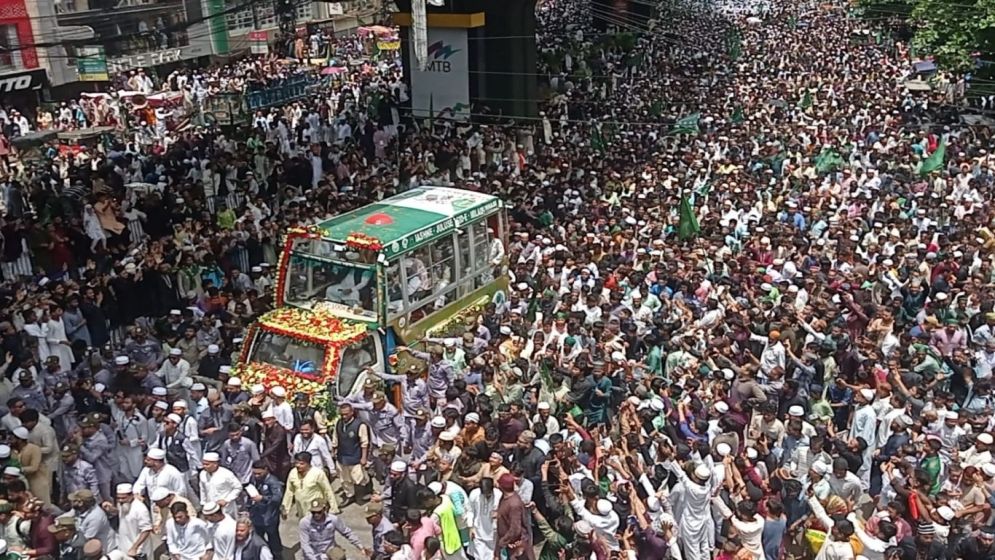
Photo: Rabin Chowdhury
As millions of sufi devotees gather in Chattogram for the 55th Jashn-e-Juloos to mark Eid-e-Miladunnabi, the annual procession has once again turned the port city into a major centre of religious observance. The tradition, which began in Chattogram more than five decades ago, has since grown into one of the country's largest religious processions, attracting devotees from across the country.
Every year, colourful Jashn-e-Juloos processions take to the streets in Chattogram and other parts of Bangladesh to mark Eid-e-Miladunnabi (PBUH). What began as a local religious gathering has gradually evolved into a nationwide tradition, bringing together thousands of devotees in an atmosphere of faith, reverence and celebration.
Chattogram holds a special place in the history of Jashn-e-Juloos in Bangladesh. In 1974, organisers launched the first procession from a khanqah on the banks of Boluar Dighi in the city’s Kurbaniganj area. Over the decades, the event has grown into one of the country’s largest religious processions.
What Does Jashn-e-Juloos Mean?
The word Juloos literally refers to sitting, gathering or assembling at a place. In common usage, however, it means a procession or celebratory march.
Jashn is a Persian word meaning joy or celebration. Together Jashn-e-Juloos refers to a festive procession or celebratory march. In Bangladesh, the term commonly describes processions held to mark Eid-e-Miladunnabii (PBUH).
From Burma To Chattogram
The roots of the Juloos tradition in Chattogram trace back to Burma, now Myanmar.
In 1946, Chattogram engineer Abdul Khaleq met Hazrat Syed Ahmad Shah Sirikoti (RA), a devoted follower of the Prophet Muhammad (PBUH), in Burma. Sirikoti Huzur served as an imam at a mosque there at the time.
A year later, in 1947, textile trader Abul Bashar of Halishahar, Abdul Jalil, secretary of the Chittagong Urban Co-operative, and several others brought him to Chattogram. He stayed at Kohinoor Manzil.
His followers and devotees later expanded Sunni religious activities in Chattogram.
The First Juloos In 1974
Organisers launched Jashn-e-Juloos in Bangladesh in 1974. On 12 Rabiul Awal in 1394 Hijri, the first procession began under the guidance and plan of Allama Hafiz Syed Muhammad Tayyab Shah (RA), the sajjadanashin of Darbar-e-Alia Qaderia Sirikoti Sharif.
Nur Muhammad Al Qaderi (RA), then senior vice-president of Anjuman Trust, led the procession from Khanqah-e-Qaderia Syedia Tayyabia at Boluar Dighi in Kurbaniganj.
The procession travelled through key roads in Chattogram before concluding at the Jamia Ahmadia Sunnia Alia Madrasa ground in Sholoshahar.
Juloos processions continued in 1974 and 1975 under the
guidance of Allama Hafiz Syed Muhammad Tayyab Shah and the leadership of
Anjuman. From 1976 to 1986, he personally led the procession.
His son, Syed Muhammad Tahir Shah, then led Jashne Juloos from 1987 to 2023.
However, age-related illness has prevented Tahir Shah from travelling to Chattogram over the past three years. His younger brother, Syed Muhammad Sabir Shah, now leads the procession.
From Chattogram to the rest of Bangladesh
Jashn-e-Juloos began on a small scale at a khanqah beside Boluar Dighi, but the tradition has since spread across Bangladesh.
Its reach has expanded significantly over the past three decades. Organisers say local communities arrange Jashn-e-Juloos processions after Fajr prayers on 12 Rabiul Awal in all 15 upazilas of Chattogram.
Today, communities organise such processions across the country, from Teknaf to Tetulia and from Kachalong to Jaintia, to mark Eid-e-Miladunnabii (PBUH).
Anjuman also organises a Juloos procession in Dhaka on 9 Rabiul Awal every year.
Allama Shah Sufi Syed Saifuddin Ahmad Al Hasani has also organised international Eid-e-Miladunnabii celebrations at the historic Suhrawardy Udyan in Dhaka.
Various khanqahs, darbars and religious organisations arrange similar processions across the country. This year, organisers held Jashn-e-Juloos events in Hajiganj in Chandpur, Bandar and Rupganj in Narayanganj, and areas near the Narayanganj City Corporation building, among other places.
On 29 August, one of the largest Jashn-e-Juloos processions in the hill districts began from Rangamati Reserve Bazar Jame Mosque after Friday prayers.
Different Sunni religious organisations and political groups also organise Jashn-e-Juloos processions in various parts of the country.
A growing tradition
Abu Taleb Belal, principal of Aparnacharan City Corporation School and College, said Jashn-e-Juloos to mark Eid-e-Miladunnabii (PBUH) no longer remains confined to Chattogram.
“It has now spread across the country, and its scale continues to grow,” he said.
More than five decades after the first Jashn-e-Juloos set out from a khanqah beside Boluar Dighi, the tradition has evolved into a major expression of religious devotion, heritage and collective participation.
The historic link between Chattogram and Jashn-e-Juloos remains strong. Each year, as Eid-e-Miladunnabii (PBUH) approaches, that history comes alive again through processions held across Bangladesh.