


 For all latest news, follow the Daily Sun's Google News channel.


Why is AL repeatedly bringing up Pakistan and ISI?
BBC Bangla
Published: 12 Aug 2026, 05:45 PM
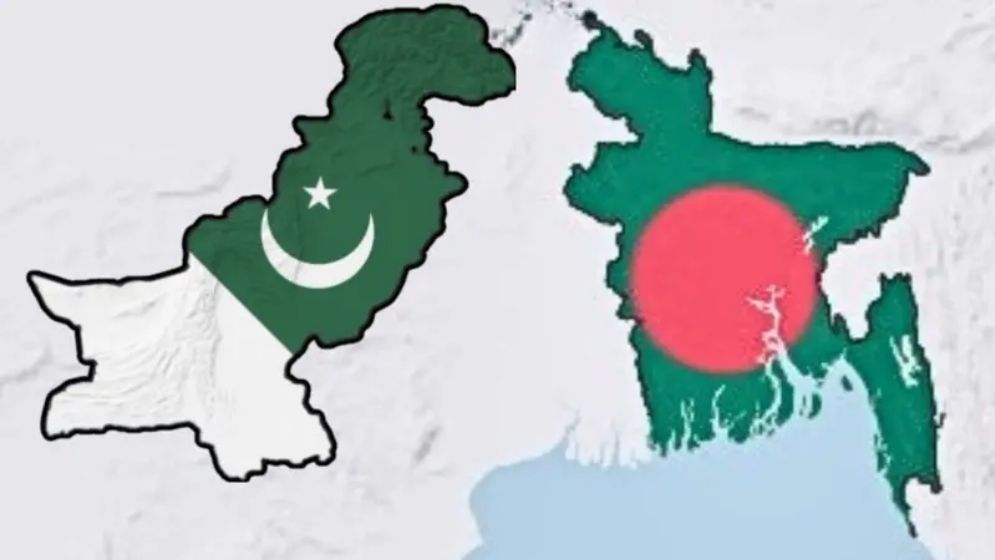
The Awami League has repeatedly raised allegations about Pakistan and its Inter-Services Intelligence (ISI) agency in recent months, with party leaders claiming that Islamabad is seeking to influence Bangladesh’s politics.
The issue drew renewed attention after ousted
prime minister Sheikh Hasina and her son Sajeeb Wazed Joy spoke at a news conference
in New Delhi on 5 August.
Joy claimed that Bangladesh had become
“Pakistan” in India’s south and alleged that Pakistan’s intelligence agency was
operating freely in Bangladesh.
Similar allegations have previously been made
by other Awami League leaders.
Earlier this year, former minister Mohammad
Ali Arafat told India’s Asian News International that the ISI and Pakistani
military intelligence were actively seeking to influence Bangladesh’s politics.
Awami League joint general secretary AFM
Bahauddin Nasim also raised allegations about the ISI’s presence in Bangladesh
and the country’s growing ties with Pakistan in an interview on 24 January.
So why does the Awami League keep bringing up
Pakistan and its intelligence agency?
Political strategy
Relations between Bangladesh and India, and
the Awami League government’s close ties with New Delhi, had long been the
subject of political debate. But ties between the two countries cooled after
Sheikh Hasina’s government fell on 5 August 2024.
Hasina and many Awami League leaders and
activists have been living in India since then.
Some analysts believe that, as many senior
Awami League leaders remain in India, raising the Pakistan issue is aimed
partly at reassuring New Delhi, where concerns over Pakistan remain politically
sensitive.
Professor Toufiq M Haque, director of the
South Asian Institute of Policy and Governance at North South University, said
the Awami League may believe that highlighting Pakistan and militancy could
encourage both India and Western countries to support its return to politics.
According to Prof Toufiq, the party is
relying on an old political strategy of linking its opponents with Pakistan and
militancy.
Prof Sreeradha Dutt, an international
relations expert at OP Jindal Global University in India, offered another
explanation.
She said, “There is a degree of sensitivity
towards Pakistan both in India and among Awami League supporters. The party
could therefore be invoking the issue to motivate its activists and reaffirm
its political position.”
While in power, the Awami League frequently
linked the BNP and Jamaat-e-Islami with Pakistan.
In 2014, Sheikh Hasina, referring to BNP
chairperson Khaleda Zia, said at a rally in Gopalganj that although she was
born in India, “her heart is in Pakistan”, and suggested that she could leave
for Pakistan if she wished.
Analysts also point to the current political
strength of the BNP and Jamaat as another reason the Awami League may be seeking
to revive the Pakistan narrative.
Although anti-Pakistan sentiment remains
strong among many Bangladeshis because of the 1971 Liberation War, anti-India
sentiment has also grown among sections of the younger generation. Analysts say
both trends have developed against the backdrop of the political trajectories
of the Awami League and India’s BJP government.
The Awami League has historically enjoyed
greater support and cooperation from India than any other major Bangladeshi
political party.
Seeking international attention
Joy appeared to make his latest remarks with
an eye on Indian and international media, according to former interim
government adviser and security analyst retired Brigadier General M Sakhawat
Hossain.
He said the Awami League was bringing up
familiar issues such as Pakistan and militancy that no longer carried the same
weight in Bangladesh or internationally.
Although the Indian government has not
officially acknowledged or supported any such involvement, several senior BNP
leaders have said that the Awami League’s political activities in India would
not have been possible without New Delhi’s approval.
Sreeradha Dutt also believes that India has
historically supported Sheikh Hasina and that she remains important to New
Delhi.
However, she said Hasina’s recent statements
could also create difficulties for India, particularly because New Delhi has
recognised and engaged with Bangladesh’s current government.
“I think she is also putting India in a
difficult position by making these statements,” Sreeradha said.
Pakistan rejects ISI allegations
The Awami League’s recent comments have also drawn
a response from Pakistan.
Asked about the allegations at a briefing,
Pakistani Foreign Office spokesman Tahir Andrabi rejected what he described as
clear insinuations about the ISI’s role.
He said India had concerns about the ISI and
suggested that Hasina might have been influenced by those concerns because she
was staying in India.
He also said Pakistan did not interfere in
Bangladesh’s internal affairs.
The issue has also received attention in Pakistan.
International relations expert Dr Ishtiaq
Ahmed told BBC Urdu that, given her circumstances, making such statements from
India and accusing Pakistan might be one of the few political options left for
Hasina.
Former Pakistani high commissioner to India
Abdul Basit said Hasina was making such remarks to please people in India
because she was living there.