


 For all latest news, follow the Daily Sun's Google News channel.


Runa Laila turns 74
‘I may continue to sing for the rest of my life’
Daily Sun Report, Dhaka
Published: 17 Nov 2026, 12:00 AM
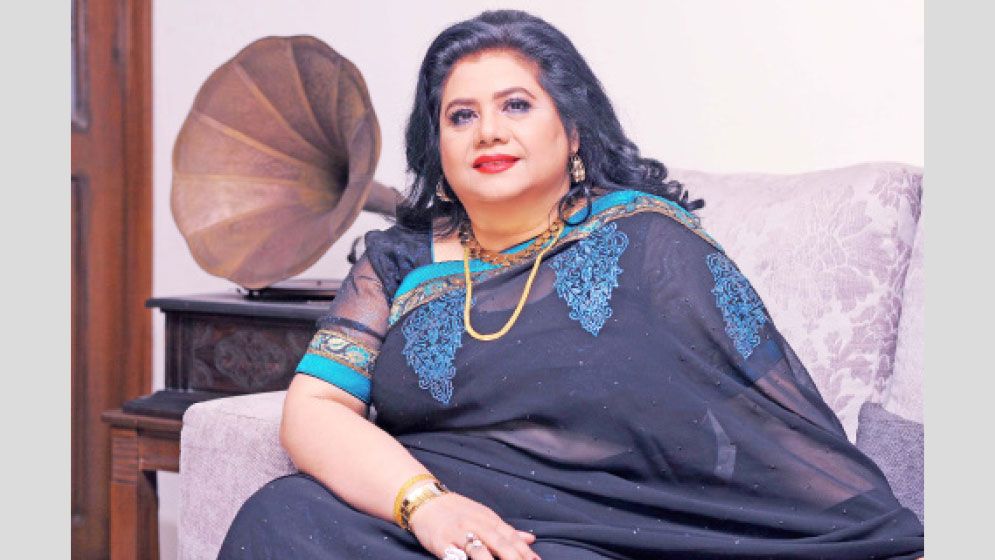
Renowned singer Runa Laila turns 74 today, marking another milestone in the life of one of the subcontinent’s most celebrated musical talents.
Her birthday is often marked by various celebratory activities throughout the year. Contemporary artistes frequently release cover versions of her popular songs, while television channels arrange special programmes to celebrate her remarkable contribution to music.
Reflecting on her birthday, Runa Laila said she now prefers to celebrate the occasion with her family, cherishing the memories of her childhood birthdays.
“These days, I prefer to celebrate my birthday primarily with my family, and this year will be no different. So many birthdays have come and gone, but it is the birthdays from my childhood that I remember most fondly–my mother making clothes for me and preparing delicious food; those are the memories that stand out.”
“Sixty years have passed in my musical career. I received such immense support from my parents, my elder sister Dina, and the rest of my family–without that, reaching this point would not have been possible. I’m infinitely grateful to the Almighty for blessing me with a beautiful life and for keeping me healthy and well to this day–Alhamdulillah. I always ask for everyone’s prayers so that I may continue to sing for the rest of my life,” she added.
Born on 17 November 1952, Runa Laila began her playback career in 1964 with the song “Gudiya Si Munni Meri Bhaiya Ki Pyari” in the Bangladesh-Pakistan joint-production film “Jugnu”. She subsequently lent her voice to numerous Pakistani films, establishing herself as a prominent playback singer.
Before the Liberation War, she made her first mark in Bengali playback singing with the popular song “Ganeri Khatay Swarlipi Likhe” from the film “Swarlipi”. Directed by Nazrul Islam, the film was released in theatres on 29 May 1970. Written by noted artiste Gazi Mazharul Anwar and composed by Subal Das, the song was picturised on actress Babita. Runa Laila’s rendition created a buzz among the audience and marked an important milestone in her career.
After moving to Bangladesh in 1974, she continued to mesmerise the audience with her playback performances in numerous films, including “Jibon Sathi”, “Takar Khela”, “Jighangsha”, “Alo Tumi Aleya”, “Love in Shimla”, “Protinidhi”, “Kajol Rekha”, “Rong Berong”, “The Rain”, “Jadur Bashi”, “Koshai”, “Devdas”, “Chadni”, “Keyamat Theke Keyamat”, “Dola”, “Antore Antore”, “Panku Jamai” and “Dui Duari”.
Over her six-decade musical journey, Runa Laila has also delivered numerous popular modern Bengali songs. Among her memorable tracks are “Jokhon Thambe Kolahol”, “Khacha Bhenge Pakhi Uregelo”, “Bondhu Tindin Tor”, “Protidin Tomai Dekhi Surjer Age”, “Bhasar Jonno Jara Diye Gecho Pran” and “Shesh Korona Khela Shurute”.
In 2017, Runa Laila made her debut as a music composer with the film “Ekte Cinemar Golpo”. Singer Akhi Alamgir lent her voice to the song “Golpo Kothar Oi Kolpoloke”, composed by Runa Laila for the film. The legendary singer subsequently received the National Film Award for Best Music Director for her debut composition.
Her compositions later attracted some of the subcontinent’s most celebrated singers. Renowned artistes Asha Bhosle, Hariharan, Adnan Sami and Rahat Fateh Ali Khan lent their voices to her compositions, with all of them singing in Bengali.
Runa Laila has sung in 17 languages, including Bengali, Hindi, Urdu, Punjabi, Sindhi, Gujarati, Pashto, Baluchi, Arabic, Persian, Malay, Nepali, Japanese, Italian, Spanish, French and English. Her ability to move effortlessly across languages and musical traditions has further established her as an exceptional talent in the subcontinent's music industry.
In recognition of her outstanding contributions to music, Runa Laila has received numerous prestigious honours throughout her career. These include Bangladesh’s Independence Day Award, six Bangladesh National Film Awards for Best Female Playback Singer, India’s Saigal Award and Pakistan’s Nigar Award (1968 and 1970).
Read More