


 For all latest news, follow the Daily Sun's Google News channel.


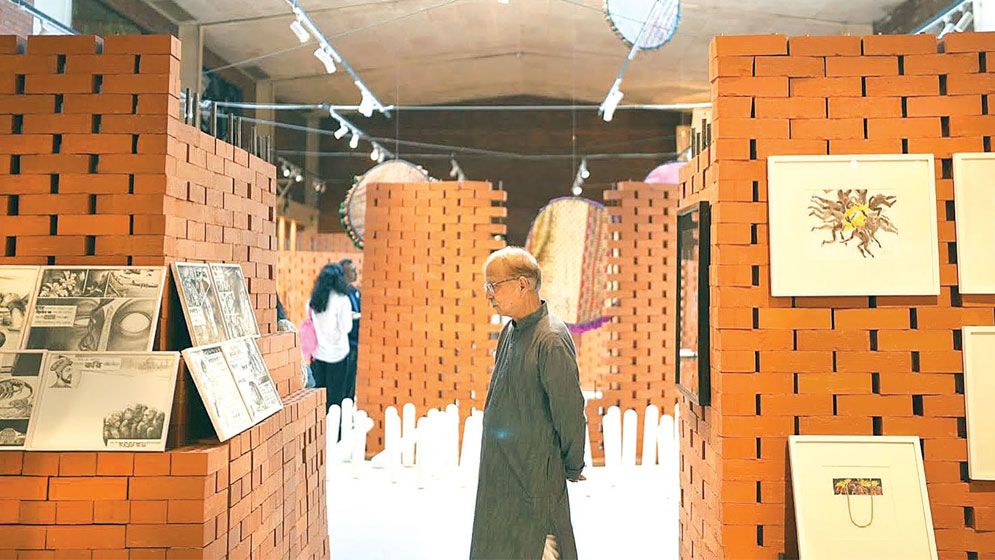
Art Dhaka has made its debut at Aloki in the capital’s Tejgaon area, bringing together more than 130 artists for a five-day celebration of Bangladesh’s diverse artistic and cultural landscape.
The inaugural edition, which began on Friday, features a wide-ranging programme of art exhibitions, immersive installations, live performances, architectural interventions and panel discussions exploring the evolving dynamics of art and culture in Bangladesh.
With curatorial direction led by Najmun Nahar Keya and Zihan Karim, the festival brings together artistic practices spanning generations, disciplines and traditions. Rather than categorising artworks through rigid distinctions of period or medium, the fair seeks to create an environment where diverse artistic expressions can be experienced alongside one another.
A dedicated Print Pavilion, curated by Fareha Zeba, explores the rich traditions and techniques of printmaking while introducing original prints as an accessible entry point for new art collectors.
Beyond the central art fair, Art Dhaka presents a series of specially curated exhibitions and programmes designed to broaden the ways in which audiences experience and engage with art.
One of the key attractions is “Leaping Across Time”, a special exhibition curated by Mustafa Zaman. The exhibition pays tribute to pioneering artists whose creative practices helped lay the foundations of modern art in Bangladesh, highlighting their contributions to the country’s artistic heritage.
The Immersive Zone offers another dimension to the experience, featuring a specially developed presentation of works from Bangladeshi artist Rokeya Sultana’s “Fata Morgana” series.
Meanwhile, the Architecture Pavilion, designed by architect Rashed Chowdhury, draws inspiration from Bengal’s architectural heritage and material traditions. The pavilion explores possibilities for creating temporary, environmentally conscious structures while reflecting on the relationship between architecture, culture and sustainability.
The programme also includes a series of panel discussions bringing together artists, cultural practitioners, collectors and industry stakeholders.
Today, the discussion “The Art Market: Value, Patronage and the Culture of Collecting” will take place at 5pm. Monday’s programme includes “The Unwritten Narrative: Art, Criticism and Cultural Memory” at 5pm and “Beyond the Object: The Changing Nature of Art” at 7pm.
The upcoming sessions will explore printmaking and its possibilities, the role of art in urban cultural life, the art market and collecting, cultural memory and art criticism, and the changing nature of artistic expression.
Art Dhaka was founded by T Aumia Khundkar, Durjoy Rahman, Fahd Sattar and Nahar Khan, whose professional backgrounds span art, culture, business, media and creative enterprise.
Through its inaugural edition, Art Dhaka seeks to strengthen the networks that sustain artistic practices, encourage new forms of patronage and create greater opportunities for artists to connect with the audience. The initiative also aims to expand public engagement with contemporary and traditional art while contributing to a more connected and accessible cultural ecosystem.
Works of more than 130 artists are represented at the event, including Abdus Shakoor Shah, Anisuzzaman Anis, Ashim Halder Sagor, Bipasha Hayat, Biren Shome, Bishwajit Goswami, Dhali Al Mamoon, Farzana Rahman Bobby, Hamiduzzaman Khan, Hashem Khan, Kalidas Karmakar, Maksuda Iqbal Nipa, Mohammad Eunus, Mohammad Kibria, Monirul Islam, Murtaja Baseer, Nisar Hossain, Novera Ahmed, Qayyum Chowdhury, Quamrul Hassan, Rafiqun Nabi, Rashid Chowdhury, Rokeya Sultana, SM Sultan, Safiuddin Ahmed, Samarjit Roy Chowdhury, Shahabuddin Ahmed, Shishir Bhattacharjee, Syed Abul Barq Alvi, Syed Jahangir, Wakilur Rahman and Zainul Abedin.
With its diverse exhibitions, multidisciplinary programmes and emphasis on accessibility, Art Dhaka aims to establish a platform for artistic discovery, dialogue and exchange, connecting artists, galleries, collectors, cultural institutions and the wider public. At the heart of the initiative is the belief that art should be accessible to everyone and that a thriving cultural ecosystem depends on meaningful engagement among those who create, support and experience art.
Art Dhaka 2026 will remain open to visitors daily from 10am to 10pm till 10 November.