



 For all latest news, follow the Daily Sun's Google News channel.


Artificial intelligence is no longer knocking at the classroom door; it is already inside, sitting beside every student who owns a smartphone. It drafts essays, solves equations, generates images and writes computer code in seconds. The question facing education systems everywhere is no longer whether AI will reshape learning and work - it plainly already is - but whether our schools, colleges and universities will prepare young people merely to receive information, or to create value, solve problems and keep learning for a lifetime.
In 2026, Australia offered one of the clearest answers yet. Educators, students, industry leaders and policymakers – many of them gathered in a summit at the Castlereagh Street Campus of the University of Sydney in late 2025 and released the Castlereagh Statement, a cross-sector call to action on education and training in the age of AI. Published as a green paper, it sets a direction and invites the whole sector to build the path together. Though written for Australia, its central ideas travel well – and they carry striking lessons for Bangladesh, where the distance between academic learning, practical skills and the changing world of work has long demanded repair. The movement is not standing still. On 9 November 2026, its organisers will convene an anniversary summit at which the Castlereagh Statement may be reissued as a white paper.
The statement opens with an uncomfortable admission: our education systems were built for a world in which information and cognitive labour were scarce. They still largely reward the reproduction of knowledge - the very thing machines now do cheaply and instantly. In response, it urges systems to reconsider what they value, teach and measure, setting out three goals, six principles and a three-horizon roadmap. Education, it argues, should prize the enduring human capabilities: judgement, creativity, curiosity, ethical reasoning, relationships, adaptability and, above all, the capacity to learn how to learn.
These arguments align closely with the GenTec Education Model. GenTec seeks to integrate general and technical education so that students build academic knowledge alongside practical, employment-orientated skills. The aim is not to discard traditional education but to make it relevant to the realities of work and society.
Bangladesh could begin this shift far earlier than it does now. At the secondary level, students might develop language proficiency alongside at least one recognised technical or digital skill; at higher secondary level, they could add another. These skills - manual, technological or creative - would follow students’ interests and local employment opportunities. Basic and intermediate competencies could be built in schools, and more advanced ones through universities, polytechnics, technical institutions and workplaces.
The purpose is to open multiple pathways from education to employment, entrepreneurship and further study – rather than funnelling everyone toward a single examination and a shrinking pool of white-collar jobs.
The Castlereagh Statement is equally forceful about assessment, and here Bangladesh has much to gain. When AI can generate a polished answer on demand, asking students to produce that answer no longer proves what they understand. The document calls for a shift from measuring the product to making the learning process visible. Bangladesh should likewise expand authentic and experiential assessment: projects, presentations, portfolios, practical demonstrations and problem-solving tasks. AI can be a legitimate learning aid, but students should still demonstrate their own reasoning.
None of this is possible without teachers. The statement insists that no technological transformation can succeed without the workforce’s agency, expertise and support, and that human relationships remain at the heart of education.
Stronger partnerships between institutions and industry are another shared priority. Australia offers ready examples of universities working alongside their vocational counterparts, such as Victoria University with Victoria Polytechnic and RMIT with RMIT TAFE. GenTec envisions locally appropriate versions of the same idea: closer relationships among Bangladeshi schools, universities, polytechnics, technical colleges, employers and government agencies, so that students gain real workplace experience before they graduate.
To steer such a system wisely, Bangladesh needs far better information about skills, education, employment and entrepreneurship. Perhaps the most important lesson from Castlereagh is one of temperament. It frames reform not as a single technology project but as a long-term process across three horizons: urgent stabilisation now, structural transition next, and new foundations over time. This lets a system respond immediately to today’s challenges while preparing for deeper changes in how learning and work are organised.
Bangladesh need not copy the Australian model; its demographic, economic and educational realities are its own. But it can learn from the principles behind the Castlereagh Statement and adapt them. A future-ready system here should weave together academic knowledge, practical and digital skills, ethical AI use, industry experience and lifelong learning.
The central question remains. Will our education system prepare young people simply to absorb information – a task machines now perform faster than any of us – or to think, create, collaborate and keep learning throughout their lives? Connecting the Castlereagh vision with a Bangladesh-focused approach such as GenTec could be a starting point for that transformation. The road runs, improbably but instructively, from Castlereagh, Sydney, to Bangladesh.
______________________________________
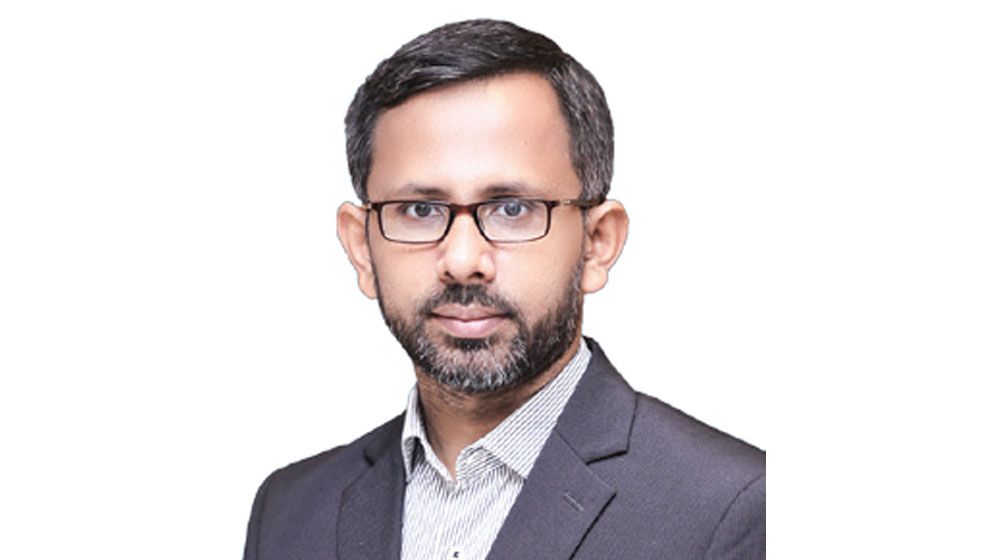
The writer is a School, Technical and Cyber-Digital Education Practitioner based in Melbourne, Australia