



 For all latest news, follow the Daily Sun's Google News channel.


Artificial intelligence (AI), cloud computing and digital platforms are rapidly reshaping national economies. This may create the impression that future job opportunities will increasingly favour the graduates of science, technology, engineering, and mathematics (STEM), while opportunities for non-STEM graduates will shrink. But the central challenge is not simply whether demand for non-STEM graduates will decline; it is how their education must adapt to a changing world of work. Technology is transforming every field ranging from business decision-making and economic analysis to law, journalism, public policy, social research and public administration.
These changes naturally raise important questions among non-STEM students: will STEM graduates enjoy a decisive advantage in the future job market? Will the importance of the humanities, social sciences and business education gradually decline?
The answer is -- no. Technological progress does not mean that the humanities, social sciences, or business education will become less important. Rather, their roles need to be redefined. In the workplace of the future, it will not be enough simply to know how to develop or use technology. We must also understand how technology is changing people, society, the economy, business, and government. This is where non-STEM education has a particularly important role to play.

However, we must recognise an important reality. Many traditional programmes in economics, sociology, English, political science, law and business administration still rely largely on discipline-based theoretical knowledge. While students acquire a sound understanding of their subjects, they do not always gain sufficient knowledge of how technology is transforming their disciplines and future professions. This must change if they are to succeed in the changing job market.
Take economics as an example. In the future, it will not be enough for an economist to know only traditional economic theories. They will also need an understanding of data analysis, the digital economy, fintech, platform-based businesses, and the possible impact of AI on economic activity. Similarly, students of business administration will need to understand data analytics, digital marketing, AI-supported decision-making, and the impact of automation, alongside accounting, management and marketing.
Sociology also needs to adapt. Apart from the study of society through traditional methods, students also need skills in quantitative research, data analysis and digital research. They should also understand how social media and digital technologies are changing human behaviour. Law students need knowledge of digital privacy, cyber law, the use of AI, and the legal and ethical questions raised by algorithm-based decision-making. Students of political science and public administration should understand digital governance, AI and public policy, and the impact of technology on democracy and public administration.
Likewise, the age of technology is creating both new challenges and opportunities for students of English and other humanities disciplines. Digital communication, new media, information verification, AI-assisted research, and the impact of technology on language, culture, and creativity are now relevant parts of their education.
One thing should be made clear here that not every student needs the same level of advanced technical expertise. The main objective should be to combine knowledge of one’s own discipline with awareness of technology and AI, digital skills, and human and critical judgement. This combination can become the new identity of non-STEM education.
To achieve this, we need to reduce the traditional barriers between academic disciplines. In the age of the Fourth Industrial Revolution (4IR), specialised knowledge alone is no longer enough. We also need the ability to bring together knowledge from different fields to understand and solve complex problems.
Therefore, it will not be enough simply to add a few technology-related courses to the curriculum. We need to rethink what we teach, how we teach, and what capabilities students should possess when they graduate from university.
The lecture-based, teacher-centred approach that has long dominated non-STEM education is no longer sufficient in the era of the 4IR. Students must become active learners-- asking questions, investigating real-world problems, and reaching conclusions through their own analysis and judgement.
Teaching must combine technological awareness with analytical ability, systems thinking, and an understanding of human and social issues. Most importantly, as reliance on AI grows, education must help students develop and retain independent and critical judgement.
Inquiry-based learning, projects, case studies, interdisciplinary problem-solving, and structured debates can connect theory with practice while developing critical thinking, collaboration and independent judgement. The goal should go beyond teaching students how to use technology; they must also understand its social, economic and ethical implications. For example, students might examine the ethical consequences of AI-based decisions or work across disciplines to explore AI’s broader impact on society.
The 4IR presents an important paradox: as machines become more intelligent, distinctly human capabilities become more valuable. This is particularly relevant to non-STEM programmes. While students in business, economics, the humanities, and social sciences need greater awareness of AI, data, and digital technologies, their education must also develop capabilities that technology cannot easily replace-- empathy, ethical reasoning, contextual judgement, and an understanding of complex human and social issues. These are not secondary “soft skills” but essential strengths of non-STEM education.
For Bangladesh, this challenge is particularly important. As the economy becomes more knowledge- and technology-driven, non-STEM programmes cannot remain disconnected from technological change. Graduates in business, economics, law, public administration, and the social sciences must understand how technology is transforming their professions and the wider consequences of these changes. Algorithmic bias, digital privacy, the future of work, and AI-based decision-making will increasingly require their knowledge and judgement.
Non-STEM students should learn not only to ask, “Can technology do this?” but also, “Should it be done? Who will benefit? Who might be harmed?”
__________________________________________________
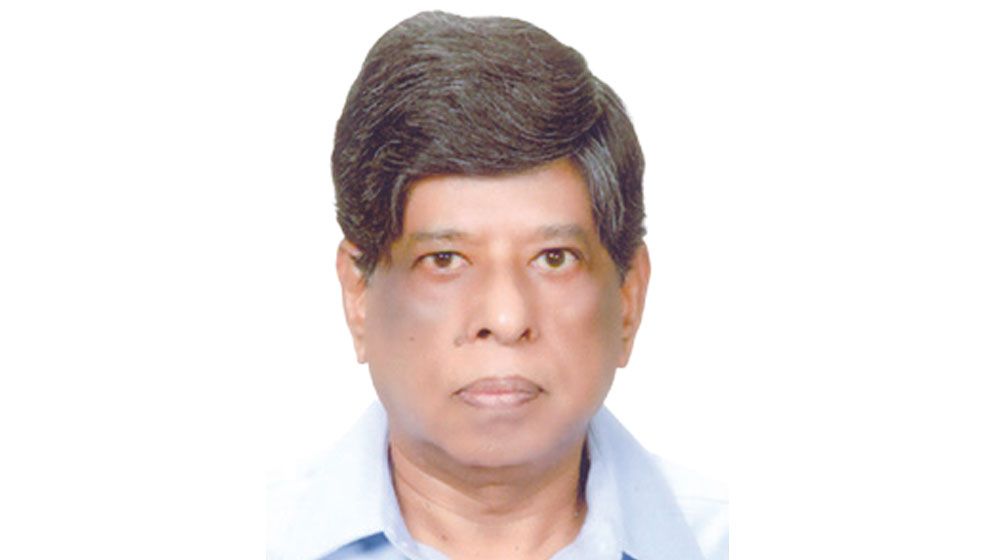
The writer is a Distinguished Professor, Eastern University, and former Vice Chancellor, East West University, Bangladesh