


 For all latest news, follow the Daily Sun's Google News channel.


This year, more than four lakh students applied for rechecking their results. The education boards rechecked more than 10 lakh scripts, resulting in grade changes for 27,836 students and changes in marks in 56,251 scripts. These figures inevitably raise a fundamental question: why are so many errors occurring in our public examination system?
One major reason is the short time given to teachers to examine a large number of scripts. In addition, teachers’ inefficiency and negligence, as well as irregularities in the computer sections of education boards, may contribute to mistakes in the examination and result-preparation processes. We can recall that ministers and education officials of the previous government used to take pride in publishing examination results within two months instead of taking three months or more. I repeatedly wrote that this should not be considered a credit when such speed could compromise the accuracy of evaluation.
We are gradually becoming more dependent on machines and modern technology, but our human qualities and sense of responsibility appear to be declining. During our time, teachers examined scripts by hand and even prepared results manually, yet mistakes were relatively few. Today, most stages of result preparation are handled by computers and other modern devices, but errors appear to be increasing. This year’s rechecking has produced a high number of grade changes, students moving from fail to pass, and scripts with changed marks. The students who have been suffering mental stress since August 10 have finally received some relief. But can such a situation be considered normal? Who will take responsibility for these mistakes? It is also a sad reality that teachers from many reputed educational institutions are reluctant to evaluate board examination scripts because of the low honorarium. They often forget that examining scripts is an important responsibility of a teacher. By evaluating scripts from different schools and areas, teachers can become familiar with the strengths, weaknesses and common mistakes of students. This experience can help them better understand the teaching-learning process. If qualified teachers refuse to examine board scripts, however, education boards are forced to depend on whoever is available. Punitive action against teachers for refusing to examine scripts may also create resentment within the teaching community. Therefore, teachers should come forward voluntarily and consider script evaluation a professional responsibility.
When experienced teachers are unwilling to take scripts, board authorities may have to assign them to inexperienced or less-motivated teachers. Some may examine scripts mainly for financial reasons and may develop improper connections with people inside education boards. There have also been instances where teachers did not examine scripts themselves but got the work done by their family members or students. Such practices existed in the past, but their prevalence appears to have increased alarmingly. I myself witnessed irregularities in script evaluation among some of my colleagues during my time as an examiner.
Another problem is that some teachers take additional scripts after completing their allotted work. They may do so repeatedly for extra income, but taking more scripts does not necessarily ensure careful evaluation. I remember that while working at Cumilla Cadet College, the controller would sometimes call me after I had submitted my allotted scripts and ask me to take additional scripts because they needed to be evaluated within a short time. Cadet college teachers were considered sincere examiners, which was why they were often given additional scripts. However, I never took scripts more than once.
The education boards need to take practical measures to reduce these recurring irregularities. First, only experienced, responsible and time-tested teachers should be appointed as examiners. Examiners could also be invited to the education boards for three to seven days to evaluate scripts in a controlled environment.
The problems, however, are not limited to teachers and examiners. Education administration also needs capable people who understand both teaching and administration. Unfortunately, we often fail to see sufficient innovation in the management of education boards. Experienced and capable teachers should be encouraged to take administrative positions so that decisions are made from both academic and administrative perspectives. Education administrators should also take greater responsibility for solving problems instead of waiting for instructions from higher authorities. The controllers of exams, as heads of examination administration, must ensure that the entire process works properly.
Public examinations determine the academic future of millions of students. Therefore, accuracy, fairness and accountability must be given greater importance than the speed of publishing results. The authorities need to address the root causes of the recurring problems through research, proper planning and practical reforms. Above all, teachers and education administrators must recognise that they share the responsibility for ensuring a reliable examination system. Unless they take the initiative to bring positive change, the same problems will continue to recur.
_______________________________________
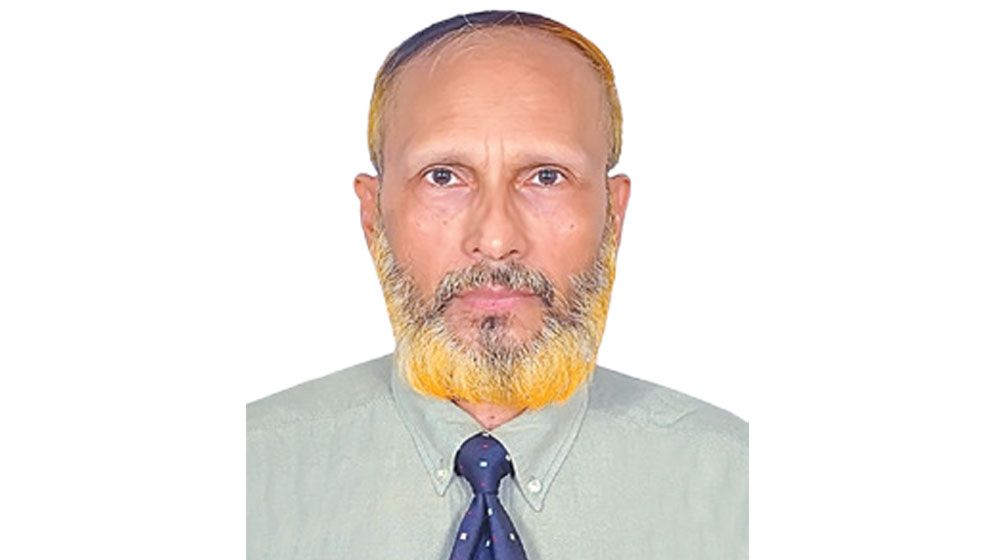
The writer is President, English Teachers’ Association of Bangladesh (ETAB). He can be reached at [email protected]