



 For all latest news, follow the Daily Sun's Google News channel.


Education has always evolved alongside society. As economies, technologies and social aspirations change, education is expected to adapt accordingly. Yet, history shows that sometimes educational reform cannot keep pace with broader societal transformation. Bangladesh illustrates this challenge clearly. Although the economy has expanded considerably over the past decades, its structural transformation has been relatively slow. Much of the country’s industrial sector continues to rely on labour-intensive production with limited technological sophistication and automation. The education system has adapted even more gradually. While important reforms have been introduced, many of its underlying assumptions, teaching methods, and assessment practices remain rooted in earlier industrial eras. As Bangladesh aspires to become a knowledge-based and innovation-driven economy, neither industry nor education can remain unchanged.
In Aristotle’s era, 4th century BCE, education was primarily intended to cultivate virtuous and rational citizens. Knowledge was regarded as relatively stable, and the teacher was the principal authority. During the pre-industrial period, when agriculture dominated economic life, education was largely religious and reserved for social elites. The Industrial Revolutions fundamentally broadened the purpose of education by creating new demands for knowledge and skills.
The First Industrial Revolution (1760–1840) generated a need for literate and disciplined factory workers, leading to the expansion of mass elementary education. The Second Industrial Revolution (1870–1914) required technicians, engineers, managers and other specialised professionals, encouraging the growth of secondary, technical and professional education. The Third Industrial Revolution (1950–2010), driven by computers and the rise of the knowledge economy, transformed universities into centres of research, innovation, and lifelong learning, while placing greater emphasis on ICT and higher education. Today, the Fourth Industrial Revolution (mid-2010s–present), characterised by artificial intelligence, automation, and digital technologies, is once again reshaping educational priorities. Increasing emphasis is being placed on competencies, critical thinking, interdisciplinary learning, creativity, adaptability and lifelong learning.
Viewed through a historical lens, Bangladesh’s education system resembles a layered legacy of successive industrial revolutions. Primary education continues to emphasise literacy, numeracy and teacher-centred learning, reflecting priorities that emerged during the First Industrial Revolution. Secondary education remains heavily shaped by subject specialisation, discipline and examination-driven assessment, hallmarks of the Second Industrial Revolution. At the tertiary level, universities have adopted features of the Third Industrial Revolution through ICT, research and digital technologies, yet many continue to rely on conventional teaching methods and rigid disciplinary structures. As a result, Bangladesh’s education system reflects not a single educational philosophy but a coexistence of multiple historical models, only partially aligned with the demands of the twenty-first century.
Importantly, Bangladesh is not alone. No country has fully achieved a Fourth Industrial Revolution (4IR) education system. Even the world’s most advanced education systems continue to retain elements inherited from earlier industrial eras. However, countries such as Singapore, South Korea, Japan, China, Finland, and Estonia have outpaced most in aligning education with the demands of a knowledge-intensive, technology-driven and innovation-oriented economy. Their experience demonstrates that educational transformation is not simply about introducing computers, artificial intelligence or digital platforms into classrooms. Rather, it involves rethinking the fundamental purpose of education-- from transmitting knowledge to developing adaptable learners capable of continuous learning and innovation throughout their lives.
The limited adoption of 4IR-oriented education around the world is not merely a consequence of policy failure. Education serves multiple social, cultural and economic purposes, while technological change often unfolds more rapidly than educational institutions can respond. Consequently, most countries operate hybrid systems that combine traditional educational practices with emerging approaches designed to prepare learners for an uncertain future.
For Bangladesh, therefore, the question is not whether to adopt a ready-made Fourth Industrial Revolution model. No such model exists. The more important challenge is to align educational reform with the country’s own economic and social transformation. Primary education must provide strong foundations in literacy, numeracy, communication and problem-solving. Secondary education must move beyond memorisation towards analytical and creative thinking. Technical and vocational education must support industrial upgrading and technological adaptation. Universities must strengthen their contributions to research, innovation, entrepreneurship and national development.
Bangladesh’s future competitiveness will depend less on technological adoption alone and more on how effectively it develops a skilled, adaptable, and continuously learning population. History suggests that societies prosper when their education systems evolve in step with their changing realities. The challenge before Bangladesh is to ensure that education not only reflects the future it seeks to build but also helps create it.
______________________________________________
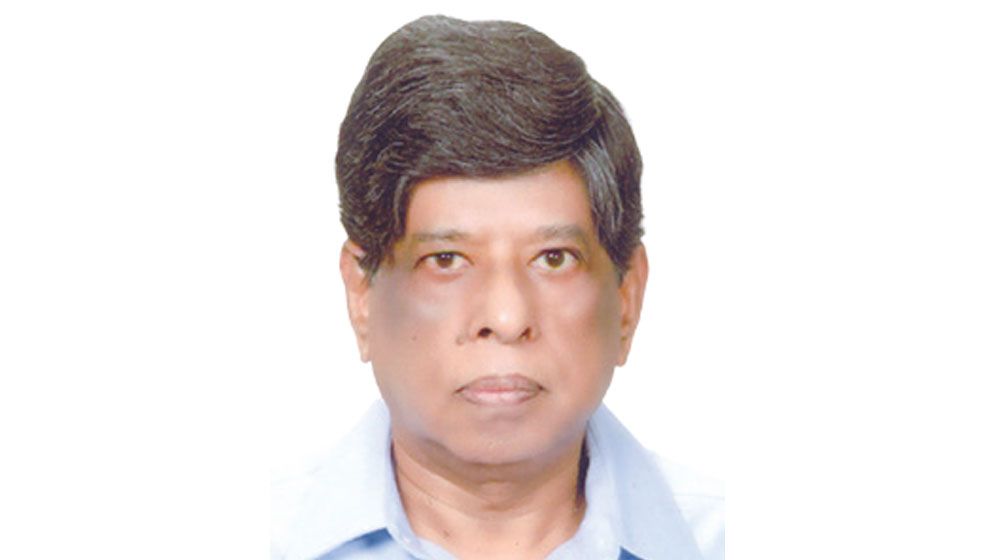
The writer is Distinguished Professor, Eastern University, and former Vice Chancellor, East West University, Bangladesh