



 For all latest news, follow the Daily Sun's Google News channel.


Edward de Waal, an English contemporary artist, potter and author, once opined, “With languages, you are at home anywhere.” Actually, living in many languages means embracing many colours. Language has the majestic power to add new eyes to view many colours at a time as well as to establish strong ties between humans. Dialects as varieties of a language that are the traits of a particular region, as well as social class, have rich, evolving systems for reflecting history, culture, norms, behaviours, identity, thought and many more things. Moreover, diversity in language and dialects offers multiple ways to perceive and express social reality. Hence, these are also sources of beauty. In terms of rhythm, intonation, and sound patterns; lexical uniqueness; grammar & structure; traditional ways of telling stories; songs; proverbs; oral poetry; and local and culturally deep-rooted figurative language expressions and dialects have both cognitive and aesthetic value. This write-up will, in short, focus on beauty and diversity in different languages and dialects used by a society.
For linking the facial and behavioural features of a community with its various languages, we may think of understanding our dialects closely. As we know, language lies at the core of human affairs, from the most straightforward to the most philosophical, and it is the crystallising screen which displays every community’s etiquette, ethics and mythos and works as the communicative conduit through which those celebrated ingredients are passed on to the next generation. As such, language, most prominently among many other yardsticks, paves the way to our understanding of human nature. Language also reflects human cerebral procedures or forms the stream and character of thought. Similar to the transmission of hereditary characteristics through the movement of DNA, language assumes disparate attributes as an outcome of its practice in human communication. Since human physiognomies are closely orientated with place, time and social setting, linguistic facets are also intimately affiliated with topographical appearances. Historical upbringing connected with geographical configuration renders a specific shape to people and their linguistic interaction. Liu et al. (2019) investigated how human countenance or facial expressions are influenced by the contexts in which language happens. Accordingly, they record event-related potentials (ERPs) and categorise various emotional and non-emotional facial expressions in terms of contextual details, only to come across the fact that the geographical and background affiliations of a language necessarily affect the production of the speakers’ facial expressions. This observation is evidently discernible in the distinctive localities and inhabitants with dissimilar dialects characterised by a wide range of lexicon, colloquialisms, tone and intonation. There are a large number of Bangla dialects that reflect, sometimes, similarities of the facial and behavioural features of these people.
Dialects preserve a community’s history and value silently. There are many ethnic groups in Bangladesh. They speak in different languages sometimes within their groups. For example, there is a language called Sadri that is spoken by several ethnic minority groups in northern districts, including Naogaon and Dinajpur. When they talk to themselves, the speakers look very vibrant and spontaneous. This is a beauty of language. To a language researcher, dialectical knowledge can enhance adaptive skills, empathy, mental agility and problem-solving competence. Some artists, writers, and musicians draw on dialectical forms to promote innovative style and voice in life.
Moreover, for embracing an inclusive society, we should recognise that dialects and minority languages are not only languages with diversity, but also they are vital for expressing cultural identity and social belonging. We should think of respecting the community of voices in education, service and other sectors to bring linguistic equality, diversity and beauty.
There is an urgency to learn foreign languages. It will boost our social, economic, cognitive and career prospects in a globalised economy as well as foster our communication skills, creativity, empathy, and our relationship with the global community. As the rainbow looks beautiful with multiple colours, a society looks beautiful with the inclusion of peaceful diversity. Let us think of embracing beauty and diversity in languages and dialects, too.
________________________________________________
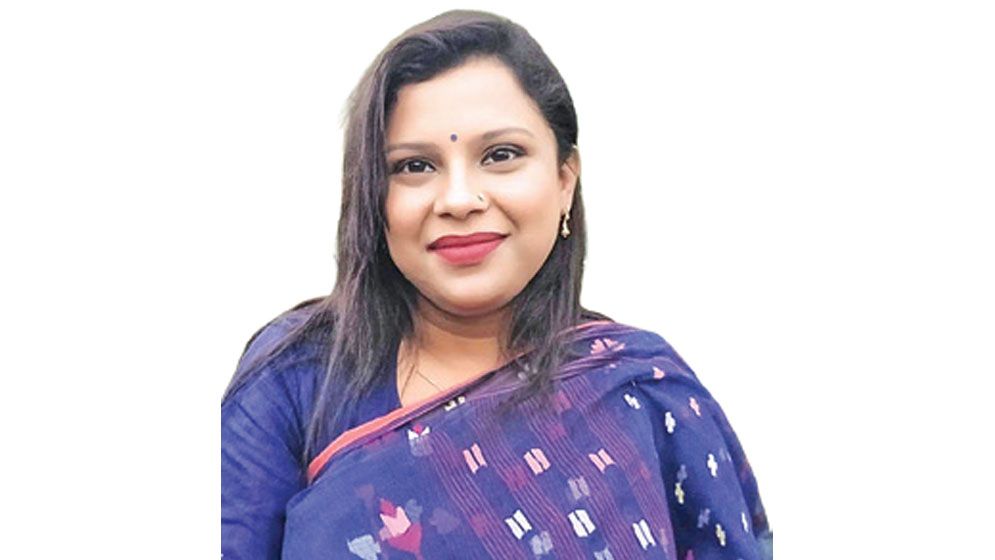
The writer is a Professor (English) at the Institute of Modern Languages of Jagannath University, Dhaka, Bangladesh. Her email address is [email protected]