



 For all latest news, follow the Daily Sun's Google News channel.


According to the famous Bengali poet, novelist, composer, painter and philosopher Rabindranath Tagore, “The highest education is that which does not merely give us information but makes our life in harmony with all existence.” This vision is widely regarded as aligned with the key principles of holistic education. Nowadays, competition has become a powerful and fundamental force in modern life, so learners are expected to demonstrate in-depth growth in mindset, along with academic excellence. Here lies the importance of lifelong learning skills. The things needed for lifelong learning skills are cultivating enthusiasm to foster a genuine passion for learning; helping learners to know how to maintain a healthy and meaningful relationship in personal, professional and societal arenas; making the learners able to grow constantly and to adapt and improve inwardly; boosting up spirits to embrace innovation for the betterment of society as well as achieving skills of flexibility, updating knowledge, enhancing self-directed inquisition and motivation in their lifelong educational or professional journey; developing a strong mindset for controlling harmful emotions and depression, etc.
We know our world is going to face many unpredictable challenges ahead. Traditional learning may not be sufficient to face all these odds and challenges. As for meeting economic challenges, we have the Sustainable Development Goals (SDGs), primarily embedded in SDG 4, which have focused on inclusive, equitable, quality education to promote learning opportunities for all by 2030, so that there can be a proficient, adaptable workforce in the job markets and also in global spheres. Lifelong learning builds a proficient and adaptable workforce, crucial for economic growth and facing competitive job markets constantly. Here lies the importance of inclusion of youth training programmes, adult skill-developing programmes, digital literacy-developing programmes, workshops on reflective discussions, seminars on sharing views or experiences, and ongoing technical and vocational training.
Moreover, to assist vulnerable populations, including refugees, migrants and persons with disabilities, we need lifelong learning skills. Through these lifelong learning programmes, we may teach learners about the needs of ensuring the physical and mental health of our children, women and old people, as well as diverse communities. Alongside, children with special needs should be taught some basic lifelong skills. With equal access to technical, vocational and tertiary education alongside adult literacy and numeracy, as stated in SDG4, promotion of quality education will be ensured.
In addition, lifelong learning is important for learners who are constantly living in a techno-saturated environment. Sometimes they need to be prepared to take on real-world challenges to prove skills through hands-on learning. So, they need to be prepared with future-proof skills like ICT skills, problem-solving skills, mathematical skills, basic science skills, health management skills, interpersonal soft skills, creativity and communication, etc. Along with academic teaching, students or learners should achieve a firsthand opportunity to grow their future potential, which will, in turn, fuel their lifelong capacity to learn and enlighten society.
________________________________________
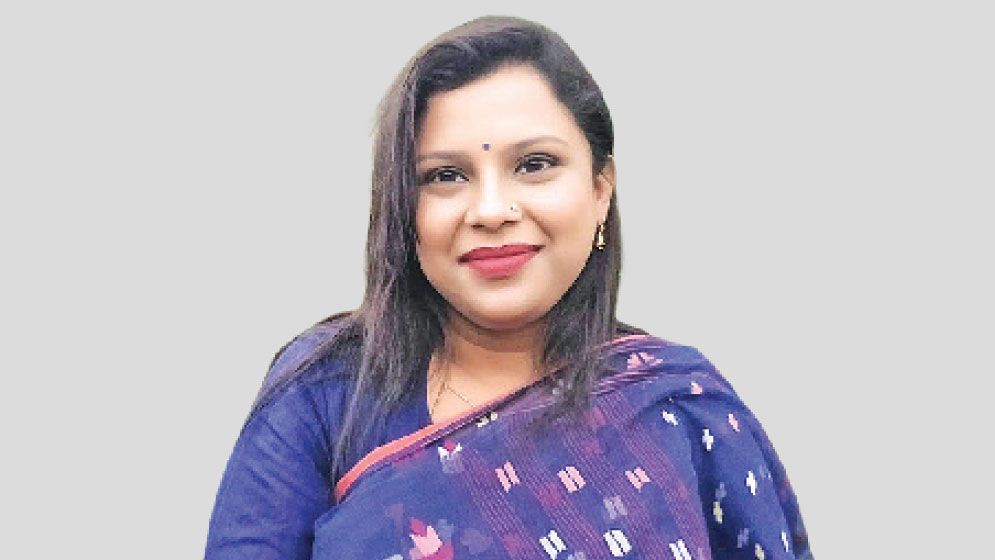
The writer is Professor of English at Institute of Modern Languages of Jagannath University and Chairperson of Council of Educational Administration & Management (CEAM) of Bangladesh Chapter from Kerala, India. She can be reached at [email protected]