


 For all latest news, follow the Daily Sun's Google News channel.


Dhaka seeks Ganges treaty renewal with India, Pak repentance over 1971: Shama
Daily Sun Report, Dhaka
Published: 29 Nov 2026, 08:44 PM
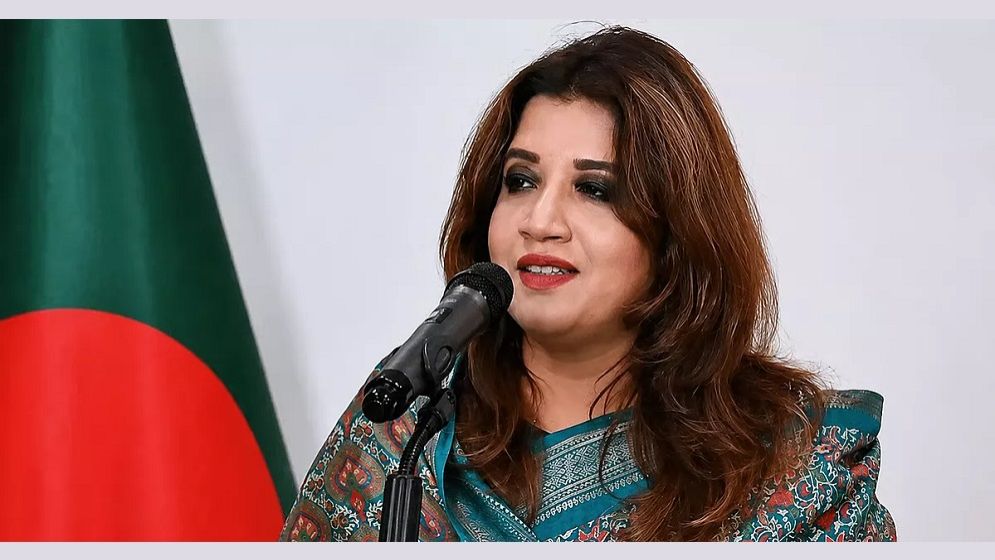
Bangladesh wants to hold talks with India on renewing the
Ganges Water Sharing Treaty and expects a political and diplomatic response to
its letter sent to Delhi over the issue, Foreign Affairs State Minister Shama
Obaed Islam said on Sunday.
Furthermore, she called for speeding up the process of
bringing convicted fugitives and other criminals living in India back to
Bangladesh.
She also said Dhaka hopes the Pakistani side will express
repentance over the 1971 Liberation War atrocities, but noted that the
government wants to move forward while maintaining relations with all countries
in the interests of future generations.
Speaking to reporters at the Foreign Ministry, Shama said
Bangladesh was interested in continuing and renewing the existing 30-year
Ganges water-sharing agreement with India, which expires on 12 December, but
noted that formal bilateral talks were necessary before a final decision could
be made.
Bangladesh's initial preference is to renew the existing
treaty, she said, adding that the scope for discussing a new agreement is yet to
develop.
The state minister said the treaty is important to both
Bangladesh and India, and Dhaka believed New Delhi understood its significance
to the interests of the two neighbouring countries. The government therefore
expects India to respond politically and diplomatically to Bangladesh's letter
seeking renewal of the agreement.
On efforts to bring former prime minister Sheikh Hasina and
other convicted fugitives and criminals back from India, Shama said there had
been no significant progress so far on several letters sent by Bangladesh
seeking their return.
On Thursday, Water Resources Minister Shahiduddin Chowdhury
Anee said Bangladesh has sent two letters to India over the Ganges Water
Sharing Treaty but has yet to receive any response.
She said the extradition or transfer of fugitives involved
specific legal and administrative procedures, which required time to complete
under the relevant agreements. While acknowledging the procedural requirements,
Bangladesh believed the process could move faster if the Indian government
demonstrated political willingness, she added.
Shama particularly stressed the need to bring back those
involved in the murder of Hadi to Bangladesh to face trial. The government
wants the perpetrators returned and brought to justice on Bangladeshi soil, she
said.
Responding to questions about Bangladesh's relations with
Pakistan and the demand for an apology for the 1971 genocide, Shama said the
BNP upheld the spirit of the 1971 Liberation War and had never used it for political
gain. The Liberation War is a source of national pride and does not belong to
any particular political party, she said.
She said Bangladesh would maintain relations with all
countries, including Pakistan, India, China, Russia, the United States and
European nations, but national independence, sovereignty, democracy and public
interests would remain the top priorities in its foreign relations. Bangladesh
would not compromise its dignity to maintain relations with any country, she
added.
Asked whether Bangladesh still expected Pakistan to
apologise for the 1971 genocide, she said Dhaka hoped Islamabad would express
remorse for the events of 1971. At the same time, Bangladesh wanted to move
forward while maintaining relations with all countries in the interests of
future generations.
Regarding the cancellation of Malaysian Prime Minister Anwar
Ibrahim's visit to Bangladesh, Shama said Malaysia's Foreign Ministry had
informed Dhaka that the decision was due to the country's domestic political
situation. The visit was linked not only to Bangladesh but also to a subsequent
planned trip to Thailand, she added.
On Bangladesh's political situation, she said the country
was going through a period of transition. Although some isolated incidents of
violence and sabotage had occurred, she did not believe they had undermined
overall political stability.
The law would take its course, and those involved in murder,
enforced disappearances, corruption and money laundering in the past would have
to face justice, she said.
Asked about concerns among European countries over
Bangladesh's political situation, Shama said she had not encountered such
concerns during her visit to Germany. She maintained that there was no
political instability in the country and said the government had swiftly
addressed labour unrest by taking steps to meet workers' legitimate demands.
She alleged that supporters of the ousted Awami League
government had attempted to create political instability by exploiting labour
protests, but said such incidents should not be seen as evidence of broader
political instability.
Expressing optimism about the future of Bangladesh's garment
industry, she said some orders had temporarily shifted to other countries, but
the sector had a strong foundation built over many years. Joint efforts by
workers and factory owners would make the industry stronger, she added.